BULLETINS
| |
| |
Bulletin of the IDF N°527/2023: The World Dairy Situation Report 2023
Annual survey containing information on milk and dairy production, processing, companies, consumption, trade and prices. Comprehensive data on 49 countries from national and international sources. Description of current trends. Global and regional commentary covering all major producing and consuming countries. Dairy outlook from OECD. It also includes all illustrations in PowerPoint and Excel tables enabling the use of figures, graphs and charts.
Pages 236 – 500 Euros-------------------------------------------------------------------------------------------------------------------------------------------------------------------------------------Bulletin of the IDF N°526/2023: Prevention of the development of chlorate in the dairy chain
This document describes the various sources, occurrence levels, regulatory approaches applied in different countries, toxicological considerations, prevention steps and best practices for the management of chlorate across the dairy chain. The challenge of keeping chlorate levels as low as reasonably achievable whilst maintaining appropriate microbiological hygiene makes chlorate a complex contaminant to manage.
Pages 31 – 50 Euros-------------------------------------------------------------------------------------------------------------------------------------------------------------------------------------Bulletin of the IDF N°525/2023: Practical considerations of sampling when monitoring dairy food production
In-process sampling during dairy production and processing is critical for hygiene management, process monitoring and microbiological risk management. This document supports dairy plants and farms in generating accurate and representative inprocess microbiological sample data. There are significant consequences for both microbiological and chemical analyses that the heterogeneity of the contamination of the sample, the sample size, and the sampling method can influence. A harmonized sampling process is proposed here to help provide accurate and comparable results to identify in-line contamination or quality implications proactively.
Pages 25 – 50 Euros-------------------------------------------------------------------------------------------------------------------------------------------------------------------------------------Bulletin of the IDF N°524/2023: Moisture content of dried milk and dried milk products - Complementary international collaborative study.
The moisture content of dried milk and dried milk products is one of the predominant factors determining their keeping quality. A complementary international collaborative study was conducted., the results of which prompt the inclusion of values of 0.15% and 0.25%, respectively for the repeatability limit and the reproducibility limit, in a revised version of ISO 5537|IDF 26 for the determination of the moisture content in dried milk and dried milk products.
-------------------------------------------------------------------------------------------------------------------------------------------------------------------------------------Bulletin of the IDF N°523/2023: Proceedings of the 7th and 8th IDF Paratuberculosis Fora
The 7th and 8th IDF Paratuberculosis Fora took place on 26 May 2021 and 12 June 2022 respectively. The 7th event was virtual while the 8th Forum was held in conjunction with the International Colloquium on Paratuberculosis in Dublin, Ireland. This publication contains a selection of eight papers, all of which were presented by program representatives on the 7th or the 8th ParaTB Fora days.
This publication is free of charge and can be downloaded here here-------------------------------------------------------------------------------------------------------------------------------------------------------------------------------------Bulletin of the IDF N°522/2022: IDF Global Marketing Trends Report
This 2023 report provides a snapshot of marketing trends within the dairy market in 2019, just before the Covid-19 crisis, in 2020, the year when the pandemic had a maximum impact, and in 2021, as the Covid-19 crisis began to diminish. The report highlights the impact of trends that emerged and developed in the very specific context of the Covid-19 pandemic on the future of dairy. It covers a cross-section of product categories including liquid milk, butter and ghee, cheese, yoghurt, cream and ice cream. There are also sections dedicated to the anti-milk, anti-fat and anti-dairy farming discourses, dairy intake recommendations, plant-based products and particular diets (flexitarianism, vegetarianism and veganism).
Pages 56 – 200 Euros
-------------------------------------------------------------------------------------------------------------------------------------------------------------------------------------Bulletin of the IDF N°521/2022: Survey on the Implementation of the CAC General Standard for the Use of Dairy Terms (GSUDT- Survey)
In 1999, the Codex Alimentarius Commission established the General Standards for the Usage of Dairy Terms (GSUDT). This standard provides the guidance on the correct use of terms that are universally identified with dairy products. This publication gives an overview of how the GSUDT has been adopted and translated in 21 countries.
Pages 23 – This publication is free of charge and can be downloaded here
|
Bulletin of the IDF N°520/2022: The IDF global Carbon Footprint standard for the dairy sector
The purpose of this bulletin is to assist the dairy sector in its efforts to reduce GHG emissions across all its value chain. It has been developed by IDF to be used by the dairy cattle farming and dairy manufacturing sectors, as well as anyone else committed to assess the Carbon Footprint of their production systems and products by using an LCA approach. This update contains changes in some key areas supported by robust scientific evidence in order to ensure the highest degree of consistency, as well as to allow comparability with the previous version and subsequent revisions.
Pages 120 – This publication is free of charge and can be downloaded here
|
|
|
|
Bulletin of the IDF N°519/2022: C-Sequ LCA guidelines for calculating carbon sequestration in cattle production systems
The concept of carbon sequestration is acknowledged as a potential way for agriculture to not just emit carbon dioxide, but store it, removing it from the atmosphere. Up until now there has been no consensus on an appropriate LCA-based approach for application in cattle production systems to quantify carbon removals. The focus has always been on emissions only. As the cattle sector works towards net zero ambitions, an appropriate science-based approach is required to not only account for emissions but also quantity carbon removal as part of the GHG footprint reporting..
Pages 50 – This publication is free of charge and can be downloaded here
|
|
|
|
Bulletin of the IDF N° 518 2022: The IDF World Dairy Situation Report 2022
Annual survey containing information on milk and dairy production, processing, companies, consumption, trade and prices. Comprehensive data on 49 countries from national and international sources. Description of current trends. Global and regional commentary covering all major producing and consuming countries. Dairy outlooks from Rabobank and OECD. It also includes all illustrations in PowerPoint slides and Excel tables enabling use of figures graphs and charts.
Pages 243 – Electronic 500€
|
|
|
|
Bulletin of the IDF N° 511 2021: Guidance on the application of conversion equations for determination of microbiological quality of raw milk
The microbiological quality of raw milk – the Total Bacteria Count – is routinely recorded by automated milk analyzers based on Flow Cytometry, whereas Standard Plate Count is still the anchor method and quoted by many official regulations. Often the units of the alternative analysers are converted into anchor method units. This Bulletin describes the experiences gained during almost 40 years and illustrates, situations where conversion of the TBC-units is relevant as well as where the units of alternative methods could be used. It provides a comparison of three possible approaches to conversion to help the users to choose the best approach. The information provided is intended to help the dairy sector in arriving at an optimal decision for each laboratory/region/country or other specific purpose.
Pages 36 Price 50€
|
|
 |
|
Bulletin of the IDF N° 510 2021: Inventory, evaluation and and perspectives on methods for determination of somatic cell count
The current reference method for SCC, which is based on microscopy, has been described as challenging to work with. Hence, the objective of this work is to define the criteria for a reference method, map all available methods for determination of SCC and to recommend one or two candidates that could potentially be used as a new reference method.
A feasibility study revealed that the current reference method is not fit for purpose. The results further indicated that automated microscopy, open and adjustable variants of flow and image cytometry, respectively, are potential candidates for a reference method. However, detailed protocols on how such methods could be used routinely for reference testing purposes do not yet exist. In a next step, such protocols need to be developed and subsequently proficiency and ring trial data are to be generated so that the actual performance of the methods can be determined.
This pubication aims to map available technologies and defne the criteria that could be used to define a reference method.
Pages 62 Price 62€
|
|
 |
|
Bulletin of the IDF N° 509 2021: Lactose, an important nutrient: Advocating a revised policy approach for dairy & its intrinsic sugar
This Bulletin summarizes the scientific evidence on the nutritional and health properties of lactose as naturally found in milk and other dairy foods. It outlines the key role that milk and dairy products have in a healthy diet and argues that lactose, as an inherent sugar, forms an important part of the dairy matrix.
This publication is free of charge and can be downloaded here |
|
 |
|
Bulletin of the IDF N° 508 2020: Guidance on application of EC JRC Certified Reference Material for somatic cell counting in milk
This paper provides relevant guidance on how to apply this material for method performance verification of both the microscopic reference method and routine methods, for verification and possibly required adjustment of calibration settings of routine methods, for assigning reference values to secondary reference materials and for use in proficiency testing.
Application of this new certified reference material for calibration of routine methods might come with a significant change in calibration settings. In such cases, it is advised that laboratories consult the relevant regulatory and supervising bodies and other local stakeholders in order to arrange for an optimal transition.
This publication is free of charge and can be downloaded here |
|
 |
|
Bulletin of the IDF N° 507 2020: The Codex General Standard for the Use of Dairy Terms - Its nature, intent and implications
An update to the bulletin on The Codex General Standard for the Use of Dairy Terms (CXS 206-1999), providing policymakers, food business operators and enforcement authorities with the latest information on the nature, content and possible implications of the GSUDT in the context of national, regional and international trade, including its status in relation to the WTO Agreement on Technical Barriers to Trade
This publication is free of charge and can be downloaded here |
|
 |
|
Bulletin of the IDF N° 506 2020: The World Dairy Situation 2020
Annual survey containing information on milk and dairy production, processing, companies, consumption, trade and prices. Comprehensive data on 51 countries from national and international sources. Description of current trends. Global and regional commentary covering all major producing and consuming countries.
The electronic version includes all illustrations in Powerpoint slides and Excel tables enabling use of figures graphs and charts.
Pages 233 – Electronic 500€ |
|
 |
|
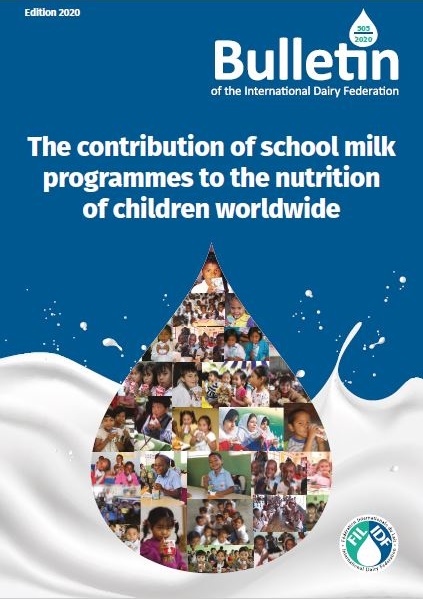
Bulletin of the IDF N° 505/ 2020: The contribution of school milk programmes to the nutrition of children worldwide – Edition 2020
Following on from its previous research into School Milk Programmes, the International Dairy Federation has developed a new report which compiles data from global experts in the field on different programmes around the world. The report provides insights on the range of products, implementation and population, accompanied by raw data.
The new edition also includes a review on the evidence of the nutritional benefits of these programmes, offering new insights into the global impact of School Milk Programmes..
This publication is free of charge and can be downloaded here
|
|
 |
|
Bulletin of the IDF N° 504 2020: New applications of MIR spectrometry: Quality assurance practices with new parameters in raw milk analysis
Mid InfraRed (MIR) spectrometry is traditionally applied for quantitative determination of major components of milk such as fat, protein or lactose. For these “traditional” parameters, MIR Filter apparatus techniques have been used for a long time. They used simple models to predict these parameters using a very low number of wavelength. Recently, Fourier-transform infrared spectroscopy (FTIR), a more complex technique, has been proposed. FTIR apparatus collect high-spectral-resolution data over a wide spectral range. This confers a significant advantage over a dispersive spectrometer, which measures intensity over a narrow range of wavelengths at a time. A Fourier transform (a mathematical process) is required to convert the raw data into the actual spectrum.
Thanks to additional prediction models developed by researchers and instrument manufacturers, FT-IR spectra can be used beyond quantitative determination of major components of milk such as fat, protein or lactose, to measure other dairy components such as fatty acids and minerals, and also to measure qualitative parameters. However, traditional calibration procedures developed with filter apparatus need to be adapted to respond to the more complex models used.
This document focuses on the required checks with the implementation of new quantitative applications and how the quality assurance of the results can be assured. New approaches are presented.
Pages 50 – Electronic 45€
|
|
 |
|
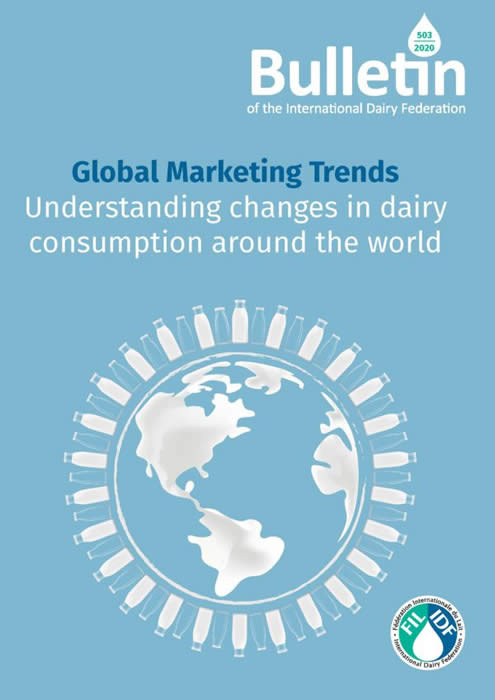
Bulletin of the IDF N° 503 2020: Global Marketing Trends - Understanding changes in dairy consumption around the world
Built on the in-depth knowledge of IDF Experts worldwide, this report provides benchmarking data and key learnings from across the sector on what is driving consumer decision-making.
This publication is based on responses received on a survey sent around the world, and shares key challenges currently faced by marketers within the dairy sector and anticipated future trends.
This second edition updates the version previously published in 2017.
Pages 132 – Electronic 100€ until 26 May then 150€ thereafter
|
|
 |
|
Bulletin of the IDF N° 502 2019: Ecology of Listeria spp. and Listeria monocytogenes, Significance in Dairy Production
The present review aims to summarise the different relevant actions in the food production process that need to be implemented to minimize the likelihood of unsafe f inal dairy product production in terms of L. monocytogenes.
This publication is free of charge and can be downloaded here
|
|
 |
|
Bulletin of the IDF N° 501 2019: The World Dairy Situation 2019
Annual survey containing information on milk and dairy production, processing, companies, consumption, trade and prices. Comprehensive data on 50 countries from national and international sources. Description of current trends. Global and regional commentary covering all major producing and consuming countries.
The electronic version includes all illustrations in Powerpoint slides and Excel tables enabling use of figures graphs and charts.
Pages 233 – Electronic500€
|
|
 |
|
Bulletin of the IDF N° 500 2019: Wastewater Treatment in Dairy Processing - Innovative solutions for sustainable wastewater management
This publication provides an overview of eco-friendly and innovative wastewater treatment technologies available to the dairy processing sector and offers solutions to drive sustainability and continuous improvement of the sector's environmental impact.
Pages 67 – Electronic35€
|
|
 |
|
Bulletin of the IDF N° 499 2019: Guidance on the Practical Application of IDF/ISO Standard on the Determination of Milkfat Purity
This Bulletin provides guidance on the practical application of the International Standard ISO 17678|IDF 202 Milk and Milk Products – Determination of the milkfat purity by gas chromatography. The method described here is designed to accommodate regional, seasonal and feed variations in authentic milkfat composition.
Pages 43 – Electronic30€
|
|
 |
|
Bulletin of the IDF N° 498 2019: The IDF Guide to Good Animal Welfare in Dairy Production 2.0
This Guide updates the previous IDF Guide to Good Animal Welfare in Dairy Production (2008) and aims to promote the implementation of good animal welfare practices in dairy production at global scale and refers to key standards (OIE Terrestrial Animal Health Code, and ISO Technical Specification 34700 :2016).
It provides recommendations on : stockmanship, feed and water, physical environment, husbandry practices and health management. Example animal welfare outcome measures are proposed to assess the level of welfare for the animals in dairy production systems,.
Pages 42 – This Bulletin is free of charge and can be downloaded here
|
|
 |
|
Bulletin of the IDF N° 497 2019: Applications of Near Infrared Spectrometry for the Analysis of Milk and Milk products
As with all foods there is a high demand for quality control and this is frequently carried out by rapid and reliable compositional analysis using near infrared (NIR) spectroscopy, which has been routinely applied for quality assessment in the dairy industry for over thirty years. Initial applications were on powdered products and cheese, but developments in hardware, software and chemometrics have widened the scope of application to include the entire range of dairy products throughout the production chain.
A first version of the international standard ISO 21543|IDF 201 was released in 2006 and is now being updated to cover a wider range of sample matrices in liquid, semisolid or solid forms and related measurement approaches and procedures.
This bulletin is a compilation of so far unpublished calibration statistics as a reference for the updated guideline.
Pages 19 – Electronic25€ |
|
 |
|
Bulletin of the IDF N° 496/ 2019: The technology of pasteurisation and its effect on the microbiological and nutritional aspects of milk
In this Bulletin, the technological process of pasteurisation is outlined, the microbiological aspects of the impact of pasteurisation on public health are explained and the scientific basis demonstrating that milk pasteurisation does not significantly impact the nutritional properties of milk are described. Thus, according to the currently available knowledge, drinking pasteurised milk is still the safest way to enjoy the health benefits of drinking milk. The focus of the Bulletin is on pasteurised cow’s milk for direct consumption; milk from other animal species or milk intended for further processing have not been considered in this publication. Although homogenisation is now an integral part of the pasteurisation process in many regions, it has not been considered for the purposes of this Bulletin.
Pages 34 – Electronic 40€
|
|
 |
|
Bulletin of the IDF N° 495/ 2018: Inventory of microbial food cultures with safety demonstration in fermented food products
In 2012 a joint Action Team of the Standing Committee on Microbiological Hygiene (SCMH) and the Standing Committee on Nutrition and Health (SCNH) published a scientific rationale for the inventory of microbial food cultures demonstrated as safe for use in food product(s).
In 2017/2018, a new joint Action Team of the Standing Committee on Microbiological Hygiene (SCMH) and Standing Committee on Dairy Science and Technology (SCSDT) reviewed the 2012 published rationale and available taxonomic developments in the course of updating the inventory of microbial food cultures. Simultaneously, a questionnaire was sent to all National Committee members of the International Dairy Federation (IDF) for submission of new species based on the published scientific rationale.
The current IDF Bulletin provides an updated inventory that replaces the one published in 2012.
Pages 71 – This Bulletin is free
of charge and can be downloaded here
|
|
 |
|
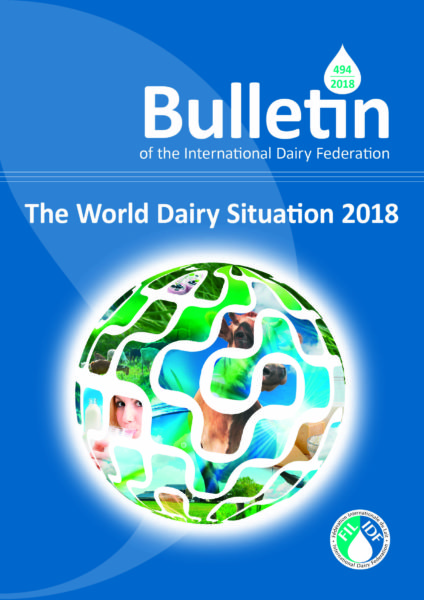
Bulletin of the IDF N° 494/ 2018: The World Dairy Situation 2018
Annual survey containing information on milk and dairy production, processing, companies, consumption, trade and prices. Comprehensive data from national and international sources. Description of current trends. Global and regional commentary covering all major producing and consuming countries.
Electronic version includes all illustrations in Powerpoint slides and Excel tables enabling use of figures graphs and charts.
Pages 198 – Electronic 400€
|
|
 |
|
Bulletin of the IDF N° 493/ 2018: Proceedings of the 6th Paratuberculosis Forum
The 6th ParaTB Forum, sponsored by the International Dairy Federation (IDF), was held on June 4th, 2018 at the International Convention Center in Riviera Maya, Mexico. The Forum comprised more than 25 delegates, representing 13 countries (Germany, Italy, Spain, the Netherlands, Ireland, Czech Republic, Brazil, Colombia, Canada, Australia, Argentina, Slovenia, and the United Kingdom), and presented an opportunity for delegates to discuss and report on the current state of paratuberculosis research and control programs in their home nations. This IDF publication reviews some of the common themes and takeaways that emerged from the presentations.
Pages 100 – Electronic 60€
|
|
 |
|
Bulletin of the IDF N° 492/ 2018: Total Cost of Ownership: An approach to support sustainable investments in the dairy processing and packaging industry
Total Cost of Ownership (TCO) is an analysis meant to determine all the lifetime costs that derive from owning certain kinds of assets. The TCO methodology described in this report has been adapted to a dairy processing system. In order to support decision making, it is possible to use TCO as a comparative tool. The TCO structure is developed based on the concept of Life Cycle Assessment, which is one of the most important techniques used to assess environmental impacts associated with all the stages of a product’s life.
Pages 47 – Paper 165€ - Electronic 65€
|
|
 |
|
Bulletin of the IDF N° 491/ 2018: Teat-cup and Cluster Removal Strategies for Cattle and Small Runinants - review and recommendations
An optimal teat-cup removal is needed to achieve gentle, quick and complete milking leading to high-quality while keeping dairy animals healthy and stress-free. This publication provides the physiological background of why automatic and early detachment may shorten the machine-on time without loss of milk production.
Overall, this work can help milking equipment suppliers, dairy farm advisers and operators on the adjustment of the factory default settings to optimal settings on automatic take-offs. Appropriate settings can significantly improve teat condition and parlour throughput while maintaining the quality and volume of milk harvested.
Pages 54 – Paper 165€ - Electronic 65€
|
|
 |
|
Bulletin of the IDF N° 490/ 2017: Quality Assurance Tools for Mid Infrared Spectrometry in Dairy Laboratories-Part 1
The first paper in this Bulletin briefly reviews the history of the development of recombined milk samples and explains the principles behind their use. To enable easy implementation of recombined milk samples by laboratories, the process of preparation and any critical points are described, taking into account recent developments.
In recent years several new applications with infrared spectrometry have been developed and implemented in dairy laboratories. Some of these prediction equations are not directly related to a component present in the milk, but are the result of interrelation(s) with other known or unknown components marked by variations in mid infrared spectra. More strongly than in the past, this new approach requires spectral standardisation. The second paper in this Bulletin provides an overview of three different standardisation procedures.
Pages 69 – Paper 185€ - Electronic 85€ |
|
 |
|
Bulletin
of the IDF No. 489/2017 - The World Dairy Situation 2017
Annual survey containing information on milk and dairy production, processing, companies, consumption, trade and prices. Comprehensive data from national and international sources. Description of current trends. Global and regional commentary covering all major producing and consuming countries.
Electronic version includes all illustrations in Powerpoint slides and Excel tables enabling use of figures graphs and charts.
Pages 203 – Paper 600€ - Electronic 500€ |
|
 |
|
Bulletin
of the IDF No. 488/2017 - The IDF Guide on Biodiversity for the Dairy Sector
These guidelines aim at providing principles for identifying biodiversity indicators that can be used to measure progress and assist technical advisors of dairy industry stakeholders in improving biodiversity management.
Pages 42– This Bulletin is free
of charge and can be downloaded here |
|
 |
|
Bulletin
of the IDF No. 487/2017 - IDF Global Marketing Trends, Understanding Changes in Global Dairy Consumption
Based on in-depth research conducted by IDF national experts, this study is intended to supplement the existing World Dairy Situation report by shedding light on global food consumption trends, with a particular focus on dairy products by geographic region. In addition to exploring dairy consumption trends, the report identifies key consumption drivers and barriers. The study looks at the major dairy product categories, and the various factors influencing consumption: demographics, economy, dairy sector dynamism, changes in consumption habits, and consumer expectations. Also featured are anti-milk and anti-fat messages, and cattle-breeding debates across the globe. .
Pages132 – Electronic 250€ |
|
 |
|
Bulletin
of the IDF No. 486/2017 -The IDF Guide to Water Footprint Methodology for the Dairy Sector
These guidelines are intended to reach better understanding of water footprint assessment within the dairy sector. They provide transparency about a dairy product’s water profile throughout its life cycle to allow monitoring, quantification and evaluation of the potential environmental impacts related to water use. The document reviews previous work on life cycle assessment and provides guidelines on standardization of water footprint. The guidelines followed ISO 14046, and are aligned with the LEAP guidelines for water use that cover all livestock sectors.
Pages 72– This Bulletin is free
of charge and can be downloaded here
|
|
 |
| |
|
Bulletin
of the IDF No. 485/2016 -The World Dairy Situation 2016
This authoritative publication contains chapters on milk production, milk processing, developments in the dairy industry in 2015/16, consumption, world dairy trade and prices. The Bulletin also features an overview of the Dairy Sector in the Netherlands and reports on 54 of the major producing and consuming countries containing statistical information and key developments as well as their main processors. Additional chapters cover the Dairy Leaders in Different World Regions, Dynamics in World Trade and Global Marketing Trends. There is also a statistical annex containing tables on dairy farming, processing, trade, consumption and prices.
Pages 259 – Paper 600€ - Electronic 500€
|
|
 |
|
Bulletin
of the IDF No. 484/2016 - Proceedings of the 5th Paratuberculosis Forum - Nantes, France, 19 June 2016
Pages 75 – Paper 185€ - Electronic 85€
|
|
 |
|
Bulletin
of the IDF No. 483/2016 - Fluorimetric Method for the Determination of Alkaline Phosphatase Activity in Cow's Milk Cheese: Interlaboratory Collaborative Study
This article presents the results of a collaborative study conducted to generate precision data for the revised International Standard ISO 11816-2|IDF 155-2, the fluorimetric method for the determination of alkaline phosphatase (ALP) activity in cheese.
Pages 21 – Paper 125€ - Electronic 25€
|
|
 |
|
Bulletin
of the IDF No. 482/2016 - Evaluation of nitrogen conversion
factors for dairy and soy
This Bulletin reviews
the scientific literature pertaining to nitrogen conversion
factors (NCFs) for dairy products and soy products. It presents
substantial scientific evidence that supports the use of a
specific NCF of 6.38 for milk protein and of 5.71 for soy
protein, rather than a single inaccurate factor of 6.25.
Pages 38– This Bulletin is free
of charge and can be downloaded here |
|
 |
|
Bulletin
of the IDF No. 481/2015 – The World Dairy Situation
2015
This authoritative publication contains chapters on milk production,
milk processing, developments in the dairy industry in 2014/15,
consumption, world dairy trade and prices. The Bulletin also
features reports on 54 of the major producing and consuming
countries containing statistical information and key developments
as well as their main processors. There is also a statistical
annex containing tables on dairy farming, processing, trade,
consumption and prices.
Pages: 252 - Electronic: 250.00€
|
|
 |
|
Bulletin
of the IDF No. 480/2015 – The Contribution of School
Milk Programmes to the Nutrition of Children Worldwide
Conducted jointly by FAO and IDF, with the support of Tetra
Laval, this survey is the largest of its kind in many years.
It provides an in-depth look at school milk programmes in
the Americas, Asia, Africa, Australia and Europe.
The 57 countries who participated in the survey supplied a
large amount of information on consumption, programme structure,
nutrition, promotion, packaging, market value, administration
and distribution.
Pages 80 – This Bulletin is free of charge and can be
downloaded here
|
|
 |
|
Bulletin
of the IDF No. 479/2015 - A common carbon footprint approach
for the dairy sector: The IDF guide to standard life cycle
assessment methodology
In 2010, Bulletin 445/2010 (the first edition of ‘A
Common Carbon Footprint Approach for Dairy: The IDF Guide
to Standard Life Cycle Assessment Methodology for the Dairy
Sector”) was published. The guide has now been reviewed
and revised to reflect evolving science and standards in carbon
footprint methodology and this Bulletin replaces Bulletin
445.
Pages 80 – This Bulletin is free of charge and can be
downloaded here
|
|
 |
|
Bulletin
of the IDF No. 478/2015 - Interlaboratory collaborative study
on a flow cytometry method for lactic acid bacteria quantification
in starter cultures, probiotics and fermented milk products
according to ISO 19344/IDF 232
This article presents the report and results of the international
collaborative study conducted to validate the international
standard ISO 19344 / IDF 232, Milk and milk products –
Starter cultures, probiotics, and fermented products –
Quantification of lactic acid bacteria by flow cytometry.
Pages 48 – Paper 60.00€ - Electronic 54.00€
|
|
 |
|
Bulletin
of the IDF No. 477/2014 – Determination of hen’s
egg white lysozyme in milk and cheese – Interlaboratory
collaborative study.
This article presents
the results of an international collaborative study conducted
to validate previous technical specifications for the measurement
of lysozyme in cheese.
Pages: 29 - Paper: 35.00€ - Electronic: 32.00€
|
|
 |
|
Bulletin
of the IDF No. 476/2014 – The World Dairy Situation
2014
This authoritative
publication contains a wealth of data on the production, consumption,
retail prices and trade for dairy products as well as statistics
showing the number of dairy farms and dairy cows up to the
2013 calendar year. Analysis of these sectors is also presented
in a number of chapters and the Bulletin also features reports
on 50 of the major producing and consuming countries containing
statistical information and key developments as well as their
main processors.
Pages: 230 - Electronic: 125.00€
|
|
 |
|
Bulletin
of the IDF No. 475/2014 - Proceedings
of the 4th Paratuberculosis Forum - Parma, Italy, 21 June
2014
This
publication contains seventeen papers written by representatives
of national and regional Johne’s disease control programmes
on the lessons learnt through their implementation. The papers
were presented and discussed at the 4th Paratuberculosis Forum
in Parma, Italy, on the 21 June 2014 at the offices of the
European Food Safety Authority and attended by participants
from 16 countries.
Presentations cover a variety of approaches to manage Johne’s
disease, from compulsory regulations targeting clinical disease
to voluntary industry programmes aimed at reducing economic
impact and supporting the production of high quality milk.
A common theme was the integration of various testing strategies
with important hygiene measures to prevent new infections.
The papers highlight the successes and challenges and the
importance of communications and incentives to maintain farmer
engagement and cooperation, in order to ensure Johne’s
disease control programmes are more effective in the future.
Pages:
103 - Paper: 125.00€ - Electronic: 114.00€
|
|
 |
|
Bulletin
of the IDF No. 474/2014 - Detecting antibiotic
residues in milk - Guidance on the application of screening
and confirmatory methods in integrated dairy chain management
The document provides
tools that can be implemented at any level of the dairy chain
and can help in choosing the most suitable method. Sampling
good practices, recommendations for sample storage, advantages
and disadvantages of available methods and procedures applied
to validate the tests are all discussed and the document ends
with examples of applied strategies in different countries.
Pages: 35 - Paper: 45.00€
- Electronic: 39.00€ |
|
 |
|
Bulletin
of the IDF No. 473/2014 - Compilation of some presentations
from the IDF World Dairy Summit 2013
This Bulletin contains
thirteen papers presented at conferences during the IDF World
Dairy Summit
in Yokohama (Japan)
from 28 October to 1 November 2013. The conferences topics
were Children and
milk, Animal health
and welfare, Dairy farming, Nutrition and health, Marketing,
Environment and Food
safety.
This bulletin contains
99 pages, is free of charge and can be downloaded here.
|
|
 |
|
Bulletin
of the IDF No. 472/2014 - Posters presented at
the IDF World Dairy Summit 2013
This Bulletin contains
fifteen posters presented during the IDF World Dairy Summit
in Yokohama, Japan from 28 October to 1 November 2013.
The articles cover
a wide range of topics: from probiotics, manufacturing processes,
contaminant analysis and the dairy industry in Japan to issues
affecting the environmental impact of dairy farming.
Pages: 119 - Paper: 149.00€
- Electronic: 132.00€ |
|
 |
|
Bulletin
of the IDF No. 471/2014 - Detection of
inhibitors and antimicrobial residues in milk and dairy products
by screening methods - Guidance on preparation of the test
portion.
Treatment of lactating
cows with antimicrobial agents can result in the presence
of drug residues in milk. Tests available for the screening
of antimicrobial residues have been developed, and often validated,
on raw milk and are not immediately applicable to dairy products
such as whole milk powder, skimmed milk powder, whey, condensed
milk, buttermilk, etc. Many dairy products require special
preparation before they can be used in screening procedures
routinely used for raw milk.
This article presents
ways of preparing various dairy products to obtain appropriate
test samples.
Detailed procedures
are given for the reconstitution of dried samples such as
milk powder and for the preparation of samples of cream, butter,
yogurt and cheese. Particular attention is paid to the dilution
necessary for test samples of various types.
Pages: 12–
Paper 12.00€ – Electronic 9.00€ |
|
 |
|
Bulletin
of the IDF No. 470/2013 - The World Dairy Situation 2013
Annual survey presented at IDF World Dairy Summit, Yokohama
(Japan), in October/November 2013. Production, consumption,
trade and price figures from dairy sector and other sources.
Largest dairy companies by turnover and/or milk intake. Comments
and prognoses on the situation in different countries and
analysis of the whole, covering all major producing and consuming
countries. Review of various forecasts of dairy trade.
Pages: 237 – Paper 125.00€ – Electronic 95.00€
|
|
 |
|
Bulletin
of the IDF No. 469/2013 - Requirements for Reference Materials
for the Calibration of Automated Somatic Cell Counters
Report produced of an international project focusing on analytical
harmonisation in somatic cell counting, managed by the International
Dairy Federation (IDF) and the International Committee for
Animal Recording (ICAR) and providing guidance for the production
of suitable reference materials for somatic cell counting
according to ISO 13366-2 | IDF 148-2.
Pages: 34 – Paper 42.00€ – Electronic 38.00€
|
|
 |
|
Bulletin
of the IDF No. 468/2013 - Interlaboratory collaborative study
of a method for the determination of nitrogenous fractions
in cheese-ISO 27871/IDF224
Results of an international collaborative study conducted
to establish precision figures for the determination of nitrogenous
fractions in cheese.
Pages: 9 – Paper 12.00€ – Electronic 10.00€
|
|
 |
|
Bulletin
of the IDF No. 467/2013 - Collaborative study of ISO 26323/IDF
213 on determination of the acidification activity of dairy
cultures by continuous pH measurement (CpH)
This report compiles the results of an international collaborative
study conducted to establish precision figures for the determination
of acidification activity of dairy cultures by continuous
pH measurement with the method described in ISO 26323|IDF
213.
Pages: 11 - Paper: 15.00€ - Electronic: 12.00€
|
|
 |
|
Bulletin
of the IDF No. 466/2013 - Guidelines for the use and interpretation
of bovine milk somatic cell counts (SCC) in the dairy industry
Somatic cell count (SCC) is the most frequently used indicator
of udder health in dairy cows. This article looks at the scientific
and practical aspects of determining the SCC in milk and how
the counts can vary.
Pages: 14 - Paper: 20.00€ - Electronic:
16.00€
|
|
 |
|
Bulletin
of the IDF No. 465/2013 - Identification and assessment
of emerging issues associated with chemical contaminants in
dairy products
The Brazilian Ministry
of Agriculture, Livestock and Supply has expanded its monitoring
of residues
of antibiotics, antiparasitics
and other substances in animal products in order to identify
whether
the levels of such
substances are at safe concentrations for human consumption.
A new national
program (RENARA) for
identifying and managing the risks associated with the presence
of residues and
contaminants in food
is outlined
This bulletin contains
11 pages, is free of charge and can be downloaded here.
|
|
 |
|
Bulletin
of the IDF No. 464/2013
Emerging
Dairy Sector Conference, IDF World Dairy Summit 2012 - Cape
Town, South Africa - October 2012
This publication
comprises two papers presented at the Emerging Dairy Sector
Conference during the IDF World Dairy Summit in Cape Town,
South Africa in October 2012:
- Dairy: nutritional value for money for South African consumers
- The benefits of animal welfare for farmers and the environment
in emerging economies
This bulletin contains
28 pages, is free of charge and can be downloaded here.
|
|
 |
|
Bulletin
of the IDF No. 463/2013
Proceedings
of The Nutrition and Health Conference, IDF World Dairy Summit
2012-Cape Town, South Africa-October 2012
This publication
contains six presentations and one poster presented at the
Nutrition and Health Conference during the IDF World Dairy
Summit in Cape Town, South Africa in October 2012.
Presentations included:
- Dairy's role in sustainable diets
- The DASH diet: a diet with a focus on dairy
- The benefits of milk and dairy consumption: addressing
misconceptions about dairy and vascular disease
- Can consumption of milk and milk products be an aid to
body weight regulation?
- Dairy components in therapeutic foods for malnutrition
result in improved clinical outcomes
- Dairy protein and muscle maintenance in the elderly
Paper presented:
- Metabolic effect of milk and fermented milk on parathyroid
hormone response and bone metabolism
Pages: 64 - Paper:
60.00 € - Electronic: 55.00€
|
|
 |
|
Bulletin
of the IDF No. 462/2013
Identification
of probiotics at strain level - Guidance document
Correct assignment
of probiotic strains to species or sub-species is indispensable
for evaluating the genetic background of the micro-organisms
the probiotic properties are imbedded in. Strain identification,
based on typing methods, is described. The methods, however,
are limited to only allowing to demonstrate identity or non-identity
of the strain in question with that of a given probiotic strain.
The authors emphasize the need for care in interpreting the
results and the use of all available peripheral information
in reaching a conclusion.
Pages: 12 - Paper: 15.00€ - Electronic: 12.00€
|
|
 |
|
IDF
Guide to Prudent Use of Antimicrobial Agents in Dairy Production
This Guide aims to provide a framework to support the responsible
use of antimicrobial agents on dairy farms and provides examples
of recommended practices in their regulation, supply and use.
It also stresses the need for a whole supply chain approach
to ensure food safety.
This bulletin contains 53 pages, is free of charge and can
be downloaded here.
|
|
 |
|
Bulletin
of the IDF No.461/2013
Collaborative
Studies on Methods to Determine Enzyme Activity in Cheese
Making
Three different collaborative studies on the activities and
compositions of different enzyme preparations in cheese making
are presented in this issue of the Bulletin of IDF.
The methods studied were: Microbial Coagulants – Determination
of total milk-clotting activity (ISO 15174 | IDF 176), Calf
rennet and adult bovine rennet – Determination by chromatography
of chymosin and bovine pepsin contents (ISO 15163 | IDF 110)
and the draft version of the method Milk and milk products
– Determination of the lipase activity of pregastric
lipase preparation (ISO 13082 | IDF 218).
Pages: 21 – Paper €28 – Electronic €25
|
|
 |
|
Bulletin
of the IDF No. 460/2012
Proceedings
of the 3rd ParaTB Forum
This publication
contains fourteen papers written by representatives of national
and regional Johne’s disease control programmes on the
lessons learnt throughout their implementation. The majority
were presented at the 3rd ParaTB Forum in Sydney, Australia,
on 4 February 2012. Each report provides details of the control
programme in question – the resources available, the
strategies implemented, and a measure of its success.
Pages: 68 –
Paper €80 – Electronic €75 |
|
 |
|
Bulletin
of the IDF No. 459/2012
Collaborative
Study on the Kjeldahl Reference Method for Nitrogen Determination
of Dried Dairy Products according to ISO 8968-1/2/ IDF 20-1/2
Results of an international
collaborative study conducted to establish precision figures
for the determination of Kjeldahl nitrogen in milk powders,
milk protein concentrate, whey protein concentrate, casein,
caseinate and infant formulas in order to extend the scope
of ISO 8968-1/2¦IDF 20-1/2. Twenty eight powder samples, with
a range of crude protein content, varying between 11.7 and
92.4%(m/m), were prepared and dispatched to the participating
laboratories as blind duplicates.
The report gives
details of the techniques required to optimise digestion procedures
to obtain the maximum nitrogen result for each sample type.
The statistical analysis of the results gave a repeatability
value, r, of 0.7% of the mean result and a reproducibility
value, R, of 1.3% of the result obtained.
Pages: 14 – Paper €20 – Electronic
€17 |
|
 |
|
Bulletin
of the IDF No. 458/2012
The World
Dairy Situation 2012
Annual survey presented
at IDF World Dairy Summit, Cape Town (South Africa), in November
2012. Production, consumption, trade and price figures from
dairy sector and other sources. Largest dairy companies by
turnover and/or milk intake. Comments and prognoses on the
situation in different countries and analysis of the whole,
covering all major producing and consuming countries. Review
of various forecasts of dairy trade.
Pages:235 - Electronic:
125.00€
|
|
 |
|
Bulletin
of the IDF No. 457/2012
Proceedings
of the IDF World Dairy Summit 2011 Parma, Italy, 12-19 Ocotber
2011
This
Bulletin presents a collection of papers from conferences
during the IDF World Dairy Summit in Parma, Italy, in October
2011. Conferences covered include Animal Feeding, Animal Health,
Dairy Policies and Nutrition.
This
bulletin contains 108 pages and can be downloaded here |
|
 |
|
Bulletin
of the IDF No. 456/2012
Interlaboratory
trial on the Potentiometric Method for the Determination of
Titratable Acidity in Fermented Milks according to ISO/TS
11869 | IDF/RM 150
Results and statistical
analysis of an interlaboratory trial to establish the repeatablity
of the international standard method for determining the titratable
acidity of a variety of fermented milks, including yogurt,
drinking yogurt, fermented milk, fermented buttermilk and
fresh cheese with varying fat contents and with or without
added flavours and fruits.
Pages: 10 - Paper : 15.00€ - Electronic:
12.00€ |
|
 |
|
Bulletin
of the IDF No. 455/2012
Safety Demonstration
of Microbial Food Cultures (MFC) in Fermented Milk Products
Revision of the
previous 2002 IDF inventory of microorganisms with technological
beneficial use in food fermentations. The scope of the current
approach has been widened to microorganisms with a role in
fermentations in a wider range of food matrices (dairy, meat,
fish, vegetables, cereals, beverages, and vinegar) and in
traditional food products worldwide.
While the rationale
has been peer reviewed and published in the International
Journal of Food Microbiology, IDF proposes now a more applicable
demonstration for food business operators and competent authorities.
This
bulletin contains 66 pages and can be downloaded here
|
|
 |
|
Bulletin
of the IDF No. 454/2012
Air Emissions from Dairy Processing
and Energy Plants
The report presents an overview of definitions,
sources, legal requirements, and technical solutions for air
emission control in dairy processing and control of dust
emissions from energy supply plants in dairy production.
This paper highlights the fact that, while the dairy industry
contributes to dust emissions, it is not a significant source
in global terms.
Furthermore, the report demonstrates the capacity of technological
solutions such as cyclones, wet filters and tubular filters
to reduce these emissions from powder drying plants.
The report also shows that the choice of fuel/energy source
can have a significant influence on dust/particulate emission
from energy supply plants and illustrates the different influences
resulting from such choices.
Pages: 27 - Free of charge.
To download a copy please click
here
|
|
 |
|
Bulletin
of the IDF No. 453/2012
Guidance
for the evaluation of precision characteristics of physicochemical
quantitative analytical methods for milk and milk products
Guidance for dairy
analysts in applying ISO 5725 - Accuracy (trueness and precision)
of measurement methods and results. Design of, and statistical
treatment of, results from interlaboratory collaborative studies
on chemical and physical methods of analysis for dairy products.
Handling and characteristics of samples, identification and
treatment of abnormal values, flowchart for decision making,
uncertainty relating to data, comparison of precision figures,
meta-analyses.
Pages: 55 - Paper
70.00€ - Electronic 65.00€ |
|
 |
|
Bulletin
of the IDF No. 452/2011
Collaborative
Study on Nitrate in Milk and Milk Products using a Method
by Enzymatic Reduction and Photometric Determination after
Griess Reaction (International Standard ISO 20541 | IDF 197)
An alternative method
for determining the content of nitrate in milk and milk products
that does not involve any reagent that can have a negative
effect of the environment has been developed (ISO 20541 |
IDF 197) and tested in an international interlaboratory study
to establish its precision (repeatability and reproducibility).
This report describes the interlaboratory study and gives
the results in full.
Pages: 35 - Paper 36.00€ - Electronic 32.00€
|
|
 |
|
Bulletin
of the IDF No. 451/2011
The World
Dairy Situation 2011
Annual survey containing
statistics on production, consumption, trade and price figures
from dairy sector and other sources. Largest dairy companies
by turnover and/or milk intake. Comments and prognoses on
the situation in different countries and analysis of the whole,
covering all major producing and consuming countries. Review
of various forecasts of dairy trade.
Pages: 225
Electronic: 125.00€
|
|
 |
|
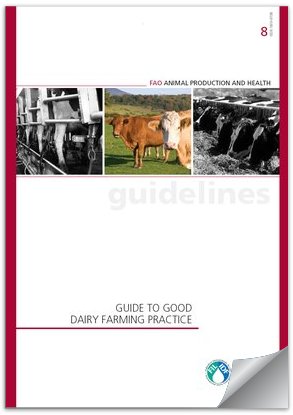
IDF
Guide to Good Dairy Farming Practice (2011)
This second edition
of the Guide to Good Dairy Farming Practice has been developed
by an IDF/FAO Project Group of the IDF Standing Committee
on Farm Management. It has been written in a practical format
for dairy farmers engaged in the production of milk from any
dairy species to support the production and marketing of safe,
quality-assured milk and dairy products.
The Guide focuses
on the relationship between consumer safety and economic,
social and environmental management at the farm level. Dairy
farmers' production systems worldwide need to be able to combine
profitability with the responsibility of protecting human
health, animal health, animal welfare and the environment.
This Guide gives individual dairy farmers proactive guidance
on how these objectives can be achieved on their farm.
The practices that
are suggested have been drawn from best practice guidelines
and existing assurance schemes around the world, and so individual
practices will vary in their applicability to various dairying
regions. They are not intended to be legally binding and readers
are encouraged to select and implement those guidelines that
are of relevance to their situation.
This guide contains
50 pages and can be downloaded here |
|
 |
|
Bulletin
of the IDF No. 450/2011
Determination
of Water Content in Lactose by Karl Fischer Titration – Interlaboratory
collaborative study
The traditional
gravimetric oven drying method for determining water content
in dried dairy products does not give reliable results when
applied to lactose. A Karl Fischer Titration method that determines
molecular water has been developed and tested in an international
collaborative study to establish its precision (repeatability
and reproducibility) for its adoption as an international
standard by IDF and ISO (ISO 12 779 | IDF 227).
Pages: 14 - Paper:
18.00€ - Electronic: 15.00€ |
|
 |
|
Bulletin
of the IDF No. 449/2011
Integrated
Supply Chain Management
The
Bulletin sets out in two chapters how Integrated Chain Management
(ICM) for Food Safety is an important tool in ensuring the
hygienic safety of food products, including milk and milk
products. One chapter sets out the leading principles
of ICM and the second provides the guidelines on integrity
of suppliers' milk and examples of approaches that can be
used to counteract systematic and/or large scale adulteration.
Also
an article setting out the principles of Fourier Infra-Red
Spectroscopy (FITR) and its application to detecting adulteration
of milk.
Pages:
31 - Paper: 45.00€ - Electronic: 40.00€ |
|
 |
|
Bulletin
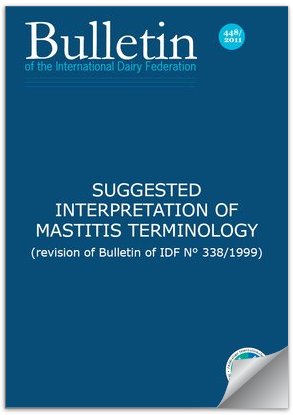
of the IDF No. 448/2011
Suggested
Interpretation of Mastitis Terminology (revision of Bulletin
No 338/1999)
A
guide to unambiguous terms intended to minimise differences
between different countries and facilitate communication between
users of mastitis data. This updates Bulletin 338/1999 and
incorporates improvements in knowledge over the past 12 years.
Pages: 35
- Paper: 45.00€ - Electronic: 40.00€ |
|
 |
|
Bulletin
of the IDF No. 447/2010
New Applications
of Mid Infra-Red Spectrometry for the Analysis of Milk and
Milk Products - Saturated and unsaturated fatty acids
This article on
saturated and unsaturated fatty acids is the next one in a
series of papers about new applications of mid infra-red spectrometry
in the analysis of milk and milk products.
Previous issues
include:
Bulletin 383/2003
- Urea, Freezing Point, pH determination, Lactic acid and
specific sugars
Bulletin 406/2006
- Casein, Free fatty acids
Products with an
higher content of unsaturated fatty acids interest the dairy
sector. Modern analytical and statistical techniques provide
accurate results on the contents of saturated, unsaturated,
mono- and polyunsaturated fatty acids in products from cow,
goat and ewe milk. Mid infra-red spectroscopy with Fourier
Transform Infra-Red technology (FTIR) can be applied as a
screening method, milk payment parameter and as a tool for
optimising dairy cattle feeding.
Pages: 17
- Paper: 25.00€ - Electronic: 20.00 |
|
 |
|
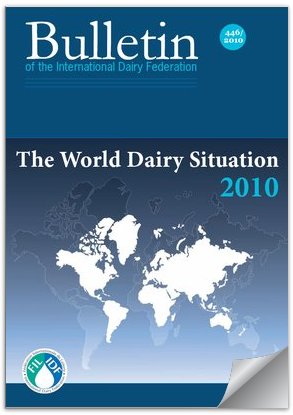
Bulletin
of the IDF No. 446/2010
The World
Dairy Situation 2010
Annual survey presented
at IDF World Dairy Summit, Auckland (NZ), in November 2010.
Production, consumption, trade and price figures from dairy
sector and other sources. Largest dairy companies by turnover
and/or milk intake. Comments and prognoses on the situation
in different countries and analysis of the whole, covering
all major producing and consuming countries. Review of various
forecasts of dairy trade.
Pages: 206 Electronic: 125.00€
|
|
 |
|
Bulletin
of the IDF No. 445/2010
A common
carbon footprint approach for dairy - The IDF guide to standard
lifecycle assessment methodology for the dairy sector - E-form
Creating consistency
and a clear message on the quantification of carbon footprint
is important for the reputation of the world dairy sector
to highlight the high level of engagement that is already
taking place in relation to this issue, and to identify practices
that will further reduce greenhouse gas emissions.
The IDF guide is the first international consensus document
describing a common carbon footprint approach for dairy products
including addressing the common LCA challenges of allocation
to co-products and land use change. The document identifies
the key areas in which there is currently ambiguity or differing
views on approach while it recommends a science-based approach
that can also be inserted into existing or developing methodologies
for practical application in developing and developed dairy
industries across the world. The IDF guide has been developed
in close collaboration and with the active involvement of
the Food and Agriculture Organization of the United Nations
(FAO) and the Sustainable Agriculture Initiative Platform
(SAI Platform).
Pages: 40 - Free
of charge. To download a copy please click here |
|
 |
|
Bulletin
of the IDF No. 444/2010
Feed-associated
Mycotoxins in the Dairy Chain: Occurrence and Control - E-form
Review of current
scientific knowledge about the major mycotoxins of concern
to dairy cattle and dairy products, their occurrence in feedstuffs,
conditions under which they are formed, their metabolism in
cattle and carry-over into milk: information on the risks
of mycotoxins in relation to human food safety and animal
health, current status with respect to legislation and limits
in feed and dairy products including Codex Alimentarius standards,
measures to control mycotoxin contamination of animal feedstuffs
and exposure of animals, analysis and sampling: extensive
bibliography.
Pages: 25 - Paper: 28.00€ -
Electronic: 25.00€ |
|
 |
|
Bulletin
of the IDF No. 443/2010
Environmental
issues at dairy farm level
The dairy sector
worldwide is confronted with a triple challenge – how to feed
an increasingly large human population, how to control the
impact of dairy production on the global environment and,
at the same time, to discover new ways of managing animal
and milk production to achieve these aims. The papers in this
IDF Bulletin provide an overall review of the interaction
between milk production and the environment and possible measures
to minimize the impact of each on the other, and illustrate
the practical steps that can be and are being taken by the
dairy sector in a variety of countries and in relation to
specific environmental issues: air quality, soil quality,
water quality, energy use, pesticide residues.
Pages: 40 - Free
of charge. To download a copy please click here
|
|
 |
|
Bulletin
of the IDF No. 442/2010
Current
situation & compilation of commercially available screening
methods for the detection of inhibitors/antibiotic residues
in milk - E-form
Abstract: The presence or absence of residues of antibiotics
and microbial growth inhibitors in milk is checked routinely
and systematically in all dairy countries. A wide range of
screening test kits is available to the dairy sector for this
purpose. This compilation brings together recent information
on what is available commercially, the analytical principle
of the tests, their limits of detection and their use in practice
(e g, on-farm, in the dairy plant and the control laboratory),
together the background of the regulatory requirements concerning
the minimum levels permitted for the residues in milk.
Pages: 164 - Price:
94 Euro - Date: 2010
|
|
 |
|
Bulletin
of the IDF No. 441/2009
Monitoring
success of paratuberculosis programs Proceedings of 2nd Paratuberculosis
Forum, Minneapolis, August 2009
Paratuberculosis
is an infectious disease that is one of the leading causes
of economic loss to the cattle and small ruminant industries.
The dairy sector (and the beef sector) have studied how to
control and reduce the prevalence and spread of this disease
for many years. The 2nd ParaTB Forum, held in Minneapolis,
Minnesota, USA on 8 August 2009 provided the opportunity to
consider national and regional control and eradication programs
on paratuberculosis in dairy herds with the emphasis on monitoring
the effectiveness ot these programs and analysing the factors
affecting their degree of success.The programs developed in
four different countries, covering a wide variety of dairy
regimes, were reviewed and discussed.
Pages: 41 - Price:
42 Euro - Date: 2009 |
|
 |
|
Bulletin
of the IDF No. 440/2009
Interlaboratory
Collaborative Study on the Kjeldahl Reference Method for Nitrogen
Determination in Sheep and Goat Milk according to ISO 8968-1/2|IDF
20-1/2
The reference method
for determination of nitrogen in milk (International Standard
ISO 8968-1/2|IDF 20-1/2) was subjected to an international
interlaboratory study to establish its precision characteristics
(reproduci-bility, R, and repeatability, r) when the method
is applied to sheep milk and goat milk. This paper is the
report of the interlaboratory studies.
Pages: 24 - Price:
25 Euro - Date: 2009
|
|
 |
|
Bulletin
of the IDF No. 439/2009
Interlaboratory
Collaborative Studies on Reference Method ISO 1211|IDF 1 for
the Determination of the Fat Content in Cow Milk, Sheep Milk
and Goat Milk
The gravimetric
reference method for determination of fat in milk (International
Standard ISO 1211| IDF 1) was subjected to new international
interlaboratory studies to establish its precision characteristics
(reproducibility, R, and repeatability, r). In these new studies
the method was applied to cow whole milk, cow reduced fat
milk and cow skimmed milk and to milk from sheep and goats.
This paper is the report of the interlaboratory studies.
Pages: 34 - Price:
30 Euro - Date: 2009
|
|
 |
|
Bulletin
of the IDF No. 438/2009
The World
Dairy Situation 2009
Annual survey containing
production, consumption, trade and price figures from the
dairy sector and other sources. It also sets out the largest
dairy companies by turnover and by milk intake. This year's
edition also features articles on:
- World Market Perspectives
- the Prospects for Agricultural Markets and Income
in the EU
- the work of the International Farm Comparison Network
in 2008
- Milk Price Developments 1996-2008
- IFCN ranking of milk processors by milk intake
Also contained are
comments and prognoses on the situation in different countries
and analysis of the whole, covering all major producing and
consuming countries, and a review of various forecasts of
dairy trade.
Page: 107 - Price:
75 Euro - Date: 2009 |
|
 |
|
Bulletin
of the IDF No. 437/2009
Effects
of Foot-and-Mouth Disease on the Dairy Industry
Position paper
outlining the effects that an outbreak of Foot-and-Mouth Disease
can have on the dairy industry in any country in the world.
In some countries the dairy industries are complex and integrated,
as most of the milk or milk products produced are destined
for international trade, whereas in other countries most of
the milk and milk products produced are for local consumption.
There are three key issues: FMD is highly infectious and spreads
very rapidly through a population of susceptible dairy animals.
An outbreak will result in severe economic consequences to
dairy producers and processors and the country as a whole;
Control measures are aimed at preventing spread to livestock
as FMD is not a public health issue for human consumers of
milk and milk products.
Page: 11 - Price:
11 Euro - Date: 2009
|
|
 |
|
Bulletin
of the IDF No. 436/2009
Environmental/Ecological
Impact of the Dairy Sector:
Abstract: Literature review on dairy products for an inventory
of key issues
List of environmental initiativess and influences on the dairy
sector.
Survey commissioned
by the IDF with the aims of highlighting the key issues for
the dairy sector based on a literature review focused on Life
Cycle Assessment (LCA) studies and of giving an overview of
initiatives and labels that play a role for the dairy sector
and what they imply for the various industry sectors.
Pages: 60 - Price: Free of charge.
To download a copy please click here
|
|
 |
|
Bulletin
of the IDF No. 435/2009
Standardization
of a Chemiluminescent Method to Detect Alkaline Phosphatase
in Liquid Dairy Products - E-Form
Abstract: Collaborative studies for the IDF/ISO standard:
ISO 22160|IDF 209:2007 - Milk and milk-based drinks - Determination
of alkaline phosphatase activity - Enzymatic photo-activated
system (EPAS) method.
Pages: 14 - Price:
14 Euro - Date: 2009
|
|
 |
|
Bulletin of the IDF No. 434/2009
International
Collaborative Study on the Gas-Liquid Chromatographic Method
for the Determination of Milk Fat Purity in Milk and Milk
Products by Analysis of Triglycerides - Draft international
standard ISO 17678|IDF 202 - E-Form
Adulteration with
cheaper fats of milkfat naturally present in pure milk products
is not a new problem but the methods of analysis available
to detect adulteration and determine its extent have only
been sufficiently sensitive to carry out the task satisfactorily
relatively recently. A new draft International standard has
been produced by IDF and ISO (ISO 17678|IDF 202) based on
the gas chromatographic analysis of triglycerides (TG), separated
by carbon number, and the derivation of TG equations from
the data using multivariate statistics. A combination of the
results of TG contents is used for the detection of different
kinds of foreign fat in pure milk products. The new method
also covers recent improvements in the analytical technique.
The international collaborative study conducted to determine
figures for the repeatability (r) and reproducibility (R)
applicable to milkfat in products from a wide range of geographical
origins is described and the newly-determined precision figures
are given for fire TG equations being differently sensitive
for a wide range of adulterant fats.
Pages: 19 - Price:
18 Euro - Date: 2009
|
|
 |
|
Bulletin
of the IDF No. 433/2009
A Revolution
in Food Safety Management - E-Form
Proceedings of
the IDF/FAO Symposium “A Revolution in Food Safety Management
– Practical implementation in the dairy product chain”, Bali
(ID), 13-15 February 2008. Papers are related to charting
a new course in food safety with the development and implementation
of risk-based metrics; incorporating risk-based metrics in
HACCP plans; getting to grips with pathogens; practices, perception
and role of risk management & risk communication.
Pages: 108 - Price:
70 Euro - Date: 2009
|
|
 |
|
Bulletin
No. 432/2008
The World
Dairy Situation 2008 - E-Form
Annual survey containing
production, consumption, trade and price figures as well as
comments and prognoses on the situation in different countries.
Also articles on the prospects for agricultural markets and
income in the EU, world market perspectives and an analysis
by the Internaitonal Farm Comparison Network (IFCN) of carbon
footprints in dairy farming.
Pages:
95 - Price: 75 Euros
|
|
 |
|
Bulletin
No. 431/2008
Dioxin and
PCB Levels in Milk - E-Form
A document based
on replies to IDF questionnaire 3002/SCRCC – Dioxin/PCB levels
in milk. Since the health concerns peaks of the late 90's,
the dioxin and related compounds issue has evolved in most
of the developed countries. Due to its rapid transfer to the
food chain, the key to reduce human exposure to PCDDs/PCDFs
is to reduce the releases into the environment. Through regulation
and voluntary efforts, releases of dioxin to the environment,
and particularly where milk is concerned, have been dramatically
reduced.
Pages: 20 - Price: 19 Euros |
|
 |
|
Bulletin
of the IDF No. 484/2016 - Proceedings of the 5th Paratuberculosis Forum - Nantes, France, 19 June 2016
Pages 75 – Paper 185€ - Electronic 85€
|
|
|
|
Bulletin
of the IDF No. 483/2016 - Fluorimetric Method for the Determination of Alkaline Phosphatase Activity in Cow's Milk Cheese: Interlaboratory Collaborative Study
This article presents the results of a collaborative study conducted to generate precision data for the revised International Standard ISO 11816-2|IDF 155-2, the fluorimetric method for the determination of alkaline phosphatase (ALP) activity in cheese.
Pages 21 – Paper 125€ - Electronic 25€
|
|
|
|
Bulletin
of the IDF No. 482/2016 - Evaluation of nitrogen conversion
factors for dairy and soy
This Bulletin reviews
the scientific literature pertaining to nitrogen conversion
factors (NCFs) for dairy products and soy products. It presents
substantial scientific evidence that supports the use of a
specific NCF of 6.38 for milk protein and of 5.71 for soy
protein, rather than a single inaccurate factor of 6.25.
Pages 38– This Bulletin is free
of charge and can be downloaded here |
|
|
|
Bulletin
of the IDF No. 481/2015 – The World Dairy Situation
2015
This authoritative publication contains chapters on milk production,
milk processing, developments in the dairy industry in 2014/15,
consumption, world dairy trade and prices. The Bulletin also
features reports on 54 of the major producing and consuming
countries containing statistical information and key developments
as well as their main processors. There is also a statistical
annex containing tables on dairy farming, processing, trade,
consumption and prices.
Pages: 252 - Electronic: 250.00€
|
|
|
|
Bulletin
of the IDF No. 480/2015 – The Contribution of School
Milk Programmes to the Nutrition of Children Worldwide
Conducted jointly by FAO and IDF, with the support of Tetra
Laval, this survey is the largest of its kind in many years.
It provides an in-depth look at school milk programmes in
the Americas, Asia, Africa, Australia and Europe.
The 57 countries who participated in the survey supplied a
large amount of information on consumption, programme structure,
nutrition, promotion, packaging, market value, administration
and distribution.
Pages 80 – This Bulletin is free of charge and can be
downloaded here
|
|
|
|
Bulletin
of the IDF No. 479/2015 - A common carbon footprint approach
for the dairy sector: The IDF guide to standard life cycle
assessment methodology
In 2010, Bulletin 445/2010 (the first edition of ‘A
Common Carbon Footprint Approach for Dairy: The IDF Guide
to Standard Life Cycle Assessment Methodology for the Dairy
Sector”) was published. The guide has now been reviewed
and revised to reflect evolving science and standards in carbon
footprint methodology and this Bulletin replaces Bulletin
445.
Pages 80 – This Bulletin is free of charge and can be
downloaded here
|
|
|
|
Bulletin
of the IDF No. 478/2015 - Interlaboratory collaborative study
on a flow cytometry method for lactic acid bacteria quantification
in starter cultures, probiotics and fermented milk products
according to ISO 19344/IDF 232
This article presents the report and results of the international
collaborative study conducted to validate the international
standard ISO 19344 / IDF 232, Milk and milk products –
Starter cultures, probiotics, and fermented products –
Quantification of lactic acid bacteria by flow cytometry.
Pages 48 – Paper 60.00€ - Electronic 54.00€
|
|
|
|
Bulletin
of the IDF No. 477/2014 – Determination of hen’s
egg white lysozyme in milk and cheese – Interlaboratory
collaborative study.
This article presents
the results of an international collaborative study conducted
to validate previous technical specifications for the measurement
of lysozyme in cheese.
Pages: 29 - Paper: 35.00€ - Electronic: 32.00€
|
|
|
|
Bulletin
of the IDF No. 476/2014 – The World Dairy Situation
2014
This authoritative
publication contains a wealth of data on the production, consumption,
retail prices and trade for dairy products as well as statistics
showing the number of dairy farms and dairy cows up to the
2013 calendar year. Analysis of these sectors is also presented
in a number of chapters and the Bulletin also features reports
on 50 of the major producing and consuming countries containing
statistical information and key developments as well as their
main processors.
Pages: 230 - Electronic: 125.00€
|
|
|
|
Bulletin
of the IDF No. 475/2014 - Proceedings
of the 4th Paratuberculosis Forum - Parma, Italy, 21 June
2014
This
publication contains seventeen papers written by representatives
of national and regional Johne’s disease control programmes
on the lessons learnt through their implementation. The papers
were presented and discussed at the 4th Paratuberculosis Forum
in Parma, Italy, on the 21 June 2014 at the offices of the
European Food Safety Authority and attended by participants
from 16 countries.
Presentations cover a variety of approaches to manage Johne’s
disease, from compulsory regulations targeting clinical disease
to voluntary industry programmes aimed at reducing economic
impact and supporting the production of high quality milk.
A common theme was the integration of various testing strategies
with important hygiene measures to prevent new infections.
The papers highlight the successes and challenges and the
importance of communications and incentives to maintain farmer
engagement and cooperation, in order to ensure Johne’s
disease control programmes are more effective in the future.
Pages:
103 - Paper: 125.00€ - Electronic: 114.00€
|
|
|
|
Bulletin
of the IDF No. 474/2014 - Detecting antibiotic
residues in milk - Guidance on the application of screening
and confirmatory methods in integrated dairy chain management
The document provides
tools that can be implemented at any level of the dairy chain
and can help in choosing the most suitable method. Sampling
good practices, recommendations for sample storage, advantages
and disadvantages of available methods and procedures applied
to validate the tests are all discussed and the document ends
with examples of applied strategies in different countries.
Pages: 35 - Paper: 45.00€
- Electronic: 39.00€ |
|
|
|
Bulletin
of the IDF No. 473/2014 - Compilation of some presentations
from the IDF World Dairy Summit 2013
This Bulletin contains
thirteen papers presented at conferences during the IDF World
Dairy Summit
in Yokohama (Japan)
from 28 October to 1 November 2013. The conferences topics
were Children and
milk, Animal health
and welfare, Dairy farming, Nutrition and health, Marketing,
Environment and Food
safety.
This bulletin contains
99 pages, is free of charge and can be downloaded here.
|
|
|
|
Bulletin
of the IDF No. 472/2014 - Posters presented at
the IDF World Dairy Summit 2013
This Bulletin contains
fifteen posters presented during the IDF World Dairy Summit
in Yokohama, Japan from 28 October to 1 November 2013.
The articles cover
a wide range of topics: from probiotics, manufacturing processes,
contaminant analysis and the dairy industry in Japan to issues
affecting the environmental impact of dairy farming.
Pages: 119 - Paper: 149.00€
- Electronic: 132.00€ |
|
|
|
Bulletin
of the IDF No. 471/2014 - Detection of
inhibitors and antimicrobial residues in milk and dairy products
by screening methods - Guidance on preparation of the test
portion.
Treatment of lactating
cows with antimicrobial agents can result in the presence
of drug residues in milk. Tests available for the screening
of antimicrobial residues have been developed, and often validated,
on raw milk and are not immediately applicable to dairy products
such as whole milk powder, skimmed milk powder, whey, condensed
milk, buttermilk, etc. Many dairy products require special
preparation before they can be used in screening procedures
routinely used for raw milk.
This article presents
ways of preparing various dairy products to obtain appropriate
test samples.
Detailed procedures
are given for the reconstitution of dried samples such as
milk powder and for the preparation of samples of cream, butter,
yogurt and cheese. Particular attention is paid to the dilution
necessary for test samples of various types.
Pages: 12–
Paper 12.00€ – Electronic 9.00€ |
|
|
|
Bulletin
of the IDF No. 470/2013 - The World Dairy Situation 2013
Annual survey presented at IDF World Dairy Summit, Yokohama
(Japan), in October/November 2013. Production, consumption,
trade and price figures from dairy sector and other sources.
Largest dairy companies by turnover and/or milk intake. Comments
and prognoses on the situation in different countries and
analysis of the whole, covering all major producing and consuming
countries. Review of various forecasts of dairy trade.
Pages: 237 – Paper 125.00€ – Electronic 95.00€
|
|
|
|
Bulletin
of the IDF No. 469/2013 - Requirements for Reference Materials
for the Calibration of Automated Somatic Cell Counters
Report produced of an international project focusing on analytical
harmonisation in somatic cell counting, managed by the International
Dairy Federation (IDF) and the International Committee for
Animal Recording (ICAR) and providing guidance for the production
of suitable reference materials for somatic cell counting
according to ISO 13366-2 | IDF 148-2.
Pages: 34 – Paper 42.00€ – Electronic 38.00€
|
|
|
|
Bulletin
of the IDF No. 468/2013 - Interlaboratory collaborative study
of a method for the determination of nitrogenous fractions
in cheese-ISO 27871/IDF224
Results of an international collaborative study conducted
to establish precision figures for the determination of nitrogenous
fractions in cheese.
Pages: 9 – Paper 12.00€ – Electronic 10.00€
|
|
|
|
Bulletin
of the IDF No. 467/2013 - Collaborative study of ISO 26323/IDF
213 on determination of the acidification activity of dairy
cultures by continuous pH measurement (CpH)
This report compiles the results of an international collaborative
study conducted to establish precision figures for the determination
of acidification activity of dairy cultures by continuous
pH measurement with the method described in ISO 26323|IDF
213.
Pages: 11 - Paper: 15.00€ - Electronic: 12.00€
|
|
|
|
Bulletin
of the IDF No. 466/2013 - Guidelines for the use and interpretation
of bovine milk somatic cell counts (SCC) in the dairy industry
Somatic cell count (SCC) is the most frequently used indicator
of udder health in dairy cows. This article looks at the scientific
and practical aspects of determining the SCC in milk and how
the counts can vary.
Pages: 14 - Paper: 20.00€ - Electronic:
16.00€
|
|
|
|
Bulletin
of the IDF No. 465/2013 - Identification and assessment
of emerging issues associated with chemical contaminants in
dairy products
The Brazilian Ministry
of Agriculture, Livestock and Supply has expanded its monitoring
of residues
of antibiotics, antiparasitics
and other substances in animal products in order to identify
whether
the levels of such
substances are at safe concentrations for human consumption.
A new national
program (RENARA) for
identifying and managing the risks associated with the presence
of residues and
contaminants in food
is outlined
This bulletin contains
11 pages, is free of charge and can be downloaded here.
|
|
|
|
Bulletin
of the IDF No. 464/2013
Emerging
Dairy Sector Conference, IDF World Dairy Summit 2012 - Cape
Town, South Africa - October 2012
This publication
comprises two papers presented at the Emerging Dairy Sector
Conference during the IDF World Dairy Summit in Cape Town,
South Africa in October 2012:
- Dairy: nutritional value for money for South African consumers
- The benefits of animal welfare for farmers and the environment
in emerging economies
This bulletin contains
28 pages, is free of charge and can be downloaded here.
|
|
|
|
Bulletin
of the IDF No. 463/2013
Proceedings
of The Nutrition and Health Conference, IDF World Dairy Summit
2012-Cape Town, South Africa-October 2012
This publication
contains six presentations and one poster presented at the
Nutrition and Health Conference during the IDF World Dairy
Summit in Cape Town, South Africa in October 2012.
Presentations included:
- Dairy's role in sustainable diets
- The DASH diet: a diet with a focus on dairy
- The benefits of milk and dairy consumption: addressing
misconceptions about dairy and vascular disease
- Can consumption of milk and milk products be an aid to
body weight regulation?
- Dairy components in therapeutic foods for malnutrition
result in improved clinical outcomes
- Dairy protein and muscle maintenance in the elderly
Paper presented:
- Metabolic effect of milk and fermented milk on parathyroid
hormone response and bone metabolism
Pages: 64 - Paper:
60.00 € - Electronic: 55.00€
|
|
|
|
Bulletin
of the IDF No. 462/2013
Identification
of probiotics at strain level - Guidance document
Correct assignment
of probiotic strains to species or sub-species is indispensable
for evaluating the genetic background of the micro-organisms
the probiotic properties are imbedded in. Strain identification,
based on typing methods, is described. The methods, however,
are limited to only allowing to demonstrate identity or non-identity
of the strain in question with that of a given probiotic strain.
The authors emphasize the need for care in interpreting the
results and the use of all available peripheral information
in reaching a conclusion.
Pages: 12 - Paper: 15.00€ - Electronic: 12.00€
|
|
|
|
IDF
Guide to Prudent Use of Antimicrobial Agents in Dairy Production
This Guide aims to provide a framework to support the responsible
use of antimicrobial agents on dairy farms and provides examples
of recommended practices in their regulation, supply and use.
It also stresses the need for a whole supply chain approach
to ensure food safety.
This bulletin contains 53 pages, is free of charge and can
be downloaded here.
|
|
|
|
Bulletin
of the IDF No.461/2013
Collaborative
Studies on Methods to Determine Enzyme Activity in Cheese
Making
Three different collaborative studies on the activities and
compositions of different enzyme preparations in cheese making
are presented in this issue of the Bulletin of IDF.
The methods studied were: Microbial Coagulants – Determination
of total milk-clotting activity (ISO 15174 | IDF 176), Calf
rennet and adult bovine rennet – Determination by chromatography
of chymosin and bovine pepsin contents (ISO 15163 | IDF 110)
and the draft version of the method Milk and milk products
– Determination of the lipase activity of pregastric
lipase preparation (ISO 13082 | IDF 218).
Pages: 21 – Paper €28 – Electronic €25
|
|
|
|
Bulletin
of the IDF No. 460/2012
Proceedings
of the 3rd ParaTB Forum
This publication
contains fourteen papers written by representatives of national
and regional Johne’s disease control programmes on the
lessons learnt throughout their implementation. The majority
were presented at the 3rd ParaTB Forum in Sydney, Australia,
on 4 February 2012. Each report provides details of the control
programme in question – the resources available, the
strategies implemented, and a measure of its success.
Pages: 68 –
Paper €80 – Electronic €75 |
|
|
|
Bulletin
of the IDF No. 459/2012
Collaborative
Study on the Kjeldahl Reference Method for Nitrogen Determination
of Dried Dairy Products according to ISO 8968-1/2/ IDF 20-1/2
Results of an international
collaborative study conducted to establish precision figures
for the determination of Kjeldahl nitrogen in milk powders,
milk protein concentrate, whey protein concentrate, casein,
caseinate and infant formulas in order to extend the scope
of ISO 8968-1/2¦IDF 20-1/2. Twenty eight powder samples, with
a range of crude protein content, varying between 11.7 and
92.4%(m/m), were prepared and dispatched to the participating
laboratories as blind duplicates.
The report gives
details of the techniques required to optimise digestion procedures
to obtain the maximum nitrogen result for each sample type.
The statistical analysis of the results gave a repeatability
value, r, of 0.7% of the mean result and a reproducibility
value, R, of 1.3% of the result obtained.
Pages: 14 – Paper €20 – Electronic
€17 |
|
|
|
Bulletin
of the IDF No. 458/2012
The World
Dairy Situation 2012
Annual survey presented
at IDF World Dairy Summit, Cape Town (South Africa), in November
2012. Production, consumption, trade and price figures from
dairy sector and other sources. Largest dairy companies by
turnover and/or milk intake. Comments and prognoses on the
situation in different countries and analysis of the whole,
covering all major producing and consuming countries. Review
of various forecasts of dairy trade.
Pages:235 - Electronic:
125.00€
|
|
|
|
Bulletin
of the IDF No. 457/2012
Proceedings
of the IDF World Dairy Summit 2011 Parma, Italy, 12-19 Ocotber
2011
This
Bulletin presents a collection of papers from conferences
during the IDF World Dairy Summit in Parma, Italy, in October
2011. Conferences covered include Animal Feeding, Animal Health,
Dairy Policies and Nutrition.
This
bulletin contains 108 pages and can be downloaded here |
|
|
|
Bulletin
of the IDF No. 456/2012
Interlaboratory
trial on the Potentiometric Method for the Determination of
Titratable Acidity in Fermented Milks according to ISO/TS
11869 | IDF/RM 150
Results and statistical
analysis of an interlaboratory trial to establish the repeatablity
of the international standard method for determining the titratable
acidity of a variety of fermented milks, including yogurt,
drinking yogurt, fermented milk, fermented buttermilk and
fresh cheese with varying fat contents and with or without
added flavours and fruits.
Pages: 10 - Paper : 15.00€ - Electronic:
12.00€ |
|
|
|
Bulletin
of the IDF No. 455/2012
Safety Demonstration
of Microbial Food Cultures (MFC) in Fermented Milk Products
Revision of the
previous 2002 IDF inventory of microorganisms with technological
beneficial use in food fermentations. The scope of the current
approach has been widened to microorganisms with a role in
fermentations in a wider range of food matrices (dairy, meat,
fish, vegetables, cereals, beverages, and vinegar) and in
traditional food products worldwide.
While the rationale
has been peer reviewed and published in the International
Journal of Food Microbiology, IDF proposes now a more applicable
demonstration for food business operators and competent authorities.
This
bulletin contains 66 pages and can be downloaded here
|
|
|
|
Bulletin
of the IDF No. 454/2012
Air Emissions from Dairy Processing
and Energy Plants
The report presents an overview of definitions,
sources, legal requirements, and technical solutions for air
emission control in dairy processing and control of dust
emissions from energy supply plants in dairy production.
This paper highlights the fact that, while the dairy industry
contributes to dust emissions, it is not a significant source
in global terms.
Furthermore, the report demonstrates the capacity of technological
solutions such as cyclones, wet filters and tubular filters
to reduce these emissions from powder drying plants.
The report also shows that the choice of fuel/energy source
can have a significant influence on dust/particulate emission
from energy supply plants and illustrates the different influences
resulting from such choices.
Pages: 27 - Free of charge.
To download a copy please click
here
|
|
|
|
Bulletin
of the IDF No. 453/2012
Guidance
for the evaluation of precision characteristics of physicochemical
quantitative analytical methods for milk and milk products
Guidance for dairy
analysts in applying ISO 5725 - Accuracy (trueness and precision)
of measurement methods and results. Design of, and statistical
treatment of, results from interlaboratory collaborative studies
on chemical and physical methods of analysis for dairy products.
Handling and characteristics of samples, identification and
treatment of abnormal values, flowchart for decision making,
uncertainty relating to data, comparison of precision figures,
meta-analyses.
Pages: 55 - Paper
70.00€ - Electronic 65.00€ |
|
|
|
Bulletin
of the IDF No. 452/2011
Collaborative
Study on Nitrate in Milk and Milk Products using a Method
by Enzymatic Reduction and Photometric Determination after
Griess Reaction (International Standard ISO 20541 | IDF 197)
An alternative method
for determining the content of nitrate in milk and milk products
that does not involve any reagent that can have a negative
effect of the environment has been developed (ISO 20541 |
IDF 197) and tested in an international interlaboratory study
to establish its precision (repeatability and reproducibility).
This report describes the interlaboratory study and gives
the results in full.
Pages: 35 - Paper 36.00€ - Electronic 32.00€
|
|
|
|
Bulletin
of the IDF No. 451/2011
The World
Dairy Situation 2011
Annual survey containing
statistics on production, consumption, trade and price figures
from dairy sector and other sources. Largest dairy companies
by turnover and/or milk intake. Comments and prognoses on
the situation in different countries and analysis of the whole,
covering all major producing and consuming countries. Review
of various forecasts of dairy trade.
Pages: 225
Electronic: 125.00€
|
|
|
|
IDF
Guide to Good Dairy Farming Practice (2011)
This second edition
of the Guide to Good Dairy Farming Practice has been developed
by an IDF/FAO Project Group of the IDF Standing Committee
on Farm Management. It has been written in a practical format
for dairy farmers engaged in the production of milk from any
dairy species to support the production and marketing of safe,
quality-assured milk and dairy products.
The Guide focuses
on the relationship between consumer safety and economic,
social and environmental management at the farm level. Dairy
farmers' production systems worldwide need to be able to combine
profitability with the responsibility of protecting human
health, animal health, animal welfare and the environment.
This Guide gives individual dairy farmers proactive guidance
on how these objectives can be achieved on their farm.
The practices that
are suggested have been drawn from best practice guidelines
and existing assurance schemes around the world, and so individual
practices will vary in their applicability to various dairying
regions. They are not intended to be legally binding and readers
are encouraged to select and implement those guidelines that
are of relevance to their situation.
This guide contains
50 pages and can be downloaded here |
|
|
|
Bulletin
of the IDF No. 450/2011
Determination
of Water Content in Lactose by Karl Fischer Titration – Interlaboratory
collaborative study
The traditional
gravimetric oven drying method for determining water content
in dried dairy products does not give reliable results when
applied to lactose. A Karl Fischer Titration method that determines
molecular water has been developed and tested in an international
collaborative study to establish its precision (repeatability
and reproducibility) for its adoption as an international
standard by IDF and ISO (ISO 12 779 | IDF 227).
Pages: 14 - Paper:
18.00€ - Electronic: 15.00€ |
|
|
|
Bulletin
of the IDF No. 449/2011
Integrated
Supply Chain Management
The
Bulletin sets out in two chapters how Integrated Chain Management
(ICM) for Food Safety is an important tool in ensuring the
hygienic safety of food products, including milk and milk
products. One chapter sets out the leading principles
of ICM and the second provides the guidelines on integrity
of suppliers' milk and examples of approaches that can be
used to counteract systematic and/or large scale adulteration.
Also
an article setting out the principles of Fourier Infra-Red
Spectroscopy (FITR) and its application to detecting adulteration
of milk.
Pages:
31 - Paper: 45.00€ - Electronic: 40.00€ |
|
|
|
Bulletin
of the IDF No. 448/2011
Suggested
Interpretation of Mastitis Terminology (revision of Bulletin
No 338/1999)
A
guide to unambiguous terms intended to minimise differences
between different countries and facilitate communication between
users of mastitis data. This updates Bulletin 338/1999 and
incorporates improvements in knowledge over the past 12 years.
Pages: 35
- Paper: 45.00€ - Electronic: 40.00€ |
|
|
|
Bulletin
of the IDF No. 447/2010
New Applications
of Mid Infra-Red Spectrometry for the Analysis of Milk and
Milk Products - Saturated and unsaturated fatty acids
This article on
saturated and unsaturated fatty acids is the next one in a
series of papers about new applications of mid infra-red spectrometry
in the analysis of milk and milk products.
Previous issues
include:
Bulletin 383/2003
- Urea, Freezing Point, pH determination, Lactic acid and
specific sugars
Bulletin 406/2006
- Casein, Free fatty acids
Products with an
higher content of unsaturated fatty acids interest the dairy
sector. Modern analytical and statistical techniques provide
accurate results on the contents of saturated, unsaturated,
mono- and polyunsaturated fatty acids in products from cow,
goat and ewe milk. Mid infra-red spectroscopy with Fourier
Transform Infra-Red technology (FTIR) can be applied as a
screening method, milk payment parameter and as a tool for
optimising dairy cattle feeding.
Pages: 17
- Paper: 25.00€ - Electronic: 20.00 |
|
|
|
Bulletin
of the IDF No. 446/2010
The World
Dairy Situation 2010
Annual survey presented
at IDF World Dairy Summit, Auckland (NZ), in November 2010.
Production, consumption, trade and price figures from dairy
sector and other sources. Largest dairy companies by turnover
and/or milk intake. Comments and prognoses on the situation
in different countries and analysis of the whole, covering
all major producing and consuming countries. Review of various
forecasts of dairy trade.
Pages: 206 Electronic: 125.00€
|
|
|
|
Bulletin
of the IDF No. 445/2010
A common
carbon footprint approach for dairy - The IDF guide to standard
lifecycle assessment methodology for the dairy sector - E-form
Creating consistency
and a clear message on the quantification of carbon footprint
is important for the reputation of the world dairy sector
to highlight the high level of engagement that is already
taking place in relation to this issue, and to identify practices
that will further reduce greenhouse gas emissions.
The IDF guide is the first international consensus document
describing a common carbon footprint approach for dairy products
including addressing the common LCA challenges of allocation
to co-products and land use change. The document identifies
the key areas in which there is currently ambiguity or differing
views on approach while it recommends a science-based approach
that can also be inserted into existing or developing methodologies
for practical application in developing and developed dairy
industries across the world. The IDF guide has been developed
in close collaboration and with the active involvement of
the Food and Agriculture Organization of the United Nations
(FAO) and the Sustainable Agriculture Initiative Platform
(SAI Platform).
Pages: 40 - Free
of charge. To download a copy please click here |
|
|
|
Bulletin
of the IDF No. 444/2010
Feed-associated
Mycotoxins in the Dairy Chain: Occurrence and Control - E-form
Review of current
scientific knowledge about the major mycotoxins of concern
to dairy cattle and dairy products, their occurrence in feedstuffs,
conditions under which they are formed, their metabolism in
cattle and carry-over into milk: information on the risks
of mycotoxins in relation to human food safety and animal
health, current status with respect to legislation and limits
in feed and dairy products including Codex Alimentarius standards,
measures to control mycotoxin contamination of animal feedstuffs
and exposure of animals, analysis and sampling: extensive
bibliography.
Pages: 25 - Paper: 28.00€ -
Electronic: 25.00€ |
|
|
|
Bulletin
of the IDF No. 443/2010
Environmental
issues at dairy farm level
The dairy sector
worldwide is confronted with a triple challenge – how to feed
an increasingly large human population, how to control the
impact of dairy production on the global environment and,
at the same time, to discover new ways of managing animal
and milk production to achieve these aims. The papers in this
IDF Bulletin provide an overall review of the interaction
between milk production and the environment and possible measures
to minimize the impact of each on the other, and illustrate
the practical steps that can be and are being taken by the
dairy sector in a variety of countries and in relation to
specific environmental issues: air quality, soil quality,
water quality, energy use, pesticide residues.
Pages: 40 - Free
of charge. To download a copy please click here
|
|
|
|
Bulletin
of the IDF No. 442/2010
Current
situation & compilation of commercially available screening
methods for the detection of inhibitors/antibiotic residues
in milk - E-form
Abstract: The presence or absence of residues of antibiotics
and microbial growth inhibitors in milk is checked routinely
and systematically in all dairy countries. A wide range of
screening test kits is available to the dairy sector for this
purpose. This compilation brings together recent information
on what is available commercially, the analytical principle
of the tests, their limits of detection and their use in practice
(e g, on-farm, in the dairy plant and the control laboratory),
together the background of the regulatory requirements concerning
the minimum levels permitted for the residues in milk.
Pages: 164 - Price:
94 Euro - Date: 2010
|
|
|
|
Bulletin
of the IDF No. 441/2009
Monitoring
success of paratuberculosis programs Proceedings of 2nd Paratuberculosis
Forum, Minneapolis, August 2009
Paratuberculosis
is an infectious disease that is one of the leading causes
of economic loss to the cattle and small ruminant industries.
The dairy sector (and the beef sector) have studied how to
control and reduce the prevalence and spread of this disease
for many years. The 2nd ParaTB Forum, held in Minneapolis,
Minnesota, USA on 8 August 2009 provided the opportunity to
consider national and regional control and eradication programs
on paratuberculosis in dairy herds with the emphasis on monitoring
the effectiveness ot these programs and analysing the factors
affecting their degree of success.The programs developed in
four different countries, covering a wide variety of dairy
regimes, were reviewed and discussed.
Pages: 41 - Price:
42 Euro - Date: 2009 |
|
|
|
Bulletin
of the IDF No. 440/2009
Interlaboratory
Collaborative Study on the Kjeldahl Reference Method for Nitrogen
Determination in Sheep and Goat Milk according to ISO 8968-1/2|IDF
20-1/2
The reference method
for determination of nitrogen in milk (International Standard
ISO 8968-1/2|IDF 20-1/2) was subjected to an international
interlaboratory study to establish its precision characteristics
(reproduci-bility, R, and repeatability, r) when the method
is applied to sheep milk and goat milk. This paper is the
report of the interlaboratory studies.
Pages: 24 - Price:
25 Euro - Date: 2009
|
|
|
|
Bulletin
of the IDF No. 439/2009
Interlaboratory
Collaborative Studies on Reference Method ISO 1211|IDF 1 for
the Determination of the Fat Content in Cow Milk, Sheep Milk
and Goat Milk
The gravimetric
reference method for determination of fat in milk (International
Standard ISO 1211| IDF 1) was subjected to new international
interlaboratory studies to establish its precision characteristics
(reproducibility, R, and repeatability, r). In these new studies
the method was applied to cow whole milk, cow reduced fat
milk and cow skimmed milk and to milk from sheep and goats.
This paper is the report of the interlaboratory studies.
Pages: 34 - Price:
30 Euro - Date: 2009
|
|
|
|
Bulletin
of the IDF No. 438/2009
The World
Dairy Situation 2009
Annual survey containing
production, consumption, trade and price figures from the
dairy sector and other sources. It also sets out the largest
dairy companies by turnover and by milk intake. This year's
edition also features articles on:
- World Market Perspectives
- the Prospects for Agricultural Markets and Income
in the EU
- the work of the International Farm Comparison Network
in 2008
- Milk Price Developments 1996-2008
- IFCN ranking of milk processors by milk intake
Also contained are
comments and prognoses on the situation in different countries
and analysis of the whole, covering all major producing and
consuming countries, and a review of various forecasts of
dairy trade.
Page: 107 - Price:
75 Euro - Date: 2009 |
|
|
|
Bulletin
of the IDF No. 437/2009
Effects
of Foot-and-Mouth Disease on the Dairy Industry
Position paper
outlining the effects that an outbreak of Foot-and-Mouth Disease
can have on the dairy industry in any country in the world.
In some countries the dairy industries are complex and integrated,
as most of the milk or milk products produced are destined
for international trade, whereas in other countries most of
the milk and milk products produced are for local consumption.
There are three key issues: FMD is highly infectious and spreads
very rapidly through a population of susceptible dairy animals.
An outbreak will result in severe economic consequences to
dairy producers and processors and the country as a whole;
Control measures are aimed at preventing spread to livestock
as FMD is not a public health issue for human consumers of
milk and milk products.
Page: 11 - Price:
11 Euro - Date: 2009
|
|
|
|
Bulletin
of the IDF No. 436/2009
Environmental/Ecological
Impact of the Dairy Sector:
Abstract: Literature review on dairy products for an inventory
of key issues
List of environmental initiativess and influences on the dairy
sector.
Survey commissioned
by the IDF with the aims of highlighting the key issues for
the dairy sector based on a literature review focused on Life
Cycle Assessment (LCA) studies and of giving an overview of
initiatives and labels that play a role for the dairy sector
and what they imply for the various industry sectors.
Pages: 60 - Price: Free of charge.
To download a copy please click here
|
|
|
|
Bulletin
of the IDF No. 435/2009
Standardization
of a Chemiluminescent Method to Detect Alkaline Phosphatase
in Liquid Dairy Products - E-Form
Abstract: Collaborative studies for the IDF/ISO standard:
ISO 22160|IDF 209:2007 - Milk and milk-based drinks - Determination
of alkaline phosphatase activity - Enzymatic photo-activated
system (EPAS) method.
Pages: 14 - Price:
14 Euro - Date: 2009
|
|
|
|
Bulletin of the IDF No. 434/2009
International
Collaborative Study on the Gas-Liquid Chromatographic Method
for the Determination of Milk Fat Purity in Milk and Milk
Products by Analysis of Triglycerides - Draft international
standard ISO 17678|IDF 202 - E-Form
Adulteration with
cheaper fats of milkfat naturally present in pure milk products
is not a new problem but the methods of analysis available
to detect adulteration and determine its extent have only
been sufficiently sensitive to carry out the task satisfactorily
relatively recently. A new draft International standard has
been produced by IDF and ISO (ISO 17678|IDF 202) based on
the gas chromatographic analysis of triglycerides (TG), separated
by carbon number, and the derivation of TG equations from
the data using multivariate statistics. A combination of the
results of TG contents is used for the detection of different
kinds of foreign fat in pure milk products. The new method
also covers recent improvements in the analytical technique.
The international collaborative study conducted to determine
figures for the repeatability (r) and reproducibility (R)
applicable to milkfat in products from a wide range of geographical
origins is described and the newly-determined precision figures
are given for fire TG equations being differently sensitive
for a wide range of adulterant fats.
Pages: 19 - Price:
18 Euro - Date: 2009
|
|
|
|
Bulletin
of the IDF No. 433/2009
A Revolution
in Food Safety Management - E-Form
Proceedings of
the IDF/FAO Symposium “A Revolution in Food Safety Management
– Practical implementation in the dairy product chain”, Bali
(ID), 13-15 February 2008. Papers are related to charting
a new course in food safety with the development and implementation
of risk-based metrics; incorporating risk-based metrics in
HACCP plans; getting to grips with pathogens; practices, perception
and role of risk management & risk communication.
Pages: 108 - Price:
70 Euro - Date: 2009
|
|
|
|
Bulletin
No. 432/2008
The World
Dairy Situation 2008 - E-Form
Annual survey containing
production, consumption, trade and price figures as well as
comments and prognoses on the situation in different countries.
Also articles on the prospects for agricultural markets and
income in the EU, world market perspectives and an analysis
by the Internaitonal Farm Comparison Network (IFCN) of carbon
footprints in dairy farming.
Pages:
95 - Price: 75 Euros
|
|
|
|
Bulletin
No. 431/2008
Dioxin and
PCB Levels in Milk - E-Form
A document based
on replies to IDF questionnaire 3002/SCRCC – Dioxin/PCB levels
in milk. Since the health concerns peaks of the late 90's,
the dioxin and related compounds issue has evolved in most
of the developed countries. Due to its rapid transfer to the
food chain, the key to reduce human exposure to PCDDs/PCDFs
is to reduce the releases into the environment. Through regulation
and voluntary efforts, releases of dioxin to the environment,
and particularly where milk is concerned, have been dramatically
reduced.
Pages: 20 - Price: 19 Euros |
|
|
|
Bulletin
of the IDF No. 485/2016 -The World Dairy Situation 2016
This authoritative publication contains chapters on milk production,
milk processing, developments in the dairy industry in 2015/16,
consumption, world dairy trade and prices. The Bulletin also
features an overview of the Dairy Sector in the Netherlands and reports on 54 of the major producing and consuming
countries containing statistical information and key developments
as well as their main processors. Additional chapters cover the Dairy Leaders in Different World Regions, Dynamics in World Trade and Global Marketing Trends. There is also a statistical
annex containing tables on dairy farming, processing, trade,
consumption and prices.
Pages 259 – Paper 600€ - Electronic 500€
|
|
 |
|
|
Bulletin
of the IDF No. 484/2016 - Proceedings of the 5th Paratuberculosis Forum - Nantes, France, 19 June 2016
Pages 75 – Paper 185€ - Electronic 85€
|
|
|
|
Bulletin
of the IDF No. 483/2016 - Fluorimetric Method for the Determination of Alkaline Phosphatase Activity in Cow's Milk Cheese: Interlaboratory Collaborative Study
This article presents the results of a collaborative study conducted to generate precision data for the revised International Standard ISO 11816-2|IDF 155-2, the fluorimetric method for the determination of alkaline phosphatase (ALP) activity in cheese.
Pages 21 – Paper 125€ - Electronic 25€
|
|
|
|
Bulletin
of the IDF No. 482/2016 - Evaluation of nitrogen conversion
factors for dairy and soy
This Bulletin reviews
the scientific literature pertaining to nitrogen conversion
factors (NCFs) for dairy products and soy products. It presents
substantial scientific evidence that supports the use of a
specific NCF of 6.38 for milk protein and of 5.71 for soy
protein, rather than a single inaccurate factor of 6.25.
Pages 38– This Bulletin is free
of charge and can be downloaded here |
|
|
|
Bulletin
of the IDF No. 481/2015 – The World Dairy Situation
2015
This authoritative publication contains chapters on milk production,
milk processing, developments in the dairy industry in 2014/15,
consumption, world dairy trade and prices. The Bulletin also
features reports on 54 of the major producing and consuming
countries containing statistical information and key developments
as well as their main processors. There is also a statistical
annex containing tables on dairy farming, processing, trade,
consumption and prices.
Pages: 252 - Electronic: 250.00€
|
|
|
|
Bulletin
of the IDF No. 480/2015 – The Contribution of School
Milk Programmes to the Nutrition of Children Worldwide
Conducted jointly by FAO and IDF, with the support of Tetra
Laval, this survey is the largest of its kind in many years.
It provides an in-depth look at school milk programmes in
the Americas, Asia, Africa, Australia and Europe.
The 57 countries who participated in the survey supplied a
large amount of information on consumption, programme structure,
nutrition, promotion, packaging, market value, administration
and distribution.
Pages 80 – This Bulletin is free of charge and can be
downloaded here
|
|
|
|
Bulletin
of the IDF No. 479/2015 - A common carbon footprint approach
for the dairy sector: The IDF guide to standard life cycle
assessment methodology
In 2010, Bulletin 445/2010 (the first edition of ‘A
Common Carbon Footprint Approach for Dairy: The IDF Guide
to Standard Life Cycle Assessment Methodology for the Dairy
Sector”) was published. The guide has now been reviewed
and revised to reflect evolving science and standards in carbon
footprint methodology and this Bulletin replaces Bulletin
445.
Pages 80 – This Bulletin is free of charge and can be
downloaded here
|
|
|
|
Bulletin
of the IDF No. 478/2015 - Interlaboratory collaborative study
on a flow cytometry method for lactic acid bacteria quantification
in starter cultures, probiotics and fermented milk products
according to ISO 19344/IDF 232
This article presents the report and results of the international
collaborative study conducted to validate the international
standard ISO 19344 / IDF 232, Milk and milk products –
Starter cultures, probiotics, and fermented products –
Quantification of lactic acid bacteria by flow cytometry.
Pages 48 – Paper 60.00€ - Electronic 54.00€
|
|
|
|
Bulletin
of the IDF No. 477/2014 – Determination of hen’s
egg white lysozyme in milk and cheese – Interlaboratory
collaborative study.
This article presents
the results of an international collaborative study conducted
to validate previous technical specifications for the measurement
of lysozyme in cheese.
Pages: 29 - Paper: 35.00€ - Electronic: 32.00€
|
|
|
|
Bulletin
of the IDF No. 476/2014 – The World Dairy Situation
2014
This authoritative
publication contains a wealth of data on the production, consumption,
retail prices and trade for dairy products as well as statistics
showing the number of dairy farms and dairy cows up to the
2013 calendar year. Analysis of these sectors is also presented
in a number of chapters and the Bulletin also features reports
on 50 of the major producing and consuming countries containing
statistical information and key developments as well as their
main processors.
Pages: 230 - Electronic: 125.00€
|
|
|
|
Bulletin
of the IDF No. 475/2014 - Proceedings
of the 4th Paratuberculosis Forum - Parma, Italy, 21 June
2014
This
publication contains seventeen papers written by representatives
of national and regional Johne’s disease control programmes
on the lessons learnt through their implementation. The papers
were presented and discussed at the 4th Paratuberculosis Forum
in Parma, Italy, on the 21 June 2014 at the offices of the
European Food Safety Authority and attended by participants
from 16 countries.
Presentations cover a variety of approaches to manage Johne’s
disease, from compulsory regulations targeting clinical disease
to voluntary industry programmes aimed at reducing economic
impact and supporting the production of high quality milk.
A common theme was the integration of various testing strategies
with important hygiene measures to prevent new infections.
The papers highlight the successes and challenges and the
importance of communications and incentives to maintain farmer
engagement and cooperation, in order to ensure Johne’s
disease control programmes are more effective in the future.
Pages:
103 - Paper: 125.00€ - Electronic: 114.00€
|
|
|
|
Bulletin
of the IDF No. 474/2014 - Detecting antibiotic
residues in milk - Guidance on the application of screening
and confirmatory methods in integrated dairy chain management
The document provides
tools that can be implemented at any level of the dairy chain
and can help in choosing the most suitable method. Sampling
good practices, recommendations for sample storage, advantages
and disadvantages of available methods and procedures applied
to validate the tests are all discussed and the document ends
with examples of applied strategies in different countries.
Pages: 35 - Paper: 45.00€
- Electronic: 39.00€ |
|
|
|
Bulletin
of the IDF No. 473/2014 - Compilation of some presentations
from the IDF World Dairy Summit 2013
This Bulletin contains
thirteen papers presented at conferences during the IDF World
Dairy Summit
in Yokohama (Japan)
from 28 October to 1 November 2013. The conferences topics
were Children and
milk, Animal health
and welfare, Dairy farming, Nutrition and health, Marketing,
Environment and Food
safety.
This bulletin contains
99 pages, is free of charge and can be downloaded here.
|
|
|
|
Bulletin
of the IDF No. 472/2014 - Posters presented at
the IDF World Dairy Summit 2013
This Bulletin contains
fifteen posters presented during the IDF World Dairy Summit
in Yokohama, Japan from 28 October to 1 November 2013.
The articles cover
a wide range of topics: from probiotics, manufacturing processes,
contaminant analysis and the dairy industry in Japan to issues
affecting the environmental impact of dairy farming.
Pages: 119 - Paper: 149.00€
- Electronic: 132.00€ |
|
|
|
Bulletin
of the IDF No. 471/2014 - Detection of
inhibitors and antimicrobial residues in milk and dairy products
by screening methods - Guidance on preparation of the test
portion.
Treatment of lactating
cows with antimicrobial agents can result in the presence
of drug residues in milk. Tests available for the screening
of antimicrobial residues have been developed, and often validated,
on raw milk and are not immediately applicable to dairy products
such as whole milk powder, skimmed milk powder, whey, condensed
milk, buttermilk, etc. Many dairy products require special
preparation before they can be used in screening procedures
routinely used for raw milk.
This article presents
ways of preparing various dairy products to obtain appropriate
test samples.
Detailed procedures
are given for the reconstitution of dried samples such as
milk powder and for the preparation of samples of cream, butter,
yogurt and cheese. Particular attention is paid to the dilution
necessary for test samples of various types.
Pages: 12–
Paper 12.00€ – Electronic 9.00€ |
|
|
|
Bulletin
of the IDF No. 470/2013 - The World Dairy Situation 2013
Annual survey presented at IDF World Dairy Summit, Yokohama
(Japan), in October/November 2013. Production, consumption,
trade and price figures from dairy sector and other sources.
Largest dairy companies by turnover and/or milk intake. Comments
and prognoses on the situation in different countries and
analysis of the whole, covering all major producing and consuming
countries. Review of various forecasts of dairy trade.
Pages: 237 – Paper 125.00€ – Electronic 95.00€
|
|
|
|
Bulletin
of the IDF No. 469/2013 - Requirements for Reference Materials
for the Calibration of Automated Somatic Cell Counters
Report produced of an international project focusing on analytical
harmonisation in somatic cell counting, managed by the International
Dairy Federation (IDF) and the International Committee for
Animal Recording (ICAR) and providing guidance for the production
of suitable reference materials for somatic cell counting
according to ISO 13366-2 | IDF 148-2.
Pages: 34 – Paper 42.00€ – Electronic 38.00€
|
|
|
|
Bulletin
of the IDF No. 468/2013 - Interlaboratory collaborative study
of a method for the determination of nitrogenous fractions
in cheese-ISO 27871/IDF224
Results of an international collaborative study conducted
to establish precision figures for the determination of nitrogenous
fractions in cheese.
Pages: 9 – Paper 12.00€ – Electronic 10.00€
|
|
|
|
Bulletin
of the IDF No. 467/2013 - Collaborative study of ISO 26323/IDF
213 on determination of the acidification activity of dairy
cultures by continuous pH measurement (CpH)
This report compiles the results of an international collaborative
study conducted to establish precision figures for the determination
of acidification activity of dairy cultures by continuous
pH measurement with the method described in ISO 26323|IDF
213.
Pages: 11 - Paper: 15.00€ - Electronic: 12.00€
|
|
|
|
Bulletin
of the IDF No. 466/2013 - Guidelines for the use and interpretation
of bovine milk somatic cell counts (SCC) in the dairy industry
Somatic cell count (SCC) is the most frequently used indicator
of udder health in dairy cows. This article looks at the scientific
and practical aspects of determining the SCC in milk and how
the counts can vary.
Pages: 14 - Paper: 20.00€ - Electronic:
16.00€
|
|
|
|
Bulletin
of the IDF No. 465/2013 - Identification and assessment
of emerging issues associated with chemical contaminants in
dairy products
The Brazilian Ministry
of Agriculture, Livestock and Supply has expanded its monitoring
of residues
of antibiotics, antiparasitics
and other substances in animal products in order to identify
whether
the levels of such
substances are at safe concentrations for human consumption.
A new national
program (RENARA) for
identifying and managing the risks associated with the presence
of residues and
contaminants in food
is outlined
This bulletin contains
11 pages, is free of charge and can be downloaded here.
|
|
|
|
Bulletin
of the IDF No. 464/2013
Emerging
Dairy Sector Conference, IDF World Dairy Summit 2012 - Cape
Town, South Africa - October 2012
This publication
comprises two papers presented at the Emerging Dairy Sector
Conference during the IDF World Dairy Summit in Cape Town,
South Africa in October 2012:
- Dairy: nutritional value for money for South African consumers
- The benefits of animal welfare for farmers and the environment
in emerging economies
This bulletin contains
28 pages, is free of charge and can be downloaded here.
|
|
|
|
Bulletin
of the IDF No. 463/2013
Proceedings
of The Nutrition and Health Conference, IDF World Dairy Summit
2012-Cape Town, South Africa-October 2012
This publication
contains six presentations and one poster presented at the
Nutrition and Health Conference during the IDF World Dairy
Summit in Cape Town, South Africa in October 2012.
Presentations included:
- Dairy's role in sustainable diets
- The DASH diet: a diet with a focus on dairy
- The benefits of milk and dairy consumption: addressing
misconceptions about dairy and vascular disease
- Can consumption of milk and milk products be an aid to
body weight regulation?
- Dairy components in therapeutic foods for malnutrition
result in improved clinical outcomes
- Dairy protein and muscle maintenance in the elderly
Paper presented:
- Metabolic effect of milk and fermented milk on parathyroid
hormone response and bone metabolism
Pages: 64 - Paper:
60.00 € - Electronic: 55.00€
|
|
|
|
Bulletin
of the IDF No. 462/2013
Identification
of probiotics at strain level - Guidance document
Correct assignment
of probiotic strains to species or sub-species is indispensable
for evaluating the genetic background of the micro-organisms
the probiotic properties are imbedded in. Strain identification,
based on typing methods, is described. The methods, however,
are limited to only allowing to demonstrate identity or non-identity
of the strain in question with that of a given probiotic strain.
The authors emphasize the need for care in interpreting the
results and the use of all available peripheral information
in reaching a conclusion.
Pages: 12 - Paper: 15.00€ - Electronic: 12.00€
|
|
|
|
IDF
Guide to Prudent Use of Antimicrobial Agents in Dairy Production
This Guide aims to provide a framework to support the responsible
use of antimicrobial agents on dairy farms and provides examples
of recommended practices in their regulation, supply and use.
It also stresses the need for a whole supply chain approach
to ensure food safety.
This bulletin contains 53 pages, is free of charge and can
be downloaded here.
|
|
|
|
Bulletin
of the IDF No.461/2013
Collaborative
Studies on Methods to Determine Enzyme Activity in Cheese
Making
Three different collaborative studies on the activities and
compositions of different enzyme preparations in cheese making
are presented in this issue of the Bulletin of IDF.
The methods studied were: Microbial Coagulants – Determination
of total milk-clotting activity (ISO 15174 | IDF 176), Calf
rennet and adult bovine rennet – Determination by chromatography
of chymosin and bovine pepsin contents (ISO 15163 | IDF 110)
and the draft version of the method Milk and milk products
– Determination of the lipase activity of pregastric
lipase preparation (ISO 13082 | IDF 218).
Pages: 21 – Paper €28 – Electronic €25
|
|
|
|
Bulletin
of the IDF No. 460/2012
Proceedings
of the 3rd ParaTB Forum
This publication
contains fourteen papers written by representatives of national
and regional Johne’s disease control programmes on the
lessons learnt throughout their implementation. The majority
were presented at the 3rd ParaTB Forum in Sydney, Australia,
on 4 February 2012. Each report provides details of the control
programme in question – the resources available, the
strategies implemented, and a measure of its success.
Pages: 68 –
Paper €80 – Electronic €75 |
|
|
|
Bulletin
of the IDF No. 459/2012
Collaborative
Study on the Kjeldahl Reference Method for Nitrogen Determination
of Dried Dairy Products according to ISO 8968-1/2/ IDF 20-1/2
Results of an international
collaborative study conducted to establish precision figures
for the determination of Kjeldahl nitrogen in milk powders,
milk protein concentrate, whey protein concentrate, casein,
caseinate and infant formulas in order to extend the scope
of ISO 8968-1/2¦IDF 20-1/2. Twenty eight powder samples, with
a range of crude protein content, varying between 11.7 and
92.4%(m/m), were prepared and dispatched to the participating
laboratories as blind duplicates.
The report gives
details of the techniques required to optimise digestion procedures
to obtain the maximum nitrogen result for each sample type.
The statistical analysis of the results gave a repeatability
value, r, of 0.7% of the mean result and a reproducibility
value, R, of 1.3% of the result obtained.
Pages: 14 – Paper €20 – Electronic
€17 |
|
|
|
Bulletin
of the IDF No. 458/2012
The World
Dairy Situation 2012
Annual survey presented
at IDF World Dairy Summit, Cape Town (South Africa), in November
2012. Production, consumption, trade and price figures from
dairy sector and other sources. Largest dairy companies by
turnover and/or milk intake. Comments and prognoses on the
situation in different countries and analysis of the whole,
covering all major producing and consuming countries. Review
of various forecasts of dairy trade.
Pages:235 - Electronic:
125.00€
|
|
|
|
Bulletin
of the IDF No. 457/2012
Proceedings
of the IDF World Dairy Summit 2011 Parma, Italy, 12-19 Ocotber
2011
This
Bulletin presents a collection of papers from conferences
during the IDF World Dairy Summit in Parma, Italy, in October
2011. Conferences covered include Animal Feeding, Animal Health,
Dairy Policies and Nutrition.
This
bulletin contains 108 pages and can be downloaded here |
|
|
|
Bulletin
of the IDF No. 456/2012
Interlaboratory
trial on the Potentiometric Method for the Determination of
Titratable Acidity in Fermented Milks according to ISO/TS
11869 | IDF/RM 150
Results and statistical
analysis of an interlaboratory trial to establish the repeatablity
of the international standard method for determining the titratable
acidity of a variety of fermented milks, including yogurt,
drinking yogurt, fermented milk, fermented buttermilk and
fresh cheese with varying fat contents and with or without
added flavours and fruits.
Pages: 10 - Paper : 15.00€ - Electronic:
12.00€ |
|
|
|
Bulletin
of the IDF No. 455/2012
Safety Demonstration
of Microbial Food Cultures (MFC) in Fermented Milk Products
Revision of the
previous 2002 IDF inventory of microorganisms with technological
beneficial use in food fermentations. The scope of the current
approach has been widened to microorganisms with a role in
fermentations in a wider range of food matrices (dairy, meat,
fish, vegetables, cereals, beverages, and vinegar) and in
traditional food products worldwide.
While the rationale
has been peer reviewed and published in the International
Journal of Food Microbiology, IDF proposes now a more applicable
demonstration for food business operators and competent authorities.
This
bulletin contains 66 pages and can be downloaded here
|
|
|
|
Bulletin
of the IDF No. 454/2012
Air Emissions from Dairy Processing
and Energy Plants
The report presents an overview of definitions,
sources, legal requirements, and technical solutions for air
emission control in dairy processing and control of dust
emissions from energy supply plants in dairy production.
This paper highlights the fact that, while the dairy industry
contributes to dust emissions, it is not a significant source
in global terms.
Furthermore, the report demonstrates the capacity of technological
solutions such as cyclones, wet filters and tubular filters
to reduce these emissions from powder drying plants.
The report also shows that the choice of fuel/energy source
can have a significant influence on dust/particulate emission
from energy supply plants and illustrates the different influences
resulting from such choices.
Pages: 27 - Free of charge.
To download a copy please click
here
|
|
|
|
Bulletin
of the IDF No. 453/2012
Guidance
for the evaluation of precision characteristics of physicochemical
quantitative analytical methods for milk and milk products
Guidance for dairy
analysts in applying ISO 5725 - Accuracy (trueness and precision)
of measurement methods and results. Design of, and statistical
treatment of, results from interlaboratory collaborative studies
on chemical and physical methods of analysis for dairy products.
Handling and characteristics of samples, identification and
treatment of abnormal values, flowchart for decision making,
uncertainty relating to data, comparison of precision figures,
meta-analyses.
Pages: 55 - Paper
70.00€ - Electronic 65.00€ |
|
|
|
Bulletin
of the IDF No. 452/2011
Collaborative
Study on Nitrate in Milk and Milk Products using a Method
by Enzymatic Reduction and Photometric Determination after
Griess Reaction (International Standard ISO 20541 | IDF 197)
An alternative method
for determining the content of nitrate in milk and milk products
that does not involve any reagent that can have a negative
effect of the environment has been developed (ISO 20541 |
IDF 197) and tested in an international interlaboratory study
to establish its precision (repeatability and reproducibility).
This report describes the interlaboratory study and gives
the results in full.
Pages: 35 - Paper 36.00€ - Electronic 32.00€
|
|
|
|
Bulletin
of the IDF No. 451/2011
The World
Dairy Situation 2011
Annual survey containing
statistics on production, consumption, trade and price figures
from dairy sector and other sources. Largest dairy companies
by turnover and/or milk intake. Comments and prognoses on
the situation in different countries and analysis of the whole,
covering all major producing and consuming countries. Review
of various forecasts of dairy trade.
Pages: 225
Electronic: 125.00€
|
|
|
|
IDF
Guide to Good Dairy Farming Practice (2011)
This second edition
of the Guide to Good Dairy Farming Practice has been developed
by an IDF/FAO Project Group of the IDF Standing Committee
on Farm Management. It has been written in a practical format
for dairy farmers engaged in the production of milk from any
dairy species to support the production and marketing of safe,
quality-assured milk and dairy products.
The Guide focuses
on the relationship between consumer safety and economic,
social and environmental management at the farm level. Dairy
farmers' production systems worldwide need to be able to combine
profitability with the responsibility of protecting human
health, animal health, animal welfare and the environment.
This Guide gives individual dairy farmers proactive guidance
on how these objectives can be achieved on their farm.
The practices that
are suggested have been drawn from best practice guidelines
and existing assurance schemes around the world, and so individual
practices will vary in their applicability to various dairying
regions. They are not intended to be legally binding and readers
are encouraged to select and implement those guidelines that
are of relevance to their situation.
This guide contains
50 pages and can be downloaded here |
|
|
|
Bulletin
of the IDF No. 450/2011
Determination
of Water Content in Lactose by Karl Fischer Titration – Interlaboratory
collaborative study
The traditional
gravimetric oven drying method for determining water content
in dried dairy products does not give reliable results when
applied to lactose. A Karl Fischer Titration method that determines
molecular water has been developed and tested in an international
collaborative study to establish its precision (repeatability
and reproducibility) for its adoption as an international
standard by IDF and ISO (ISO 12 779 | IDF 227).
Pages: 14 - Paper:
18.00€ - Electronic: 15.00€ |
|
|
|
Bulletin
of the IDF No. 449/2011
Integrated
Supply Chain Management
The
Bulletin sets out in two chapters how Integrated Chain Management
(ICM) for Food Safety is an important tool in ensuring the
hygienic safety of food products, including milk and milk
products. One chapter sets out the leading principles
of ICM and the second provides the guidelines on integrity
of suppliers' milk and examples of approaches that can be
used to counteract systematic and/or large scale adulteration.
Also
an article setting out the principles of Fourier Infra-Red
Spectroscopy (FITR) and its application to detecting adulteration
of milk.
Pages:
31 - Paper: 45.00€ - Electronic: 40.00€ |
|
|
|
Bulletin
of the IDF No. 448/2011
Suggested
Interpretation of Mastitis Terminology (revision of Bulletin
No 338/1999)
A
guide to unambiguous terms intended to minimise differences
between different countries and facilitate communication between
users of mastitis data. This updates Bulletin 338/1999 and
incorporates improvements in knowledge over the past 12 years.
Pages: 35
- Paper: 45.00€ - Electronic: 40.00€ |
|
|
|
Bulletin
of the IDF No. 447/2010
New Applications
of Mid Infra-Red Spectrometry for the Analysis of Milk and
Milk Products - Saturated and unsaturated fatty acids
This article on
saturated and unsaturated fatty acids is the next one in a
series of papers about new applications of mid infra-red spectrometry
in the analysis of milk and milk products.
Previous issues
include:
Bulletin 383/2003
- Urea, Freezing Point, pH determination, Lactic acid and
specific sugars
Bulletin 406/2006
- Casein, Free fatty acids
Products with an
higher content of unsaturated fatty acids interest the dairy
sector. Modern analytical and statistical techniques provide
accurate results on the contents of saturated, unsaturated,
mono- and polyunsaturated fatty acids in products from cow,
goat and ewe milk. Mid infra-red spectroscopy with Fourier
Transform Infra-Red technology (FTIR) can be applied as a
screening method, milk payment parameter and as a tool for
optimising dairy cattle feeding.
Pages: 17
- Paper: 25.00€ - Electronic: 20.00 |
|
|
|
Bulletin
of the IDF No. 446/2010
The World
Dairy Situation 2010
Annual survey presented
at IDF World Dairy Summit, Auckland (NZ), in November 2010.
Production, consumption, trade and price figures from dairy
sector and other sources. Largest dairy companies by turnover
and/or milk intake. Comments and prognoses on the situation
in different countries and analysis of the whole, covering
all major producing and consuming countries. Review of various
forecasts of dairy trade.
Pages: 206 Electronic: 125.00€
|
|
|
|
Bulletin
of the IDF No. 445/2010
A common
carbon footprint approach for dairy - The IDF guide to standard
lifecycle assessment methodology for the dairy sector - E-form
Creating consistency
and a clear message on the quantification of carbon footprint
is important for the reputation of the world dairy sector
to highlight the high level of engagement that is already
taking place in relation to this issue, and to identify practices
that will further reduce greenhouse gas emissions.
The IDF guide is the first international consensus document
describing a common carbon footprint approach for dairy products
including addressing the common LCA challenges of allocation
to co-products and land use change. The document identifies
the key areas in which there is currently ambiguity or differing
views on approach while it recommends a science-based approach
that can also be inserted into existing or developing methodologies
for practical application in developing and developed dairy
industries across the world. The IDF guide has been developed
in close collaboration and with the active involvement of
the Food and Agriculture Organization of the United Nations
(FAO) and the Sustainable Agriculture Initiative Platform
(SAI Platform).
Pages: 40 - Free
of charge. To download a copy please click here |
|
|
|
Bulletin
of the IDF No. 444/2010
Feed-associated
Mycotoxins in the Dairy Chain: Occurrence and Control - E-form
Review of current
scientific knowledge about the major mycotoxins of concern
to dairy cattle and dairy products, their occurrence in feedstuffs,
conditions under which they are formed, their metabolism in
cattle and carry-over into milk: information on the risks
of mycotoxins in relation to human food safety and animal
health, current status with respect to legislation and limits
in feed and dairy products including Codex Alimentarius standards,
measures to control mycotoxin contamination of animal feedstuffs
and exposure of animals, analysis and sampling: extensive
bibliography.
Pages: 25 - Paper: 28.00€ -
Electronic: 25.00€ |
|
|
|
Bulletin
of the IDF No. 443/2010
Environmental
issues at dairy farm level
The dairy sector
worldwide is confronted with a triple challenge – how to feed
an increasingly large human population, how to control the
impact of dairy production on the global environment and,
at the same time, to discover new ways of managing animal
and milk production to achieve these aims. The papers in this
IDF Bulletin provide an overall review of the interaction
between milk production and the environment and possible measures
to minimize the impact of each on the other, and illustrate
the practical steps that can be and are being taken by the
dairy sector in a variety of countries and in relation to
specific environmental issues: air quality, soil quality,
water quality, energy use, pesticide residues.
Pages: 40 - Free
of charge. To download a copy please click here
|
|
|
|
Bulletin
of the IDF No. 442/2010
Current
situation & compilation of commercially available screening
methods for the detection of inhibitors/antibiotic residues
in milk - E-form
Abstract: The presence or absence of residues of antibiotics
and microbial growth inhibitors in milk is checked routinely
and systematically in all dairy countries. A wide range of
screening test kits is available to the dairy sector for this
purpose. This compilation brings together recent information
on what is available commercially, the analytical principle
of the tests, their limits of detection and their use in practice
(e g, on-farm, in the dairy plant and the control laboratory),
together the background of the regulatory requirements concerning
the minimum levels permitted for the residues in milk.
Pages: 164 - Price:
94 Euro - Date: 2010
|
|
|
|
Bulletin
of the IDF No. 441/2009
Monitoring
success of paratuberculosis programs Proceedings of 2nd Paratuberculosis
Forum, Minneapolis, August 2009
Paratuberculosis
is an infectious disease that is one of the leading causes
of economic loss to the cattle and small ruminant industries.
The dairy sector (and the beef sector) have studied how to
control and reduce the prevalence and spread of this disease
for many years. The 2nd ParaTB Forum, held in Minneapolis,
Minnesota, USA on 8 August 2009 provided the opportunity to
consider national and regional control and eradication programs
on paratuberculosis in dairy herds with the emphasis on monitoring
the effectiveness ot these programs and analysing the factors
affecting their degree of success.The programs developed in
four different countries, covering a wide variety of dairy
regimes, were reviewed and discussed.
Pages: 41 - Price:
42 Euro - Date: 2009 |
|
|
|
Bulletin
of the IDF No. 440/2009
Interlaboratory
Collaborative Study on the Kjeldahl Reference Method for Nitrogen
Determination in Sheep and Goat Milk according to ISO 8968-1/2|IDF
20-1/2
The reference method
for determination of nitrogen in milk (International Standard
ISO 8968-1/2|IDF 20-1/2) was subjected to an international
interlaboratory study to establish its precision characteristics
(reproduci-bility, R, and repeatability, r) when the method
is applied to sheep milk and goat milk. This paper is the
report of the interlaboratory studies.
Pages: 24 - Price:
25 Euro - Date: 2009
|
|
|
|
Bulletin
of the IDF No. 439/2009
Interlaboratory
Collaborative Studies on Reference Method ISO 1211|IDF 1 for
the Determination of the Fat Content in Cow Milk, Sheep Milk
and Goat Milk
The gravimetric
reference method for determination of fat in milk (International
Standard ISO 1211| IDF 1) was subjected to new international
interlaboratory studies to establish its precision characteristics
(reproducibility, R, and repeatability, r). In these new studies
the method was applied to cow whole milk, cow reduced fat
milk and cow skimmed milk and to milk from sheep and goats.
This paper is the report of the interlaboratory studies.
Pages: 34 - Price:
30 Euro - Date: 2009
|
|
|
|
Bulletin
of the IDF No. 438/2009
The World
Dairy Situation 2009
Annual survey containing
production, consumption, trade and price figures from the
dairy sector and other sources. It also sets out the largest
dairy companies by turnover and by milk intake. This year's
edition also features articles on:
- World Market Perspectives
- the Prospects for Agricultural Markets and Income
in the EU
- the work of the International Farm Comparison Network
in 2008
- Milk Price Developments 1996-2008
- IFCN ranking of milk processors by milk intake
Also contained are
comments and prognoses on the situation in different countries
and analysis of the whole, covering all major producing and
consuming countries, and a review of various forecasts of
dairy trade.
Page: 107 - Price:
75 Euro - Date: 2009 |
|
|
|
Bulletin
of the IDF No. 437/2009
Effects
of Foot-and-Mouth Disease on the Dairy Industry
Position paper
outlining the effects that an outbreak of Foot-and-Mouth Disease
can have on the dairy industry in any country in the world.
In some countries the dairy industries are complex and integrated,
as most of the milk or milk products produced are destined
for international trade, whereas in other countries most of
the milk and milk products produced are for local consumption.
There are three key issues: FMD is highly infectious and spreads
very rapidly through a population of susceptible dairy animals.
An outbreak will result in severe economic consequences to
dairy producers and processors and the country as a whole;
Control measures are aimed at preventing spread to livestock
as FMD is not a public health issue for human consumers of
milk and milk products.
Page: 11 - Price:
11 Euro - Date: 2009
|
|
|
|
Bulletin
of the IDF No. 436/2009
Environmental/Ecological
Impact of the Dairy Sector:
Abstract: Literature review on dairy products for an inventory
of key issues
List of environmental initiativess and influences on the dairy
sector.
Survey commissioned
by the IDF with the aims of highlighting the key issues for
the dairy sector based on a literature review focused on Life
Cycle Assessment (LCA) studies and of giving an overview of
initiatives and labels that play a role for the dairy sector
and what they imply for the various industry sectors.
Pages: 60 - Price: Free of charge.
To download a copy please click here
|
|
|
|
Bulletin
of the IDF No. 435/2009
Standardization
of a Chemiluminescent Method to Detect Alkaline Phosphatase
in Liquid Dairy Products - E-Form
Abstract: Collaborative studies for the IDF/ISO standard:
ISO 22160|IDF 209:2007 - Milk and milk-based drinks - Determination
of alkaline phosphatase activity - Enzymatic photo-activated
system (EPAS) method.
Pages: 14 - Price:
14 Euro - Date: 2009
|
|
|
|
Bulletin of the IDF No. 434/2009
International
Collaborative Study on the Gas-Liquid Chromatographic Method
for the Determination of Milk Fat Purity in Milk and Milk
Products by Analysis of Triglycerides - Draft international
standard ISO 17678|IDF 202 - E-Form
Adulteration with
cheaper fats of milkfat naturally present in pure milk products
is not a new problem but the methods of analysis available
to detect adulteration and determine its extent have only
been sufficiently sensitive to carry out the task satisfactorily
relatively recently. A new draft International standard has
been produced by IDF and ISO (ISO 17678|IDF 202) based on
the gas chromatographic analysis of triglycerides (TG), separated
by carbon number, and the derivation of TG equations from
the data using multivariate statistics. A combination of the
results of TG contents is used for the detection of different
kinds of foreign fat in pure milk products. The new method
also covers recent improvements in the analytical technique.
The international collaborative study conducted to determine
figures for the repeatability (r) and reproducibility (R)
applicable to milkfat in products from a wide range of geographical
origins is described and the newly-determined precision figures
are given for fire TG equations being differently sensitive
for a wide range of adulterant fats.
Pages: 19 - Price:
18 Euro - Date: 2009
|
|
|
|
Bulletin
of the IDF No. 433/2009
A Revolution
in Food Safety Management - E-Form
Proceedings of
the IDF/FAO Symposium “A Revolution in Food Safety Management
– Practical implementation in the dairy product chain”, Bali
(ID), 13-15 February 2008. Papers are related to charting
a new course in food safety with the development and implementation
of risk-based metrics; incorporating risk-based metrics in
HACCP plans; getting to grips with pathogens; practices, perception
and role of risk management & risk communication.
Pages: 108 - Price:
70 Euro - Date: 2009
|
|
|
|
Bulletin
No. 432/2008
The World
Dairy Situation 2008 - E-Form
Annual survey containing
production, consumption, trade and price figures as well as
comments and prognoses on the situation in different countries.
Also articles on the prospects for agricultural markets and
income in the EU, world market perspectives and an analysis
by the Internaitonal Farm Comparison Network (IFCN) of carbon
footprints in dairy farming.
Pages:
95 - Price: 75 Euros
|
|
|
|
Bulletin
No. 431/2008
Dioxin and
PCB Levels in Milk - E-Form
A document based
on replies to IDF questionnaire 3002/SCRCC – Dioxin/PCB levels
in milk. Since the health concerns peaks of the late 90's,
the dioxin and related compounds issue has evolved in most
of the developed countries. Due to its rapid transfer to the
food chain, the key to reduce human exposure to PCDDs/PCDFs
is to reduce the releases into the environment. Through regulation
and voluntary efforts, releases of dioxin to the environment,
and particularly where milk is concerned, have been dramatically
reduced.
Pages: 20 - Price: 19 Euros |
|
|
|
Bulletin
of the IDF No. 483/2016 - Proceedings of the 5th Paratuberculosis Forum - Nantes, France, 19 June 2016
This article presents the results of a collaborative study conducted to generate precision data for the revised International Standard ISO 11816-2|IDF 155-2, the fluorimetric method for the determination of alkaline phosphatase (ALP) activity in cheese.
Pages 21 – Paper125€ - Electronic 25€
|
|
|
|
Bulletin
of the IDF No. 482/2016 - Evaluation of nitrogen conversion
factors for dairy and soy
This Bulletin reviews
the scientific literature pertaining to nitrogen conversion
factors (NCFs) for dairy products and soy products. It presents
substantial scientific evidence that supports the use of a
specific NCF of 6.38 for milk protein and of 5.71 for soy
protein, rather than a single inaccurate factor of 6.25.
Pages 38– This Bulletin is free
of charge and can be downloaded here |
|
|
|
Bulletin
of the IDF No. 481/2015 – The World Dairy Situation
2015
This authoritative publication contains chapters on milk production,
milk processing, developments in the dairy industry in 2014/15,
consumption, world dairy trade and prices. The Bulletin also
features reports on 54 of the major producing and consuming
countries containing statistical information and key developments
as well as their main processors. There is also a statistical
annex containing tables on dairy farming, processing, trade,
consumption and prices.
Pages: 252 - Electronic: 250.00€
|
|
|
|
Bulletin
of the IDF No. 480/2015 – The Contribution of School
Milk Programmes to the Nutrition of Children Worldwide
Conducted jointly by FAO and IDF, with the support of Tetra
Laval, this survey is the largest of its kind in many years.
It provides an in-depth look at school milk programmes in
the Americas, Asia, Africa, Australia and Europe.
The 57 countries who participated in the survey supplied a
large amount of information on consumption, programme structure,
nutrition, promotion, packaging, market value, administration
and distribution.
Pages 80 – This Bulletin is free of charge and can be
downloaded here
|
|
|
|
Bulletin
of the IDF No. 479/2015 - A common carbon footprint approach
for the dairy sector: The IDF guide to standard life cycle
assessment methodology
In 2010, Bulletin 445/2010 (the first edition of ‘A
Common Carbon Footprint Approach for Dairy: The IDF Guide
to Standard Life Cycle Assessment Methodology for the Dairy
Sector”) was published. The guide has now been reviewed
and revised to reflect evolving science and standards in carbon
footprint methodology and this Bulletin replaces Bulletin
445.
Pages 80 – This Bulletin is free of charge and can be
downloaded here
|
|
|
|
Bulletin
of the IDF No. 478/2015 - Interlaboratory collaborative study
on a flow cytometry method for lactic acid bacteria quantification
in starter cultures, probiotics and fermented milk products
according to ISO 19344/IDF 232
This article presents the report and results of the international
collaborative study conducted to validate the international
standard ISO 19344 / IDF 232, Milk and milk products –
Starter cultures, probiotics, and fermented products –
Quantification of lactic acid bacteria by flow cytometry.
Pages 48 – Paper 60.00€ - Electronic 54.00€
|
|
|
|
Bulletin
of the IDF No. 477/2014 – Determination of hen’s
egg white lysozyme in milk and cheese – Interlaboratory
collaborative study.
This article presents
the results of an international collaborative study conducted
to validate previous technical specifications for the measurement
of lysozyme in cheese.
Pages: 29 - Paper: 35.00€ - Electronic: 32.00€
|
|
|
|
Bulletin
of the IDF No. 476/2014 – The World Dairy Situation
2014
This authoritative
publication contains a wealth of data on the production, consumption,
retail prices and trade for dairy products as well as statistics
showing the number of dairy farms and dairy cows up to the
2013 calendar year. Analysis of these sectors is also presented
in a number of chapters and the Bulletin also features reports
on 50 of the major producing and consuming countries containing
statistical information and key developments as well as their
main processors.
Pages: 230 - Electronic: 125.00€
|
|
|
|
Bulletin
of the IDF No. 475/2014 - Proceedings
of the 4th Paratuberculosis Forum - Parma, Italy, 21 June
2014
This
publication contains seventeen papers written by representatives
of national and regional Johne’s disease control programmes
on the lessons learnt through their implementation. The papers
were presented and discussed at the 4th Paratuberculosis Forum
in Parma, Italy, on the 21 June 2014 at the offices of the
European Food Safety Authority and attended by participants
from 16 countries.
Presentations cover a variety of approaches to manage Johne’s
disease, from compulsory regulations targeting clinical disease
to voluntary industry programmes aimed at reducing economic
impact and supporting the production of high quality milk.
A common theme was the integration of various testing strategies
with important hygiene measures to prevent new infections.
The papers highlight the successes and challenges and the
importance of communications and incentives to maintain farmer
engagement and cooperation, in order to ensure Johne’s
disease control programmes are more effective in the future.
Pages:
103 - Paper: 125.00€ - Electronic: 114.00€
|
|
|
|
Bulletin
of the IDF No. 474/2014 - Detecting antibiotic
residues in milk - Guidance on the application of screening
and confirmatory methods in integrated dairy chain management
The document provides
tools that can be implemented at any level of the dairy chain
and can help in choosing the most suitable method. Sampling
good practices, recommendations for sample storage, advantages
and disadvantages of available methods and procedures applied
to validate the tests are all discussed and the document ends
with examples of applied strategies in different countries.
Pages: 35 - Paper: 45.00€
- Electronic: 39.00€ |
|
|
|
Bulletin
of the IDF No. 473/2014 - Compilation of some presentations
from the IDF World Dairy Summit 2013
This Bulletin contains
thirteen papers presented at conferences during the IDF World
Dairy Summit
in Yokohama (Japan)
from 28 October to 1 November 2013. The conferences topics
were Children and
milk, Animal health
and welfare, Dairy farming, Nutrition and health, Marketing,
Environment and Food
safety.
This bulletin contains
99 pages, is free of charge and can be downloaded here.
|
|
|
|
Bulletin
of the IDF No. 472/2014 - Posters presented at
the IDF World Dairy Summit 2013
This Bulletin contains
fifteen posters presented during the IDF World Dairy Summit
in Yokohama, Japan from 28 October to 1 November 2013.
The articles cover
a wide range of topics: from probiotics, manufacturing processes,
contaminant analysis and the dairy industry in Japan to issues
affecting the environmental impact of dairy farming.
Pages: 119 - Paper: 149.00€
- Electronic: 132.00€ |
|
|
|
Bulletin
of the IDF No. 471/2014 - Detection of
inhibitors and antimicrobial residues in milk and dairy products
by screening methods - Guidance on preparation of the test
portion.
Treatment of lactating
cows with antimicrobial agents can result in the presence
of drug residues in milk. Tests available for the screening
of antimicrobial residues have been developed, and often validated,
on raw milk and are not immediately applicable to dairy products
such as whole milk powder, skimmed milk powder, whey, condensed
milk, buttermilk, etc. Many dairy products require special
preparation before they can be used in screening procedures
routinely used for raw milk.
This article presents
ways of preparing various dairy products to obtain appropriate
test samples.
Detailed procedures
are given for the reconstitution of dried samples such as
milk powder and for the preparation of samples of cream, butter,
yogurt and cheese. Particular attention is paid to the dilution
necessary for test samples of various types.
Pages: 12–
Paper 12.00€ – Electronic 9.00€ |
|
|
|
Bulletin
of the IDF No. 470/2013 - The World Dairy Situation 2013
Annual survey presented at IDF World Dairy Summit, Yokohama
(Japan), in October/November 2013. Production, consumption,
trade and price figures from dairy sector and other sources.
Largest dairy companies by turnover and/or milk intake. Comments
and prognoses on the situation in different countries and
analysis of the whole, covering all major producing and consuming
countries. Review of various forecasts of dairy trade.
Pages: 237 – Paper 125.00€ – Electronic 95.00€
|
|
|
|
Bulletin
of the IDF No. 469/2013 - Requirements for Reference Materials
for the Calibration of Automated Somatic Cell Counters
Report produced of an international project focusing on analytical
harmonisation in somatic cell counting, managed by the International
Dairy Federation (IDF) and the International Committee for
Animal Recording (ICAR) and providing guidance for the production
of suitable reference materials for somatic cell counting
according to ISO 13366-2 | IDF 148-2.
Pages: 34 – Paper 42.00€ – Electronic 38.00€
|
|
|
|
Bulletin
of the IDF No. 468/2013 - Interlaboratory collaborative study
of a method for the determination of nitrogenous fractions
in cheese-ISO 27871/IDF224
Results of an international collaborative study conducted
to establish precision figures for the determination of nitrogenous
fractions in cheese.
Pages: 9 – Paper 12.00€ – Electronic 10.00€
|
|
|
|
Bulletin
of the IDF No. 467/2013 - Collaborative study of ISO 26323/IDF
213 on determination of the acidification activity of dairy
cultures by continuous pH measurement (CpH)
This report compiles the results of an international collaborative
study conducted to establish precision figures for the determination
of acidification activity of dairy cultures by continuous
pH measurement with the method described in ISO 26323|IDF
213.
Pages: 11 - Paper: 15.00€ - Electronic: 12.00€
|
|
|
|
Bulletin
of the IDF No. 466/2013 - Guidelines for the use and interpretation
of bovine milk somatic cell counts (SCC) in the dairy industry
Somatic cell count (SCC) is the most frequently used indicator
of udder health in dairy cows. This article looks at the scientific
and practical aspects of determining the SCC in milk and how
the counts can vary.
Pages: 14 - Paper: 20.00€ - Electronic:
16.00€
|
|
|
|
Bulletin
of the IDF No. 465/2013 - Identification and assessment
of emerging issues associated with chemical contaminants in
dairy products
The Brazilian Ministry
of Agriculture, Livestock and Supply has expanded its monitoring
of residues
of antibiotics, antiparasitics
and other substances in animal products in order to identify
whether
the levels of such
substances are at safe concentrations for human consumption.
A new national
program (RENARA) for
identifying and managing the risks associated with the presence
of residues and
contaminants in food
is outlined
This bulletin contains
11 pages, is free of charge and can be downloaded here.
|
|
|
|
Bulletin
of the IDF No. 464/2013
Emerging
Dairy Sector Conference, IDF World Dairy Summit 2012 - Cape
Town, South Africa - October 2012
This publication
comprises two papers presented at the Emerging Dairy Sector
Conference during the IDF World Dairy Summit in Cape Town,
South Africa in October 2012:
- Dairy: nutritional value for money for South African consumers
- The benefits of animal welfare for farmers and the environment
in emerging economies
This bulletin contains
28 pages, is free of charge and can be downloaded here.
|
|
|
|
Bulletin
of the IDF No. 463/2013
Proceedings
of The Nutrition and Health Conference, IDF World Dairy Summit
2012-Cape Town, South Africa-October 2012
This publication
contains six presentations and one poster presented at the
Nutrition and Health Conference during the IDF World Dairy
Summit in Cape Town, South Africa in October 2012.
Presentations included:
- Dairy's role in sustainable diets
- The DASH diet: a diet with a focus on dairy
- The benefits of milk and dairy consumption: addressing
misconceptions about dairy and vascular disease
- Can consumption of milk and milk products be an aid to
body weight regulation?
- Dairy components in therapeutic foods for malnutrition
result in improved clinical outcomes
- Dairy protein and muscle maintenance in the elderly
Paper presented:
- Metabolic effect of milk and fermented milk on parathyroid
hormone response and bone metabolism
Pages: 64 - Paper:
60.00 € - Electronic: 55.00€
|
|
|
|
Bulletin
of the IDF No. 462/2013
Identification
of probiotics at strain level - Guidance document
Correct assignment
of probiotic strains to species or sub-species is indispensable
for evaluating the genetic background of the micro-organisms
the probiotic properties are imbedded in. Strain identification,
based on typing methods, is described. The methods, however,
are limited to only allowing to demonstrate identity or non-identity
of the strain in question with that of a given probiotic strain.
The authors emphasize the need for care in interpreting the
results and the use of all available peripheral information
in reaching a conclusion.
Pages: 12 - Paper: 15.00€ - Electronic: 12.00€
|
|
|
|
IDF
Guide to Prudent Use of Antimicrobial Agents in Dairy Production
This Guide aims to provide a framework to support the responsible
use of antimicrobial agents on dairy farms and provides examples
of recommended practices in their regulation, supply and use.
It also stresses the need for a whole supply chain approach
to ensure food safety.
This bulletin contains 53 pages, is free of charge and can
be downloaded here.
|
|
|
|
Bulletin
of the IDF No.461/2013
Collaborative
Studies on Methods to Determine Enzyme Activity in Cheese
Making
Three different collaborative studies on the activities and
compositions of different enzyme preparations in cheese making
are presented in this issue of the Bulletin of IDF.
The methods studied were: Microbial Coagulants – Determination
of total milk-clotting activity (ISO 15174 | IDF 176), Calf
rennet and adult bovine rennet – Determination by chromatography
of chymosin and bovine pepsin contents (ISO 15163 | IDF 110)
and the draft version of the method Milk and milk products
– Determination of the lipase activity of pregastric
lipase preparation (ISO 13082 | IDF 218).
Pages: 21 – Paper €28 – Electronic €25
|
|
|
|
Bulletin
of the IDF No. 460/2012
Proceedings
of the 3rd ParaTB Forum
This publication
contains fourteen papers written by representatives of national
and regional Johne’s disease control programmes on the
lessons learnt throughout their implementation. The majority
were presented at the 3rd ParaTB Forum in Sydney, Australia,
on 4 February 2012. Each report provides details of the control
programme in question – the resources available, the
strategies implemented, and a measure of its success.
Pages: 68 –
Paper €80 – Electronic €75 |
|
|
|
Bulletin
of the IDF No. 459/2012
Collaborative
Study on the Kjeldahl Reference Method for Nitrogen Determination
of Dried Dairy Products according to ISO 8968-1/2/ IDF 20-1/2
Results of an international
collaborative study conducted to establish precision figures
for the determination of Kjeldahl nitrogen in milk powders,
milk protein concentrate, whey protein concentrate, casein,
caseinate and infant formulas in order to extend the scope
of ISO 8968-1/2¦IDF 20-1/2. Twenty eight powder samples, with
a range of crude protein content, varying between 11.7 and
92.4%(m/m), were prepared and dispatched to the participating
laboratories as blind duplicates.
The report gives
details of the techniques required to optimise digestion procedures
to obtain the maximum nitrogen result for each sample type.
The statistical analysis of the results gave a repeatability
value, r, of 0.7% of the mean result and a reproducibility
value, R, of 1.3% of the result obtained.
Pages: 14 – Paper €20 – Electronic
€17 |
|
|
|
Bulletin
of the IDF No. 458/2012
The World
Dairy Situation 2012
Annual survey presented
at IDF World Dairy Summit, Cape Town (South Africa), in November
2012. Production, consumption, trade and price figures from
dairy sector and other sources. Largest dairy companies by
turnover and/or milk intake. Comments and prognoses on the
situation in different countries and analysis of the whole,
covering all major producing and consuming countries. Review
of various forecasts of dairy trade.
Pages:235 - Electronic:
125.00€
|
|
|
|
Bulletin
of the IDF No. 457/2012
Proceedings
of the IDF World Dairy Summit 2011 Parma, Italy, 12-19 Ocotber
2011
This
Bulletin presents a collection of papers from conferences
during the IDF World Dairy Summit in Parma, Italy, in October
2011. Conferences covered include Animal Feeding, Animal Health,
Dairy Policies and Nutrition.
This
bulletin contains 108 pages and can be downloaded here |
|
|
|
Bulletin
of the IDF No. 456/2012
Interlaboratory
trial on the Potentiometric Method for the Determination of
Titratable Acidity in Fermented Milks according to ISO/TS
11869 | IDF/RM 150
Results and statistical
analysis of an interlaboratory trial to establish the repeatablity
of the international standard method for determining the titratable
acidity of a variety of fermented milks, including yogurt,
drinking yogurt, fermented milk, fermented buttermilk and
fresh cheese with varying fat contents and with or without
added flavours and fruits.
Pages: 10 - Paper : 15.00€ - Electronic:
12.00€ |
|
|
|
Bulletin
of the IDF No. 455/2012
Safety Demonstration
of Microbial Food Cultures (MFC) in Fermented Milk Products
Revision of the
previous 2002 IDF inventory of microorganisms with technological
beneficial use in food fermentations. The scope of the current
approach has been widened to microorganisms with a role in
fermentations in a wider range of food matrices (dairy, meat,
fish, vegetables, cereals, beverages, and vinegar) and in
traditional food products worldwide.
While the rationale
has been peer reviewed and published in the International
Journal of Food Microbiology, IDF proposes now a more applicable
demonstration for food business operators and competent authorities.
This
bulletin contains 66 pages and can be downloaded here
|
|
|
|
Bulletin
of the IDF No. 454/2012
Air Emissions from Dairy Processing
and Energy Plants
The report presents an overview of definitions,
sources, legal requirements, and technical solutions for air
emission control in dairy processing and control of dust
emissions from energy supply plants in dairy production.
This paper highlights the fact that, while the dairy industry
contributes to dust emissions, it is not a significant source
in global terms.
Furthermore, the report demonstrates the capacity of technological
solutions such as cyclones, wet filters and tubular filters
to reduce these emissions from powder drying plants.
The report also shows that the choice of fuel/energy source
can have a significant influence on dust/particulate emission
from energy supply plants and illustrates the different influences
resulting from such choices.
Pages: 27 - Free of charge.
To download a copy please click
here
|
|
|
|
Bulletin
of the IDF No. 453/2012
Guidance
for the evaluation of precision characteristics of physicochemical
quantitative analytical methods for milk and milk products
Guidance for dairy
analysts in applying ISO 5725 - Accuracy (trueness and precision)
of measurement methods and results. Design of, and statistical
treatment of, results from interlaboratory collaborative studies
on chemical and physical methods of analysis for dairy products.
Handling and characteristics of samples, identification and
treatment of abnormal values, flowchart for decision making,
uncertainty relating to data, comparison of precision figures,
meta-analyses.
Pages: 55 - Paper
70.00€ - Electronic 65.00€ |
|
|
|
Bulletin
of the IDF No. 452/2011
Collaborative
Study on Nitrate in Milk and Milk Products using a Method
by Enzymatic Reduction and Photometric Determination after
Griess Reaction (International Standard ISO 20541 | IDF 197)
An alternative method
for determining the content of nitrate in milk and milk products
that does not involve any reagent that can have a negative
effect of the environment has been developed (ISO 20541 |
IDF 197) and tested in an international interlaboratory study
to establish its precision (repeatability and reproducibility).
This report describes the interlaboratory study and gives
the results in full.
Pages: 35 - Paper 36.00€ - Electronic 32.00€
|
|
|
|
Bulletin
of the IDF No. 451/2011
The World
Dairy Situation 2011
Annual survey containing
statistics on production, consumption, trade and price figures
from dairy sector and other sources. Largest dairy companies
by turnover and/or milk intake. Comments and prognoses on
the situation in different countries and analysis of the whole,
covering all major producing and consuming countries. Review
of various forecasts of dairy trade.
Pages: 225
Electronic: 125.00€
|
|
|
|
IDF
Guide to Good Dairy Farming Practice (2011)
This second edition
of the Guide to Good Dairy Farming Practice has been developed
by an IDF/FAO Project Group of the IDF Standing Committee
on Farm Management. It has been written in a practical format
for dairy farmers engaged in the production of milk from any
dairy species to support the production and marketing of safe,
quality-assured milk and dairy products.
The Guide focuses
on the relationship between consumer safety and economic,
social and environmental management at the farm level. Dairy
farmers' production systems worldwide need to be able to combine
profitability with the responsibility of protecting human
health, animal health, animal welfare and the environment.
This Guide gives individual dairy farmers proactive guidance
on how these objectives can be achieved on their farm.
The practices that
are suggested have been drawn from best practice guidelines
and existing assurance schemes around the world, and so individual
practices will vary in their applicability to various dairying
regions. They are not intended to be legally binding and readers
are encouraged to select and implement those guidelines that
are of relevance to their situation.
This guide contains
50 pages and can be downloaded here |
|
|
|
Bulletin
of the IDF No. 450/2011
Determination
of Water Content in Lactose by Karl Fischer Titration – Interlaboratory
collaborative study
The traditional
gravimetric oven drying method for determining water content
in dried dairy products does not give reliable results when
applied to lactose. A Karl Fischer Titration method that determines
molecular water has been developed and tested in an international
collaborative study to establish its precision (repeatability
and reproducibility) for its adoption as an international
standard by IDF and ISO (ISO 12 779 | IDF 227).
Pages: 14 - Paper:
18.00€ - Electronic: 15.00€ |
|
|
|
Bulletin
of the IDF No. 449/2011
Integrated
Supply Chain Management
The
Bulletin sets out in two chapters how Integrated Chain Management
(ICM) for Food Safety is an important tool in ensuring the
hygienic safety of food products, including milk and milk
products. One chapter sets out the leading principles
of ICM and the second provides the guidelines on integrity
of suppliers' milk and examples of approaches that can be
used to counteract systematic and/or large scale adulteration.
Also
an article setting out the principles of Fourier Infra-Red
Spectroscopy (FITR) and its application to detecting adulteration
of milk.
Pages:
31 - Paper: 45.00€ - Electronic: 40.00€ |
|
|
|
Bulletin
of the IDF No. 448/2011
Suggested
Interpretation of Mastitis Terminology (revision of Bulletin
No 338/1999)
A
guide to unambiguous terms intended to minimise differences
between different countries and facilitate communication between
users of mastitis data. This updates Bulletin 338/1999 and
incorporates improvements in knowledge over the past 12 years.
Pages: 35
- Paper: 45.00€ - Electronic: 40.00€ |
|
|
|
Bulletin
of the IDF No. 447/2010
New Applications
of Mid Infra-Red Spectrometry for the Analysis of Milk and
Milk Products - Saturated and unsaturated fatty acids
This article on
saturated and unsaturated fatty acids is the next one in a
series of papers about new applications of mid infra-red spectrometry
in the analysis of milk and milk products.
Previous issues
include:
Bulletin 383/2003
- Urea, Freezing Point, pH determination, Lactic acid and
specific sugars
Bulletin 406/2006
- Casein, Free fatty acids
Products with an
higher content of unsaturated fatty acids interest the dairy
sector. Modern analytical and statistical techniques provide
accurate results on the contents of saturated, unsaturated,
mono- and polyunsaturated fatty acids in products from cow,
goat and ewe milk. Mid infra-red spectroscopy with Fourier
Transform Infra-Red technology (FTIR) can be applied as a
screening method, milk payment parameter and as a tool for
optimising dairy cattle feeding.
Pages: 17
- Paper: 25.00€ - Electronic: 20.00 |
|
|
|
Bulletin
of the IDF No. 446/2010
The World
Dairy Situation 2010
Annual survey presented
at IDF World Dairy Summit, Auckland (NZ), in November 2010.
Production, consumption, trade and price figures from dairy
sector and other sources. Largest dairy companies by turnover
and/or milk intake. Comments and prognoses on the situation
in different countries and analysis of the whole, covering
all major producing and consuming countries. Review of various
forecasts of dairy trade.
Pages: 206 Electronic: 125.00€
|
|
|
|
Bulletin
of the IDF No. 445/2010
A common
carbon footprint approach for dairy - The IDF guide to standard
lifecycle assessment methodology for the dairy sector - E-form
Creating consistency
and a clear message on the quantification of carbon footprint
is important for the reputation of the world dairy sector
to highlight the high level of engagement that is already
taking place in relation to this issue, and to identify practices
that will further reduce greenhouse gas emissions.
The IDF guide is the first international consensus document
describing a common carbon footprint approach for dairy products
including addressing the common LCA challenges of allocation
to co-products and land use change. The document identifies
the key areas in which there is currently ambiguity or differing
views on approach while it recommends a science-based approach
that can also be inserted into existing or developing methodologies
for practical application in developing and developed dairy
industries across the world. The IDF guide has been developed
in close collaboration and with the active involvement of
the Food and Agriculture Organization of the United Nations
(FAO) and the Sustainable Agriculture Initiative Platform
(SAI Platform).
Pages: 40 - Free
of charge. To download a copy please click here |
|
|
|
Bulletin
of the IDF No. 444/2010
Feed-associated
Mycotoxins in the Dairy Chain: Occurrence and Control - E-form
Review of current
scientific knowledge about the major mycotoxins of concern
to dairy cattle and dairy products, their occurrence in feedstuffs,
conditions under which they are formed, their metabolism in
cattle and carry-over into milk: information on the risks
of mycotoxins in relation to human food safety and animal
health, current status with respect to legislation and limits
in feed and dairy products including Codex Alimentarius standards,
measures to control mycotoxin contamination of animal feedstuffs
and exposure of animals, analysis and sampling: extensive
bibliography.
Pages: 25 - Paper: 28.00€ -
Electronic: 25.00€ |
|
|
|
Bulletin
of the IDF No. 443/2010
Environmental
issues at dairy farm level
The dairy sector
worldwide is confronted with a triple challenge – how to feed
an increasingly large human population, how to control the
impact of dairy production on the global environment and,
at the same time, to discover new ways of managing animal
and milk production to achieve these aims. The papers in this
IDF Bulletin provide an overall review of the interaction
between milk production and the environment and possible measures
to minimize the impact of each on the other, and illustrate
the practical steps that can be and are being taken by the
dairy sector in a variety of countries and in relation to
specific environmental issues: air quality, soil quality,
water quality, energy use, pesticide residues.
Pages: 40 - Free
of charge. To download a copy please click here
|
|
|
|
Bulletin
of the IDF No. 442/2010
Current
situation & compilation of commercially available screening
methods for the detection of inhibitors/antibiotic residues
in milk - E-form
Abstract: The presence or absence of residues of antibiotics
and microbial growth inhibitors in milk is checked routinely
and systematically in all dairy countries. A wide range of
screening test kits is available to the dairy sector for this
purpose. This compilation brings together recent information
on what is available commercially, the analytical principle
of the tests, their limits of detection and their use in practice
(e g, on-farm, in the dairy plant and the control laboratory),
together the background of the regulatory requirements concerning
the minimum levels permitted for the residues in milk.
Pages: 164 - Price:
94 Euro - Date: 2010
|
|
|
|
Bulletin
of the IDF No. 441/2009
Monitoring
success of paratuberculosis programs Proceedings of 2nd Paratuberculosis
Forum, Minneapolis, August 2009
Paratuberculosis
is an infectious disease that is one of the leading causes
of economic loss to the cattle and small ruminant industries.
The dairy sector (and the beef sector) have studied how to
control and reduce the prevalence and spread of this disease
for many years. The 2nd ParaTB Forum, held in Minneapolis,
Minnesota, USA on 8 August 2009 provided the opportunity to
consider national and regional control and eradication programs
on paratuberculosis in dairy herds with the emphasis on monitoring
the effectiveness ot these programs and analysing the factors
affecting their degree of success.The programs developed in
four different countries, covering a wide variety of dairy
regimes, were reviewed and discussed.
Pages: 41 - Price:
42 Euro - Date: 2009 |
|
|
|
Bulletin
of the IDF No. 440/2009
Interlaboratory
Collaborative Study on the Kjeldahl Reference Method for Nitrogen
Determination in Sheep and Goat Milk according to ISO 8968-1/2|IDF
20-1/2
The reference method
for determination of nitrogen in milk (International Standard
ISO 8968-1/2|IDF 20-1/2) was subjected to an international
interlaboratory study to establish its precision characteristics
(reproduci-bility, R, and repeatability, r) when the method
is applied to sheep milk and goat milk. This paper is the
report of the interlaboratory studies.
Pages: 24 - Price:
25 Euro - Date: 2009
|
|
|
|
Bulletin
of the IDF No. 439/2009
Interlaboratory
Collaborative Studies on Reference Method ISO 1211|IDF 1 for
the Determination of the Fat Content in Cow Milk, Sheep Milk
and Goat Milk
The gravimetric
reference method for determination of fat in milk (International
Standard ISO 1211| IDF 1) was subjected to new international
interlaboratory studies to establish its precision characteristics
(reproducibility, R, and repeatability, r). In these new studies
the method was applied to cow whole milk, cow reduced fat
milk and cow skimmed milk and to milk from sheep and goats.
This paper is the report of the interlaboratory studies.
Pages: 34 - Price:
30 Euro - Date: 2009
|
|
|
|
Bulletin
of the IDF No. 438/2009
The World
Dairy Situation 2009
Annual survey containing
production, consumption, trade and price figures from the
dairy sector and other sources. It also sets out the largest
dairy companies by turnover and by milk intake. This year's
edition also features articles on:
- World Market Perspectives
- the Prospects for Agricultural Markets and Income
in the EU
- the work of the International Farm Comparison Network
in 2008
- Milk Price Developments 1996-2008
- IFCN ranking of milk processors by milk intake
Also contained are
comments and prognoses on the situation in different countries
and analysis of the whole, covering all major producing and
consuming countries, and a review of various forecasts of
dairy trade.
Page: 107 - Price:
75 Euro - Date: 2009 |
|
|
|
Bulletin
of the IDF No. 437/2009
Effects
of Foot-and-Mouth Disease on the Dairy Industry
Position paper
outlining the effects that an outbreak of Foot-and-Mouth Disease
can have on the dairy industry in any country in the world.
In some countries the dairy industries are complex and integrated,
as most of the milk or milk products produced are destined
for international trade, whereas in other countries most of
the milk and milk products produced are for local consumption.
There are three key issues: FMD is highly infectious and spreads
very rapidly through a population of susceptible dairy animals.
An outbreak will result in severe economic consequences to
dairy producers and processors and the country as a whole;
Control measures are aimed at preventing spread to livestock
as FMD is not a public health issue for human consumers of
milk and milk products.
Page: 11 - Price:
11 Euro - Date: 2009
|
|
|
|
Bulletin
of the IDF No. 436/2009
Environmental/Ecological
Impact of the Dairy Sector:
Abstract: Literature review on dairy products for an inventory
of key issues
List of environmental initiativess and influences on the dairy
sector.
Survey commissioned
by the IDF with the aims of highlighting the key issues for
the dairy sector based on a literature review focused on Life
Cycle Assessment (LCA) studies and of giving an overview of
initiatives and labels that play a role for the dairy sector
and what they imply for the various industry sectors.
Pages: 60 - Price: Free of charge.
To download a copy please click here
|
|
|
|
Bulletin
of the IDF No. 435/2009
Standardization
of a Chemiluminescent Method to Detect Alkaline Phosphatase
in Liquid Dairy Products - E-Form
Abstract: Collaborative studies for the IDF/ISO standard:
ISO 22160|IDF 209:2007 - Milk and milk-based drinks - Determination
of alkaline phosphatase activity - Enzymatic photo-activated
system (EPAS) method.
Pages: 14 - Price:
14 Euro - Date: 2009
|
|
|
|
Bulletin of the IDF No. 434/2009
International
Collaborative Study on the Gas-Liquid Chromatographic Method
for the Determination of Milk Fat Purity in Milk and Milk
Products by Analysis of Triglycerides - Draft international
standard ISO 17678|IDF 202 - E-Form
Adulteration with
cheaper fats of milkfat naturally present in pure milk products
is not a new problem but the methods of analysis available
to detect adulteration and determine its extent have only
been sufficiently sensitive to carry out the task satisfactorily
relatively recently. A new draft International standard has
been produced by IDF and ISO (ISO 17678|IDF 202) based on
the gas chromatographic analysis of triglycerides (TG), separated
by carbon number, and the derivation of TG equations from
the data using multivariate statistics. A combination of the
results of TG contents is used for the detection of different
kinds of foreign fat in pure milk products. The new method
also covers recent improvements in the analytical technique.
The international collaborative study conducted to determine
figures for the repeatability (r) and reproducibility (R)
applicable to milkfat in products from a wide range of geographical
origins is described and the newly-determined precision figures
are given for fire TG equations being differently sensitive
for a wide range of adulterant fats.
Pages: 19 - Price:
18 Euro - Date: 2009
|
|
|
|
Bulletin
of the IDF No. 433/2009
A Revolution
in Food Safety Management - E-Form
Proceedings of
the IDF/FAO Symposium “A Revolution in Food Safety Management
– Practical implementation in the dairy product chain”, Bali
(ID), 13-15 February 2008. Papers are related to charting
a new course in food safety with the development and implementation
of risk-based metrics; incorporating risk-based metrics in
HACCP plans; getting to grips with pathogens; practices, perception
and role of risk management & risk communication.
Pages: 108 - Price:
70 Euro - Date: 2009
|
|
|
|
Bulletin
No. 432/2008
The World
Dairy Situation 2008 - E-Form
Annual survey containing
production, consumption, trade and price figures as well as
comments and prognoses on the situation in different countries.
Also articles on the prospects for agricultural markets and
income in the EU, world market perspectives and an analysis
by the Internaitonal Farm Comparison Network (IFCN) of carbon
footprints in dairy farming.
Pages:
95 - Price: 75 Euros
|
|
|
|
Bulletin
No. 431/2008
Dioxin and
PCB Levels in Milk - E-Form
A document based
on replies to IDF questionnaire 3002/SCRCC – Dioxin/PCB levels
in milk. Since the health concerns peaks of the late 90's,
the dioxin and related compounds issue has evolved in most
of the developed countries. Due to its rapid transfer to the
food chain, the key to reduce human exposure to PCDDs/PCDFs
is to reduce the releases into the environment. Through regulation
and voluntary efforts, releases of dioxin to the environment,
and particularly where milk is concerned, have been dramatically
reduced.
Pages: 20 - Price: 19 Euros |
|
|
|
Bulletin of the IDF N° 504 2020: New applications of MIR spectrometry: Quality assurance practices with new parameters in raw milk analysis
Mid InfraRed (MIR) spectrometry is traditionally applied for quantitative determination of major components of milk such as fat, protein or lactose. For these “traditional” parameters, MIR Filter apparatus techniques have been used for a long time. They used simple models to predict these parameters using a very low number of wavelength. Recently, Fourier-transform infrared spectroscopy (FTIR), a more complex technique, has been proposed. FTIR apparatus collect high-spectral-resolution data over a wide spectral range. This confers a significant advantage over a dispersive spectrometer, which measures intensity over a narrow range of wavelengths at a time. A Fourier transform (a mathematical process) is required to convert the raw data into the actual spectrum.
Thanks to additional prediction models developed by researchers and instrument manufacturers, FT-IR spectra can be used beyond quantitative determination of major components of milk such as fat, protein or lactose, to measure other dairy components such as fatty acids and minerals, and also to measure qualitative parameters. However, traditional calibration procedures developed with filter apparatus need to be adapted to respond to the more complex models used.
This document focuses on the required checks with the implementation of new quantitative applications and how the quality assurance of the results can be assured. New approaches are presented.
Pages 50 – Electronic 45€
|
|
|
|
Bulletin of the IDF N° 503 2020: Global Marketing Trends - Understanding changes in dairy consumption around the world
Built on the in-depth knowledge of IDF Experts worldwide, this report provides benchmarking data and key learnings from across the sector on what is driving consumer decision-making.
This publication is based on responses received on a survey sent around the world, and shares key challenges currently faced by marketers within the dairy sector and anticipated future trends.
This second edition updates the version previously published in 2017.
Pages 132 – Electronic 100€ until 26 May then 150€ thereafter
|
|
|
|
Bulletin of the IDF N° 502 2019: Ecology of Listeria spp. and Listeria monocytogenes, Significance in Dairy Production
The present review aims to summarise the different relevant actions in the food production process that need to be implemented to minimize the likelihood of unsafe f inal dairy product production in terms of L. monocytogenes.
This publication is free of charge and can be downloaded here
|
|
|
|
Bulletin of the IDF N° 501 2019: The World Dairy Situation 2019
Annual survey containing information on milk and dairy production, processing, companies, consumption, trade and prices. Comprehensive data on 50 countries from national and international sources. Description of current trends. Global and regional commentary covering all major producing and consuming countries.
The electronic version includes all illustrations in Powerpoint slides and Excel tables enabling use of figures graphs and charts.
Pages 233 – Electronic500€
|
|
|
|
Bulletin of the IDF N° 500 2019: Wastewater Treatment in Dairy Processing - Innovative solutions for sustainable wastewater management
This publication provides an overview of eco-friendly and innovative wastewater treatment technologies available to the dairy processing sector and offers solutions to drive sustainability and continuous improvement of the sector's environmental impact.
Pages 67 – Electronic35€
|
|
|
|
Bulletin of the IDF N° 499 2019: Guidance on the Practical Application of IDF/ISO Standard on the Determination of Milkfat Purity
This Bulletin provides guidance on the practical application of the International Standard ISO 17678|IDF 202 Milk and Milk Products – Determination of the milkfat purity by gas chromatography. The method described here is designed to accommodate regional, seasonal and feed variations in authentic milkfat composition.
Pages 43 – Electronic30€
|
|
|
|
Bulletin of the IDF N° 498 2019: The IDF Guide to Good Animal Welfare in Dairy Production 2.0
This Guide updates the previous IDF Guide to Good Animal Welfare in Dairy Production (2008) and aims to promote the implementation of good animal welfare practices in dairy production at global scale and refers to key standards (OIE Terrestrial Animal Health Code, and ISO Technical Specification 34700 :2016).
It provides recommendations on : stockmanship, feed and water, physical environment, husbandry practices and health management. Example animal welfare outcome measures are proposed to assess the level of welfare for the animals in dairy production systems,.
Pages 42 – This Bulletin is free of charge and can be downloaded here
|
|
|
|
Bulletin of the IDF N° 497 2019: Applications of Near Infrared Spectrometry for the Analysis of Milk and Milk products
As with all foods there is a high demand for quality control and this is frequently carried out by rapid and reliable compositional analysis using near infrared (NIR) spectroscopy, which has been routinely applied for quality assessment in the dairy industry for over thirty years. Initial applications were on powdered products and cheese, but developments in hardware, software and chemometrics have widened the scope of application to include the entire range of dairy products throughout the production chain.
A first version of the international standard ISO 21543|IDF 201 was released in 2006 and is now being updated to cover a wider range of sample matrices in liquid, semisolid or solid forms and related measurement approaches and procedures.
This bulletin is a compilation of so far unpublished calibration statistics as a reference for the updated guideline.
Pages 19 – Electronic25€ |
|
|
|
Bulletin of the IDF N° 496/ 2019: The technology of pasteurisation and its effect on the microbiological and nutritional aspects of milk
In this Bulletin, the technological process of pasteurisation is outlined, the microbiological aspects of the impact of pasteurisation on public health are explained and the scientific basis demonstrating that milk pasteurisation does not significantly impact the nutritional properties of milk are described. Thus, according to the currently available knowledge, drinking pasteurised milk is still the safest way to enjoy the health benefits of drinking milk. The focus of the Bulletin is on pasteurised cow’s milk for direct consumption; milk from other animal species or milk intended for further processing have not been considered in this publication. Although homogenisation is now an integral part of the pasteurisation process in many regions, it has not been considered for the purposes of this Bulletin.
Pages 34 – Electronic 40€
|
|
|
|
Bulletin of the IDF N° 495/ 2018: Inventory of microbial food cultures with safety demonstration in fermented food products
In 2012 a joint Action Team of the Standing Committee on Microbiological Hygiene (SCMH) and the Standing Committee on Nutrition and Health (SCNH) published a scientific rationale for the inventory of microbial food cultures demonstrated as safe for use in food product(s).
In 2017/2018, a new joint Action Team of the Standing Committee on Microbiological Hygiene (SCMH) and Standing Committee on Dairy Science and Technology (SCSDT) reviewed the 2012 published rationale and available taxonomic developments in the course of updating the inventory of microbial food cultures. Simultaneously, a questionnaire was sent to all National Committee members of the International Dairy Federation (IDF) for submission of new species based on the published scientific rationale.
The current IDF Bulletin provides an updated inventory that replaces the one published in 2012.
Pages 71 – This Bulletin is free
of charge and can be downloaded here
|
|
|
|
Bulletin of the IDF N° 494/ 2018: The World Dairy Situation 2018
Annual survey containing information on milk and dairy production, processing, companies, consumption, trade and prices. Comprehensive data from national and international sources. Description of current trends. Global and regional commentary covering all major producing and consuming countries.
Electronic version includes all illustrations in Powerpoint slides and Excel tables enabling use of figures graphs and charts.
Pages 198 – Electronic 400€
|
|
|
|
Bulletin of the IDF N° 493/ 2018: Proceedings of the 6th Paratuberculosis Forum
The 6th ParaTB Forum, sponsored by the International Dairy Federation (IDF), was held on June 4th, 2018 at the International Convention Center in Riviera Maya, Mexico. The Forum comprised more than 25 delegates, representing 13 countries (Germany, Italy, Spain, the Netherlands, Ireland, Czech Republic, Brazil, Colombia, Canada, Australia, Argentina, Slovenia, and the United Kingdom), and presented an opportunity for delegates to discuss and report on the current state of paratuberculosis research and control programs in their home nations. This IDF publication reviews some of the common themes and takeaways that emerged from the presentations.
Pages 100 – Electronic 60€
|
|
|
|
Bulletin of the IDF N° 492/ 2018: Total Cost of Ownership: An approach to support sustainable investments in the dairy processing and packaging industry
Total Cost of Ownership (TCO) is an analysis meant to determine all the lifetime costs that derive from owning certain kinds of assets. The TCO methodology described in this report has been adapted to a dairy processing system. In order to support decision making, it is possible to use TCO as a comparative tool. The TCO structure is developed based on the concept of Life Cycle Assessment, which is one of the most important techniques used to assess environmental impacts associated with all the stages of a product’s life.
Pages 47 – Paper 165€ - Electronic 65€
|
|
|
|
Bulletin of the IDF N° 491/ 2018: Teat-cup and Cluster Removal Strategies for Cattle and Small Runinants - review and recommendations
An optimal teat-cup removal is needed to achieve gentle, quick and complete milking leading to high-quality while keeping dairy animals healthy and stress-free. This publication provides the physiological background of why automatic and early detachment may shorten the machine-on time without loss of milk production.
Overall, this work can help milking equipment suppliers, dairy farm advisers and operators on the adjustment of the factory default settings to optimal settings on automatic take-offs. Appropriate settings can significantly improve teat condition and parlour throughput while maintaining the quality and volume of milk harvested.
Pages 54 – Paper 165€ - Electronic 65€
|
|
|
|
Bulletin of the IDF N° 490/ 2017: Quality Assurance Tools for Mid Infrared Spectrometry in Dairy Laboratories-Part 1
The first paper in this Bulletin briefly reviews the history of the development of recombined milk samples and explains the principles behind their use. To enable easy implementation of recombined milk samples by laboratories, the process of preparation and any critical points are described, taking into account recent developments.
In recent years several new applications with infrared spectrometry have been developed and implemented in dairy laboratories. Some of these prediction equations are not directly related to a component present in the milk, but are the result of interrelation(s) with other known or unknown components marked by variations in mid infrared spectra. More strongly than in the past, this new approach requires spectral standardisation. The second paper in this Bulletin provides an overview of three different standardisation procedures.
Pages 69 – Paper 185€ - Electronic 85€ |
|
|
|
Bulletin
of the IDF No. 489/2017 - The World Dairy Situation 2017
Annual survey containing information on milk and dairy production, processing, companies, consumption, trade and prices. Comprehensive data from national and international sources. Description of current trends. Global and regional commentary covering all major producing and consuming countries.
Electronic version includes all illustrations in Powerpoint slides and Excel tables enabling use of figures graphs and charts.
Pages 203 – Paper 600€ - Electronic 500€ |
|
|
|
Bulletin
of the IDF No. 488/2017 - The IDF Guide on Biodiversity for the Dairy Sector
These guidelines aim at providing principles for identifying biodiversity indicators that can be used to measure progress and assist technical advisors of dairy industry stakeholders in improving biodiversity management.
Pages 42– This Bulletin is free
of charge and can be downloaded here |
|
|
|
Bulletin
of the IDF No. 487/2017 - IDF Global Marketing Trends, Understanding Changes in Global Dairy Consumption
Based on in-depth research conducted by IDF national experts, this study is intended to supplement the existing World Dairy Situation report by shedding light on global food consumption trends, with a particular focus on dairy products by geographic region. In addition to exploring dairy consumption trends, the report identifies key consumption drivers and barriers. The study looks at the major dairy product categories, and the various factors influencing consumption: demographics, economy, dairy sector dynamism, changes in consumption habits, and consumer expectations. Also featured are anti-milk and anti-fat messages, and cattle-breeding debates across the globe. .
Pages132 – Electronic 250€ |
|
|
|
Bulletin
of the IDF No. 486/2017 -The IDF Guide to Water Footprint Methodology for the Dairy Sector
These guidelines are intended to reach better understanding of water footprint assessment within the dairy sector. They provide transparency about a dairy product’s water profile throughout its life cycle to allow monitoring, quantification and evaluation of the potential environmental impacts related to water use. The document reviews previous work on life cycle assessment and provides guidelines on standardization of water footprint. The guidelines followed ISO 14046, and are aligned with the LEAP guidelines for water use that cover all livestock sectors.
Pages 72– This Bulletin is free
of charge and can be downloaded here
|
|
|
| |
|
Bulletin
of the IDF No. 485/2016 -The World Dairy Situation 2016
This authoritative publication contains chapters on milk production, milk processing, developments in the dairy industry in 2015/16, consumption, world dairy trade and prices. The Bulletin also features an overview of the Dairy Sector in the Netherlands and reports on 54 of the major producing and consuming countries containing statistical information and key developments as well as their main processors. Additional chapters cover the Dairy Leaders in Different World Regions, Dynamics in World Trade and Global Marketing Trends. There is also a statistical annex containing tables on dairy farming, processing, trade, consumption and prices.
Pages 259 – Paper 600€ - Electronic 500€
|
|
|
|
Bulletin
of the IDF No. 484/2016 - Proceedings of the 5th Paratuberculosis Forum - Nantes, France, 19 June 2016
Pages 75 – Paper 185€ - Electronic 85€
|
|
|
|
Bulletin
of the IDF No. 483/2016 - Fluorimetric Method for the Determination of Alkaline Phosphatase Activity in Cow's Milk Cheese: Interlaboratory Collaborative Study
This article presents the results of a collaborative study conducted to generate precision data for the revised International Standard ISO 11816-2|IDF 155-2, the fluorimetric method for the determination of alkaline phosphatase (ALP) activity in cheese.
Pages 21 – Paper 125€ - Electronic 25€
|
|
|
|
Bulletin
of the IDF No. 482/2016 - Evaluation of nitrogen conversion
factors for dairy and soy
This Bulletin reviews
the scientific literature pertaining to nitrogen conversion
factors (NCFs) for dairy products and soy products. It presents
substantial scientific evidence that supports the use of a
specific NCF of 6.38 for milk protein and of 5.71 for soy
protein, rather than a single inaccurate factor of 6.25.
Pages 38– This Bulletin is free
of charge and can be downloaded here |
|
|
|
Bulletin
of the IDF No. 481/2015 – The World Dairy Situation
2015
This authoritative publication contains chapters on milk production,
milk processing, developments in the dairy industry in 2014/15,
consumption, world dairy trade and prices. The Bulletin also
features reports on 54 of the major producing and consuming
countries containing statistical information and key developments
as well as their main processors. There is also a statistical
annex containing tables on dairy farming, processing, trade,
consumption and prices.
Pages: 252 - Electronic: 250.00€
|
|
|
|
Bulletin
of the IDF No. 480/2015 – The Contribution of School
Milk Programmes to the Nutrition of Children Worldwide
Conducted jointly by FAO and IDF, with the support of Tetra
Laval, this survey is the largest of its kind in many years.
It provides an in-depth look at school milk programmes in
the Americas, Asia, Africa, Australia and Europe.
The 57 countries who participated in the survey supplied a
large amount of information on consumption, programme structure,
nutrition, promotion, packaging, market value, administration
and distribution.
Pages 80 – This Bulletin is free of charge and can be
downloaded here
|
|
|
|
Bulletin
of the IDF No. 479/2015 - A common carbon footprint approach
for the dairy sector: The IDF guide to standard life cycle
assessment methodology
In 2010, Bulletin 445/2010 (the first edition of ‘A
Common Carbon Footprint Approach for Dairy: The IDF Guide
to Standard Life Cycle Assessment Methodology for the Dairy
Sector”) was published. The guide has now been reviewed
and revised to reflect evolving science and standards in carbon
footprint methodology and this Bulletin replaces Bulletin
445.
Pages 80 – This Bulletin is free of charge and can be
downloaded here
|
|
|
|
Bulletin
of the IDF No. 478/2015 - Interlaboratory collaborative study
on a flow cytometry method for lactic acid bacteria quantification
in starter cultures, probiotics and fermented milk products
according to ISO 19344/IDF 232
This article presents the report and results of the international
collaborative study conducted to validate the international
standard ISO 19344 / IDF 232, Milk and milk products –
Starter cultures, probiotics, and fermented products –
Quantification of lactic acid bacteria by flow cytometry.
Pages 48 – Paper 60.00€ - Electronic 54.00€
|
|
|
|
Bulletin
of the IDF No. 477/2014 – Determination of hen’s
egg white lysozyme in milk and cheese – Interlaboratory
collaborative study.
This article presents
the results of an international collaborative study conducted
to validate previous technical specifications for the measurement
of lysozyme in cheese.
Pages: 29 - Paper: 35.00€ - Electronic: 32.00€
|
|
|
|
Bulletin
of the IDF No. 476/2014 – The World Dairy Situation
2014
This authoritative
publication contains a wealth of data on the production, consumption,
retail prices and trade for dairy products as well as statistics
showing the number of dairy farms and dairy cows up to the
2013 calendar year. Analysis of these sectors is also presented
in a number of chapters and the Bulletin also features reports
on 50 of the major producing and consuming countries containing
statistical information and key developments as well as their
main processors.
Pages: 230 - Electronic: 125.00€
|
|
|
|
Bulletin
of the IDF No. 475/2014 - Proceedings
of the 4th Paratuberculosis Forum - Parma, Italy, 21 June
2014
This
publication contains seventeen papers written by representatives
of national and regional Johne’s disease control programmes
on the lessons learnt through their implementation. The papers
were presented and discussed at the 4th Paratuberculosis Forum
in Parma, Italy, on the 21 June 2014 at the offices of the
European Food Safety Authority and attended by participants
from 16 countries.
Presentations cover a variety of approaches to manage Johne’s
disease, from compulsory regulations targeting clinical disease
to voluntary industry programmes aimed at reducing economic
impact and supporting the production of high quality milk.
A common theme was the integration of various testing strategies
with important hygiene measures to prevent new infections.
The papers highlight the successes and challenges and the
importance of communications and incentives to maintain farmer
engagement and cooperation, in order to ensure Johne’s
disease control programmes are more effective in the future.
Pages:
103 - Paper: 125.00€ - Electronic: 114.00€
|
|
|
|
Bulletin
of the IDF No. 474/2014 - Detecting antibiotic
residues in milk - Guidance on the application of screening
and confirmatory methods in integrated dairy chain management
The document provides
tools that can be implemented at any level of the dairy chain
and can help in choosing the most suitable method. Sampling
good practices, recommendations for sample storage, advantages
and disadvantages of available methods and procedures applied
to validate the tests are all discussed and the document ends
with examples of applied strategies in different countries.
Pages: 35 - Paper: 45.00€
- Electronic: 39.00€ |
|
|
|
Bulletin
of the IDF No. 473/2014 - Compilation of some presentations
from the IDF World Dairy Summit 2013
This Bulletin contains
thirteen papers presented at conferences during the IDF World
Dairy Summit
in Yokohama (Japan)
from 28 October to 1 November 2013. The conferences topics
were Children and
milk, Animal health
and welfare, Dairy farming, Nutrition and health, Marketing,
Environment and Food
safety.
This bulletin contains
99 pages, is free of charge and can be downloaded here.
|
|
|
|
Bulletin
of the IDF No. 472/2014 - Posters presented at
the IDF World Dairy Summit 2013
This Bulletin contains
fifteen posters presented during the IDF World Dairy Summit
in Yokohama, Japan from 28 October to 1 November 2013.
The articles cover
a wide range of topics: from probiotics, manufacturing processes,
contaminant analysis and the dairy industry in Japan to issues
affecting the environmental impact of dairy farming.
Pages: 119 - Paper: 149.00€
- Electronic: 132.00€ |
|
|
|
Bulletin
of the IDF No. 471/2014 - Detection of
inhibitors and antimicrobial residues in milk and dairy products
by screening methods - Guidance on preparation of the test
portion.
Treatment of lactating
cows with antimicrobial agents can result in the presence
of drug residues in milk. Tests available for the screening
of antimicrobial residues have been developed, and often validated,
on raw milk and are not immediately applicable to dairy products
such as whole milk powder, skimmed milk powder, whey, condensed
milk, buttermilk, etc. Many dairy products require special
preparation before they can be used in screening procedures
routinely used for raw milk.
This article presents
ways of preparing various dairy products to obtain appropriate
test samples.
Detailed procedures
are given for the reconstitution of dried samples such as
milk powder and for the preparation of samples of cream, butter,
yogurt and cheese. Particular attention is paid to the dilution
necessary for test samples of various types.
Pages: 12–
Paper 12.00€ – Electronic 9.00€ |
|
|
|
Bulletin
of the IDF No. 470/2013 - The World Dairy Situation 2013
Annual survey presented at IDF World Dairy Summit, Yokohama
(Japan), in October/November 2013. Production, consumption,
trade and price figures from dairy sector and other sources.
Largest dairy companies by turnover and/or milk intake. Comments
and prognoses on the situation in different countries and
analysis of the whole, covering all major producing and consuming
countries. Review of various forecasts of dairy trade.
Pages: 237 – Paper 125.00€ – Electronic 95.00€
|
|
|
|
Bulletin
of the IDF No. 469/2013 - Requirements for Reference Materials
for the Calibration of Automated Somatic Cell Counters
Report produced of an international project focusing on analytical
harmonisation in somatic cell counting, managed by the International
Dairy Federation (IDF) and the International Committee for
Animal Recording (ICAR) and providing guidance for the production
of suitable reference materials for somatic cell counting
according to ISO 13366-2 | IDF 148-2.
Pages: 34 – Paper 42.00€ – Electronic 38.00€
|
|
|
|
Bulletin
of the IDF No. 468/2013 - Interlaboratory collaborative study
of a method for the determination of nitrogenous fractions
in cheese-ISO 27871/IDF224
Results of an international collaborative study conducted
to establish precision figures for the determination of nitrogenous
fractions in cheese.
Pages: 9 – Paper 12.00€ – Electronic 10.00€
|
|
|
|
Bulletin
of the IDF No. 467/2013 - Collaborative study of ISO 26323/IDF
213 on determination of the acidification activity of dairy
cultures by continuous pH measurement (CpH)
This report compiles the results of an international collaborative
study conducted to establish precision figures for the determination
of acidification activity of dairy cultures by continuous
pH measurement with the method described in ISO 26323|IDF
213.
Pages: 11 - Paper: 15.00€ - Electronic: 12.00€
|
|
|
|
Bulletin
of the IDF No. 466/2013 - Guidelines for the use and interpretation
of bovine milk somatic cell counts (SCC) in the dairy industry
Somatic cell count (SCC) is the most frequently used indicator
of udder health in dairy cows. This article looks at the scientific
and practical aspects of determining the SCC in milk and how
the counts can vary.
Pages: 14 - Paper: 20.00€ - Electronic:
16.00€
|
|
|
|
Bulletin
of the IDF No. 465/2013 - Identification and assessment
of emerging issues associated with chemical contaminants in
dairy products
The Brazilian Ministry
of Agriculture, Livestock and Supply has expanded its monitoring
of residues
of antibiotics, antiparasitics
and other substances in animal products in order to identify
whether
the levels of such
substances are at safe concentrations for human consumption.
A new national
program (RENARA) for
identifying and managing the risks associated with the presence
of residues and
contaminants in food
is outlined
This bulletin contains
11 pages, is free of charge and can be downloaded here.
|
|
|
|
Bulletin
of the IDF No. 464/2013
Emerging
Dairy Sector Conference, IDF World Dairy Summit 2012 - Cape
Town, South Africa - October 2012
This publication
comprises two papers presented at the Emerging Dairy Sector
Conference during the IDF World Dairy Summit in Cape Town,
South Africa in October 2012:
- Dairy: nutritional value for money for South African consumers
- The benefits of animal welfare for farmers and the environment
in emerging economies
This bulletin contains
28 pages, is free of charge and can be downloaded here.
|
|
|
|
Bulletin
of the IDF No. 463/2013
Proceedings
of The Nutrition and Health Conference, IDF World Dairy Summit
2012-Cape Town, South Africa-October 2012
This publication
contains six presentations and one poster presented at the
Nutrition and Health Conference during the IDF World Dairy
Summit in Cape Town, South Africa in October 2012.
Presentations included:
- Dairy's role in sustainable diets
- The DASH diet: a diet with a focus on dairy
- The benefits of milk and dairy consumption: addressing
misconceptions about dairy and vascular disease
- Can consumption of milk and milk products be an aid to
body weight regulation?
- Dairy components in therapeutic foods for malnutrition
result in improved clinical outcomes
- Dairy protein and muscle maintenance in the elderly
Paper presented:
- Metabolic effect of milk and fermented milk on parathyroid
hormone response and bone metabolism
Pages: 64 - Paper:
60.00 € - Electronic: 55.00€
|
|
|
|
Bulletin
of the IDF No. 462/2013
Identification
of probiotics at strain level - Guidance document
Correct assignment
of probiotic strains to species or sub-species is indispensable
for evaluating the genetic background of the micro-organisms
the probiotic properties are imbedded in. Strain identification,
based on typing methods, is described. The methods, however,
are limited to only allowing to demonstrate identity or non-identity
of the strain in question with that of a given probiotic strain.
The authors emphasize the need for care in interpreting the
results and the use of all available peripheral information
in reaching a conclusion.
Pages: 12 - Paper: 15.00€ - Electronic: 12.00€
|
|
|
|
IDF
Guide to Prudent Use of Antimicrobial Agents in Dairy Production
This Guide aims to provide a framework to support the responsible
use of antimicrobial agents on dairy farms and provides examples
of recommended practices in their regulation, supply and use.
It also stresses the need for a whole supply chain approach
to ensure food safety.
This bulletin contains 53 pages, is free of charge and can
be downloaded here.
|
|
|
|
Bulletin
of the IDF No.461/2013
Collaborative
Studies on Methods to Determine Enzyme Activity in Cheese
Making
Three different collaborative studies on the activities and
compositions of different enzyme preparations in cheese making
are presented in this issue of the Bulletin of IDF.
The methods studied were: Microbial Coagulants – Determination
of total milk-clotting activity (ISO 15174 | IDF 176), Calf
rennet and adult bovine rennet – Determination by chromatography
of chymosin and bovine pepsin contents (ISO 15163 | IDF 110)
and the draft version of the method Milk and milk products
– Determination of the lipase activity of pregastric
lipase preparation (ISO 13082 | IDF 218).
Pages: 21 – Paper €28 – Electronic €25
|
|
|
|
Bulletin
of the IDF No. 460/2012
Proceedings
of the 3rd ParaTB Forum
This publication
contains fourteen papers written by representatives of national
and regional Johne’s disease control programmes on the
lessons learnt throughout their implementation. The majority
were presented at the 3rd ParaTB Forum in Sydney, Australia,
on 4 February 2012. Each report provides details of the control
programme in question – the resources available, the
strategies implemented, and a measure of its success.
Pages: 68 –
Paper €80 – Electronic €75 |
|
|
|
Bulletin
of the IDF No. 459/2012
Collaborative
Study on the Kjeldahl Reference Method for Nitrogen Determination
of Dried Dairy Products according to ISO 8968-1/2/ IDF 20-1/2
Results of an international
collaborative study conducted to establish precision figures
for the determination of Kjeldahl nitrogen in milk powders,
milk protein concentrate, whey protein concentrate, casein,
caseinate and infant formulas in order to extend the scope
of ISO 8968-1/2¦IDF 20-1/2. Twenty eight powder samples, with
a range of crude protein content, varying between 11.7 and
92.4%(m/m), were prepared and dispatched to the participating
laboratories as blind duplicates.
The report gives
details of the techniques required to optimise digestion procedures
to obtain the maximum nitrogen result for each sample type.
The statistical analysis of the results gave a repeatability
value, r, of 0.7% of the mean result and a reproducibility
value, R, of 1.3% of the result obtained.
Pages: 14 – Paper €20 – Electronic
€17 |
|
|
|
Bulletin
of the IDF No. 458/2012
The World
Dairy Situation 2012
Annual survey presented
at IDF World Dairy Summit, Cape Town (South Africa), in November
2012. Production, consumption, trade and price figures from
dairy sector and other sources. Largest dairy companies by
turnover and/or milk intake. Comments and prognoses on the
situation in different countries and analysis of the whole,
covering all major producing and consuming countries. Review
of various forecasts of dairy trade.
Pages:235 - Electronic:
125.00€
|
|
|
|
Bulletin
of the IDF No. 457/2012
Proceedings
of the IDF World Dairy Summit 2011 Parma, Italy, 12-19 Ocotber
2011
This
Bulletin presents a collection of papers from conferences
during the IDF World Dairy Summit in Parma, Italy, in October
2011. Conferences covered include Animal Feeding, Animal Health,
Dairy Policies and Nutrition.
This
bulletin contains 108 pages and can be downloaded here |
|
|
|
Bulletin
of the IDF No. 456/2012
Interlaboratory
trial on the Potentiometric Method for the Determination of
Titratable Acidity in Fermented Milks according to ISO/TS
11869 | IDF/RM 150
Results and statistical
analysis of an interlaboratory trial to establish the repeatablity
of the international standard method for determining the titratable
acidity of a variety of fermented milks, including yogurt,
drinking yogurt, fermented milk, fermented buttermilk and
fresh cheese with varying fat contents and with or without
added flavours and fruits.
Pages: 10 - Paper : 15.00€ - Electronic:
12.00€ |
|
|
|
Bulletin
of the IDF No. 455/2012
Safety Demonstration
of Microbial Food Cultures (MFC) in Fermented Milk Products
Revision of the
previous 2002 IDF inventory of microorganisms with technological
beneficial use in food fermentations. The scope of the current
approach has been widened to microorganisms with a role in
fermentations in a wider range of food matrices (dairy, meat,
fish, vegetables, cereals, beverages, and vinegar) and in
traditional food products worldwide.
While the rationale
has been peer reviewed and published in the International
Journal of Food Microbiology, IDF proposes now a more applicable
demonstration for food business operators and competent authorities.
This
bulletin contains 66 pages and can be downloaded here
|
|
|
|
Bulletin
of the IDF No. 454/2012
Air Emissions from Dairy Processing
and Energy Plants
The report presents an overview of definitions,
sources, legal requirements, and technical solutions for air
emission control in dairy processing and control of dust
emissions from energy supply plants in dairy production.
This paper highlights the fact that, while the dairy industry
contributes to dust emissions, it is not a significant source
in global terms.
Furthermore, the report demonstrates the capacity of technological
solutions such as cyclones, wet filters and tubular filters
to reduce these emissions from powder drying plants.
The report also shows that the choice of fuel/energy source
can have a significant influence on dust/particulate emission
from energy supply plants and illustrates the different influences
resulting from such choices.
Pages: 27 - Free of charge.
To download a copy please click
here
|
|
|
|
Bulletin
of the IDF No. 453/2012
Guidance
for the evaluation of precision characteristics of physicochemical
quantitative analytical methods for milk and milk products
Guidance for dairy
analysts in applying ISO 5725 - Accuracy (trueness and precision)
of measurement methods and results. Design of, and statistical
treatment of, results from interlaboratory collaborative studies
on chemical and physical methods of analysis for dairy products.
Handling and characteristics of samples, identification and
treatment of abnormal values, flowchart for decision making,
uncertainty relating to data, comparison of precision figures,
meta-analyses.
Pages: 55 - Paper
70.00€ - Electronic 65.00€ |
|
|
|
Bulletin
of the IDF No. 452/2011
Collaborative
Study on Nitrate in Milk and Milk Products using a Method
by Enzymatic Reduction and Photometric Determination after
Griess Reaction (International Standard ISO 20541 | IDF 197)
An alternative method
for determining the content of nitrate in milk and milk products
that does not involve any reagent that can have a negative
effect of the environment has been developed (ISO 20541 |
IDF 197) and tested in an international interlaboratory study
to establish its precision (repeatability and reproducibility).
This report describes the interlaboratory study and gives
the results in full.
Pages: 35 - Paper 36.00€ - Electronic 32.00€
|
|
|
|
Bulletin
of the IDF No. 451/2011
The World
Dairy Situation 2011
Annual survey containing
statistics on production, consumption, trade and price figures
from dairy sector and other sources. Largest dairy companies
by turnover and/or milk intake. Comments and prognoses on
the situation in different countries and analysis of the whole,
covering all major producing and consuming countries. Review
of various forecasts of dairy trade.
Pages: 225
Electronic: 125.00€
|
|
|
|
IDF
Guide to Good Dairy Farming Practice (2011)
This second edition
of the Guide to Good Dairy Farming Practice has been developed
by an IDF/FAO Project Group of the IDF Standing Committee
on Farm Management. It has been written in a practical format
for dairy farmers engaged in the production of milk from any
dairy species to support the production and marketing of safe,
quality-assured milk and dairy products.
The Guide focuses
on the relationship between consumer safety and economic,
social and environmental management at the farm level. Dairy
farmers' production systems worldwide need to be able to combine
profitability with the responsibility of protecting human
health, animal health, animal welfare and the environment.
This Guide gives individual dairy farmers proactive guidance
on how these objectives can be achieved on their farm.
The practices that
are suggested have been drawn from best practice guidelines
and existing assurance schemes around the world, and so individual
practices will vary in their applicability to various dairying
regions. They are not intended to be legally binding and readers
are encouraged to select and implement those guidelines that
are of relevance to their situation.
This guide contains
50 pages and can be downloaded here |
|
|
|
Bulletin
of the IDF No. 450/2011
Determination
of Water Content in Lactose by Karl Fischer Titration – Interlaboratory
collaborative study
The traditional
gravimetric oven drying method for determining water content
in dried dairy products does not give reliable results when
applied to lactose. A Karl Fischer Titration method that determines
molecular water has been developed and tested in an international
collaborative study to establish its precision (repeatability
and reproducibility) for its adoption as an international
standard by IDF and ISO (ISO 12 779 | IDF 227).
Pages: 14 - Paper:
18.00€ - Electronic: 15.00€ |
|
|
|
Bulletin
of the IDF No. 449/2011
Integrated
Supply Chain Management
The
Bulletin sets out in two chapters how Integrated Chain Management
(ICM) for Food Safety is an important tool in ensuring the
hygienic safety of food products, including milk and milk
products. One chapter sets out the leading principles
of ICM and the second provides the guidelines on integrity
of suppliers' milk and examples of approaches that can be
used to counteract systematic and/or large scale adulteration.
Also
an article setting out the principles of Fourier Infra-Red
Spectroscopy (FITR) and its application to detecting adulteration
of milk.
Pages:
31 - Paper: 45.00€ - Electronic: 40.00€ |
|
|
|
Bulletin
of the IDF No. 448/2011
Suggested
Interpretation of Mastitis Terminology (revision of Bulletin
No 338/1999)
A
guide to unambiguous terms intended to minimise differences
between different countries and facilitate communication between
users of mastitis data. This updates Bulletin 338/1999 and
incorporates improvements in knowledge over the past 12 years.
Pages: 35
- Paper: 45.00€ - Electronic: 40.00€ |
|
|
|
Bulletin
of the IDF No. 447/2010
New Applications
of Mid Infra-Red Spectrometry for the Analysis of Milk and
Milk Products - Saturated and unsaturated fatty acids
This article on
saturated and unsaturated fatty acids is the next one in a
series of papers about new applications of mid infra-red spectrometry
in the analysis of milk and milk products.
Previous issues
include:
Bulletin 383/2003
- Urea, Freezing Point, pH determination, Lactic acid and
specific sugars
Bulletin 406/2006
- Casein, Free fatty acids
Products with an
higher content of unsaturated fatty acids interest the dairy
sector. Modern analytical and statistical techniques provide
accurate results on the contents of saturated, unsaturated,
mono- and polyunsaturated fatty acids in products from cow,
goat and ewe milk. Mid infra-red spectroscopy with Fourier
Transform Infra-Red technology (FTIR) can be applied as a
screening method, milk payment parameter and as a tool for
optimising dairy cattle feeding.
Pages: 17
- Paper: 25.00€ - Electronic: 20.00 |
|
|
|
Bulletin
of the IDF No. 446/2010
The World
Dairy Situation 2010
Annual survey presented
at IDF World Dairy Summit, Auckland (NZ), in November 2010.
Production, consumption, trade and price figures from dairy
sector and other sources. Largest dairy companies by turnover
and/or milk intake. Comments and prognoses on the situation
in different countries and analysis of the whole, covering
all major producing and consuming countries. Review of various
forecasts of dairy trade.
Pages: 206 Electronic: 125.00€
|
|
|
|
Bulletin
of the IDF No. 445/2010
A common
carbon footprint approach for dairy - The IDF guide to standard
lifecycle assessment methodology for the dairy sector - E-form
Creating consistency
and a clear message on the quantification of carbon footprint
is important for the reputation of the world dairy sector
to highlight the high level of engagement that is already
taking place in relation to this issue, and to identify practices
that will further reduce greenhouse gas emissions.
The IDF guide is the first international consensus document
describing a common carbon footprint approach for dairy products
including addressing the common LCA challenges of allocation
to co-products and land use change. The document identifies
the key areas in which there is currently ambiguity or differing
views on approach while it recommends a science-based approach
that can also be inserted into existing or developing methodologies
for practical application in developing and developed dairy
industries across the world. The IDF guide has been developed
in close collaboration and with the active involvement of
the Food and Agriculture Organization of the United Nations
(FAO) and the Sustainable Agriculture Initiative Platform
(SAI Platform).
Pages: 40 - Free
of charge. To download a copy please click here |
|
|
|
Bulletin
of the IDF No. 444/2010
Feed-associated
Mycotoxins in the Dairy Chain: Occurrence and Control - E-form
Review of current
scientific knowledge about the major mycotoxins of concern
to dairy cattle and dairy products, their occurrence in feedstuffs,
conditions under which they are formed, their metabolism in
cattle and carry-over into milk: information on the risks
of mycotoxins in relation to human food safety and animal
health, current status with respect to legislation and limits
in feed and dairy products including Codex Alimentarius standards,
measures to control mycotoxin contamination of animal feedstuffs
and exposure of animals, analysis and sampling: extensive
bibliography.
Pages: 25 - Paper: 28.00€ -
Electronic: 25.00€ |
|
|
|
Bulletin
of the IDF No. 443/2010
Environmental
issues at dairy farm level
The dairy sector
worldwide is confronted with a triple challenge – how to feed
an increasingly large human population, how to control the
impact of dairy production on the global environment and,
at the same time, to discover new ways of managing animal
and milk production to achieve these aims. The papers in this
IDF Bulletin provide an overall review of the interaction
between milk production and the environment and possible measures
to minimize the impact of each on the other, and illustrate
the practical steps that can be and are being taken by the
dairy sector in a variety of countries and in relation to
specific environmental issues: air quality, soil quality,
water quality, energy use, pesticide residues.
Pages: 40 - Free
of charge. To download a copy please click here
|
|
|
|
Bulletin
of the IDF No. 442/2010
Current
situation & compilation of commercially available screening
methods for the detection of inhibitors/antibiotic residues
in milk - E-form
Abstract: The presence or absence of residues of antibiotics
and microbial growth inhibitors in milk is checked routinely
and systematically in all dairy countries. A wide range of
screening test kits is available to the dairy sector for this
purpose. This compilation brings together recent information
on what is available commercially, the analytical principle
of the tests, their limits of detection and their use in practice
(e g, on-farm, in the dairy plant and the control laboratory),
together the background of the regulatory requirements concerning
the minimum levels permitted for the residues in milk.
Pages: 164 - Price:
94 Euro - Date: 2010
|
|
|
|
Bulletin
of the IDF No. 441/2009
Monitoring
success of paratuberculosis programs Proceedings of 2nd Paratuberculosis
Forum, Minneapolis, August 2009
Paratuberculosis
is an infectious disease that is one of the leading causes
of economic loss to the cattle and small ruminant industries.
The dairy sector (and the beef sector) have studied how to
control and reduce the prevalence and spread of this disease
for many years. The 2nd ParaTB Forum, held in Minneapolis,
Minnesota, USA on 8 August 2009 provided the opportunity to
consider national and regional control and eradication programs
on paratuberculosis in dairy herds with the emphasis on monitoring
the effectiveness ot these programs and analysing the factors
affecting their degree of success.The programs developed in
four different countries, covering a wide variety of dairy
regimes, were reviewed and discussed.
Pages: 41 - Price:
42 Euro - Date: 2009 |
|
|
|
Bulletin
of the IDF No. 440/2009
Interlaboratory
Collaborative Study on the Kjeldahl Reference Method for Nitrogen
Determination in Sheep and Goat Milk according to ISO 8968-1/2|IDF
20-1/2
The reference method
for determination of nitrogen in milk (International Standard
ISO 8968-1/2|IDF 20-1/2) was subjected to an international
interlaboratory study to establish its precision characteristics
(reproduci-bility, R, and repeatability, r) when the method
is applied to sheep milk and goat milk. This paper is the
report of the interlaboratory studies.
Pages: 24 - Price:
25 Euro - Date: 2009
|
|
|
|
Bulletin
of the IDF No. 439/2009
Interlaboratory
Collaborative Studies on Reference Method ISO 1211|IDF 1 for
the Determination of the Fat Content in Cow Milk, Sheep Milk
and Goat Milk
The gravimetric
reference method for determination of fat in milk (International
Standard ISO 1211| IDF 1) was subjected to new international
interlaboratory studies to establish its precision characteristics
(reproducibility, R, and repeatability, r). In these new studies
the method was applied to cow whole milk, cow reduced fat
milk and cow skimmed milk and to milk from sheep and goats.
This paper is the report of the interlaboratory studies.
Pages: 34 - Price:
30 Euro - Date: 2009
|
|
|
|
Bulletin
of the IDF No. 438/2009
The World
Dairy Situation 2009
Annual survey containing
production, consumption, trade and price figures from the
dairy sector and other sources. It also sets out the largest
dairy companies by turnover and by milk intake. This year's
edition also features articles on:
- World Market Perspectives
- the Prospects for Agricultural Markets and Income
in the EU
- the work of the International Farm Comparison Network
in 2008
- Milk Price Developments 1996-2008
- IFCN ranking of milk processors by milk intake
Also contained are
comments and prognoses on the situation in different countries
and analysis of the whole, covering all major producing and
consuming countries, and a review of various forecasts of
dairy trade.
Page: 107 - Price:
75 Euro - Date: 2009 |
|
|
|
Bulletin
of the IDF No. 437/2009
Effects
of Foot-and-Mouth Disease on the Dairy Industry
Position paper
outlining the effects that an outbreak of Foot-and-Mouth Disease
can have on the dairy industry in any country in the world.
In some countries the dairy industries are complex and integrated,
as most of the milk or milk products produced are destined
for international trade, whereas in other countries most of
the milk and milk products produced are for local consumption.
There are three key issues: FMD is highly infectious and spreads
very rapidly through a population of susceptible dairy animals.
An outbreak will result in severe economic consequences to
dairy producers and processors and the country as a whole;
Control measures are aimed at preventing spread to livestock
as FMD is not a public health issue for human consumers of
milk and milk products.
Page: 11 - Price:
11 Euro - Date: 2009
|
|
|
|
Bulletin
of the IDF No. 436/2009
Environmental/Ecological
Impact of the Dairy Sector:
Abstract: Literature review on dairy products for an inventory
of key issues
List of environmental initiativess and influences on the dairy
sector.
Survey commissioned
by the IDF with the aims of highlighting the key issues for
the dairy sector based on a literature review focused on Life
Cycle Assessment (LCA) studies and of giving an overview of
initiatives and labels that play a role for the dairy sector
and what they imply for the various industry sectors.
Pages: 60 - Price: Free of charge.
To download a copy please click here
|
|
|
|
Bulletin
of the IDF No. 435/2009
Standardization
of a Chemiluminescent Method to Detect Alkaline Phosphatase
in Liquid Dairy Products - E-Form
Abstract: Collaborative studies for the IDF/ISO standard:
ISO 22160|IDF 209:2007 - Milk and milk-based drinks - Determination
of alkaline phosphatase activity - Enzymatic photo-activated
system (EPAS) method.
Pages: 14 - Price:
14 Euro - Date: 2009
|
|
|
|
Bulletin of the IDF No. 434/2009
International
Collaborative Study on the Gas-Liquid Chromatographic Method
for the Determination of Milk Fat Purity in Milk and Milk
Products by Analysis of Triglycerides - Draft international
standard ISO 17678|IDF 202 - E-Form
Adulteration with
cheaper fats of milkfat naturally present in pure milk products
is not a new problem but the methods of analysis available
to detect adulteration and determine its extent have only
been sufficiently sensitive to carry out the task satisfactorily
relatively recently. A new draft International standard has
been produced by IDF and ISO (ISO 17678|IDF 202) based on
the gas chromatographic analysis of triglycerides (TG), separated
by carbon number, and the derivation of TG equations from
the data using multivariate statistics. A combination of the
results of TG contents is used for the detection of different
kinds of foreign fat in pure milk products. The new method
also covers recent improvements in the analytical technique.
The international collaborative study conducted to determine
figures for the repeatability (r) and reproducibility (R)
applicable to milkfat in products from a wide range of geographical
origins is described and the newly-determined precision figures
are given for fire TG equations being differently sensitive
for a wide range of adulterant fats.
Pages: 19 - Price:
18 Euro - Date: 2009
|
|
|
|
Bulletin
of the IDF No. 433/2009
A Revolution
in Food Safety Management - E-Form
Proceedings of
the IDF/FAO Symposium “A Revolution in Food Safety Management
– Practical implementation in the dairy product chain”, Bali
(ID), 13-15 February 2008. Papers are related to charting
a new course in food safety with the development and implementation
of risk-based metrics; incorporating risk-based metrics in
HACCP plans; getting to grips with pathogens; practices, perception
and role of risk management & risk communication.
Pages: 108 - Price:
70 Euro - Date: 2009
|
|
|
|
Bulletin
No. 432/2008
The World
Dairy Situation 2008 - E-Form
Annual survey containing
production, consumption, trade and price figures as well as
comments and prognoses on the situation in different countries.
Also articles on the prospects for agricultural markets and
income in the EU, world market perspectives and an analysis
by the Internaitonal Farm Comparison Network (IFCN) of carbon
footprints in dairy farming.
Pages:
95 - Price: 75 Euros
|
|
|
|
Bulletin
No. 431/2008
Dioxin and
PCB Levels in Milk - E-Form
A document based
on replies to IDF questionnaire 3002/SCRCC – Dioxin/PCB levels
in milk. Since the health concerns peaks of the late 90's,
the dioxin and related compounds issue has evolved in most
of the developed countries. Due to its rapid transfer to the
food chain, the key to reduce human exposure to PCDDs/PCDFs
is to reduce the releases into the environment. Through regulation
and voluntary efforts, releases of dioxin to the environment,
and particularly where milk is concerned, have been dramatically
reduced.
Pages: 20 - Price: 19 Euros |
|
|
|
Bulletin
of the IDF No. 484/2016 - Proceedings of the 5th Paratuberculosis Forum - Nantes, France, 19 June 2016
Pages 75 – Paper 185€ - Electronic 85€
|
|
|
|
Bulletin
of the IDF No. 483/2016 - Fluorimetric Method for the Determination of Alkaline Phosphatase Activity in Cow's Milk Cheese: Interlaboratory Collaborative Study
This article presents the results of a collaborative study conducted to generate precision data for the revised International Standard ISO 11816-2|IDF 155-2, the fluorimetric method for the determination of alkaline phosphatase (ALP) activity in cheese.
Pages 21 – Paper 125€ - Electronic 25€
|
|
|
|
Bulletin
of the IDF No. 482/2016 - Evaluation of nitrogen conversion
factors for dairy and soy
This Bulletin reviews
the scientific literature pertaining to nitrogen conversion
factors (NCFs) for dairy products and soy products. It presents
substantial scientific evidence that supports the use of a
specific NCF of 6.38 for milk protein and of 5.71 for soy
protein, rather than a single inaccurate factor of 6.25.
Pages 38– This Bulletin is free
of charge and can be downloaded here |
|
|
|
Bulletin
of the IDF No. 481/2015 – The World Dairy Situation
2015
This authoritative publication contains chapters on milk production,
milk processing, developments in the dairy industry in 2014/15,
consumption, world dairy trade and prices. The Bulletin also
features reports on 54 of the major producing and consuming
countries containing statistical information and key developments
as well as their main processors. There is also a statistical
annex containing tables on dairy farming, processing, trade,
consumption and prices.
Pages: 252 - Electronic: 250.00€
|
|
|
|
Bulletin
of the IDF No. 480/2015 – The Contribution of School
Milk Programmes to the Nutrition of Children Worldwide
Conducted jointly by FAO and IDF, with the support of Tetra
Laval, this survey is the largest of its kind in many years.
It provides an in-depth look at school milk programmes in
the Americas, Asia, Africa, Australia and Europe.
The 57 countries who participated in the survey supplied a
large amount of information on consumption, programme structure,
nutrition, promotion, packaging, market value, administration
and distribution.
Pages 80 – This Bulletin is free of charge and can be
downloaded here
|
|
|
|
Bulletin
of the IDF No. 479/2015 - A common carbon footprint approach
for the dairy sector: The IDF guide to standard life cycle
assessment methodology
In 2010, Bulletin 445/2010 (the first edition of ‘A
Common Carbon Footprint Approach for Dairy: The IDF Guide
to Standard Life Cycle Assessment Methodology for the Dairy
Sector”) was published. The guide has now been reviewed
and revised to reflect evolving science and standards in carbon
footprint methodology and this Bulletin replaces Bulletin
445.
Pages 80 – This Bulletin is free of charge and can be
downloaded here
|
|
|
|
Bulletin
of the IDF No. 478/2015 - Interlaboratory collaborative study
on a flow cytometry method for lactic acid bacteria quantification
in starter cultures, probiotics and fermented milk products
according to ISO 19344/IDF 232
This article presents the report and results of the international
collaborative study conducted to validate the international
standard ISO 19344 / IDF 232, Milk and milk products –
Starter cultures, probiotics, and fermented products –
Quantification of lactic acid bacteria by flow cytometry.
Pages 48 – Paper 60.00€ - Electronic 54.00€
|
|
|
|
Bulletin
of the IDF No. 477/2014 – Determination of hen’s
egg white lysozyme in milk and cheese – Interlaboratory
collaborative study.
This article presents
the results of an international collaborative study conducted
to validate previous technical specifications for the measurement
of lysozyme in cheese.
Pages: 29 - Paper: 35.00€ - Electronic: 32.00€
|
|
|
|
Bulletin
of the IDF No. 476/2014 – The World Dairy Situation
2014
This authoritative
publication contains a wealth of data on the production, consumption,
retail prices and trade for dairy products as well as statistics
showing the number of dairy farms and dairy cows up to the
2013 calendar year. Analysis of these sectors is also presented
in a number of chapters and the Bulletin also features reports
on 50 of the major producing and consuming countries containing
statistical information and key developments as well as their
main processors.
Pages: 230 - Electronic: 125.00€
|
|
|
|
Bulletin
of the IDF No. 475/2014 - Proceedings
of the 4th Paratuberculosis Forum - Parma, Italy, 21 June
2014
This
publication contains seventeen papers written by representatives
of national and regional Johne’s disease control programmes
on the lessons learnt through their implementation. The papers
were presented and discussed at the 4th Paratuberculosis Forum
in Parma, Italy, on the 21 June 2014 at the offices of the
European Food Safety Authority and attended by participants
from 16 countries.
Presentations cover a variety of approaches to manage Johne’s
disease, from compulsory regulations targeting clinical disease
to voluntary industry programmes aimed at reducing economic
impact and supporting the production of high quality milk.
A common theme was the integration of various testing strategies
with important hygiene measures to prevent new infections.
The papers highlight the successes and challenges and the
importance of communications and incentives to maintain farmer
engagement and cooperation, in order to ensure Johne’s
disease control programmes are more effective in the future.
Pages:
103 - Paper: 125.00€ - Electronic: 114.00€
|
|
|
|
Bulletin
of the IDF No. 474/2014 - Detecting antibiotic
residues in milk - Guidance on the application of screening
and confirmatory methods in integrated dairy chain management
The document provides
tools that can be implemented at any level of the dairy chain
and can help in choosing the most suitable method. Sampling
good practices, recommendations for sample storage, advantages
and disadvantages of available methods and procedures applied
to validate the tests are all discussed and the document ends
with examples of applied strategies in different countries.
Pages: 35 - Paper: 45.00€
- Electronic: 39.00€ |
|
|
|
Bulletin
of the IDF No. 473/2014 - Compilation of some presentations
from the IDF World Dairy Summit 2013
This Bulletin contains
thirteen papers presented at conferences during the IDF World
Dairy Summit
in Yokohama (Japan)
from 28 October to 1 November 2013. The conferences topics
were Children and
milk, Animal health
and welfare, Dairy farming, Nutrition and health, Marketing,
Environment and Food
safety.
This bulletin contains
99 pages, is free of charge and can be downloaded here.
|
|
|
|
Bulletin
of the IDF No. 472/2014 - Posters presented at
the IDF World Dairy Summit 2013
This Bulletin contains
fifteen posters presented during the IDF World Dairy Summit
in Yokohama, Japan from 28 October to 1 November 2013.
The articles cover
a wide range of topics: from probiotics, manufacturing processes,
contaminant analysis and the dairy industry in Japan to issues
affecting the environmental impact of dairy farming.
Pages: 119 - Paper: 149.00€
- Electronic: 132.00€ |
|
|
|
Bulletin
of the IDF No. 471/2014 - Detection of
inhibitors and antimicrobial residues in milk and dairy products
by screening methods - Guidance on preparation of the test
portion.
Treatment of lactating
cows with antimicrobial agents can result in the presence
of drug residues in milk. Tests available for the screening
of antimicrobial residues have been developed, and often validated,
on raw milk and are not immediately applicable to dairy products
such as whole milk powder, skimmed milk powder, whey, condensed
milk, buttermilk, etc. Many dairy products require special
preparation before they can be used in screening procedures
routinely used for raw milk.
This article presents
ways of preparing various dairy products to obtain appropriate
test samples.
Detailed procedures
are given for the reconstitution of dried samples such as
milk powder and for the preparation of samples of cream, butter,
yogurt and cheese. Particular attention is paid to the dilution
necessary for test samples of various types.
Pages: 12–
Paper 12.00€ – Electronic 9.00€ |
|
|
|
Bulletin
of the IDF No. 470/2013 - The World Dairy Situation 2013
Annual survey presented at IDF World Dairy Summit, Yokohama
(Japan), in October/November 2013. Production, consumption,
trade and price figures from dairy sector and other sources.
Largest dairy companies by turnover and/or milk intake. Comments
and prognoses on the situation in different countries and
analysis of the whole, covering all major producing and consuming
countries. Review of various forecasts of dairy trade.
Pages: 237 – Paper 125.00€ – Electronic 95.00€
|
|
|
|
Bulletin
of the IDF No. 469/2013 - Requirements for Reference Materials
for the Calibration of Automated Somatic Cell Counters
Report produced of an international project focusing on analytical
harmonisation in somatic cell counting, managed by the International
Dairy Federation (IDF) and the International Committee for
Animal Recording (ICAR) and providing guidance for the production
of suitable reference materials for somatic cell counting
according to ISO 13366-2 | IDF 148-2.
Pages: 34 – Paper 42.00€ – Electronic 38.00€
|
|
|
|
Bulletin
of the IDF No. 468/2013 - Interlaboratory collaborative study
of a method for the determination of nitrogenous fractions
in cheese-ISO 27871/IDF224
Results of an international collaborative study conducted
to establish precision figures for the determination of nitrogenous
fractions in cheese.
Pages: 9 – Paper 12.00€ – Electronic 10.00€
|
|
|
|
Bulletin
of the IDF No. 467/2013 - Collaborative study of ISO 26323/IDF
213 on determination of the acidification activity of dairy
cultures by continuous pH measurement (CpH)
This report compiles the results of an international collaborative
study conducted to establish precision figures for the determination
of acidification activity of dairy cultures by continuous
pH measurement with the method described in ISO 26323|IDF
213.
Pages: 11 - Paper: 15.00€ - Electronic: 12.00€
|
|
|
|
Bulletin
of the IDF No. 466/2013 - Guidelines for the use and interpretation
of bovine milk somatic cell counts (SCC) in the dairy industry
Somatic cell count (SCC) is the most frequently used indicator
of udder health in dairy cows. This article looks at the scientific
and practical aspects of determining the SCC in milk and how
the counts can vary.
Pages: 14 - Paper: 20.00€ - Electronic:
16.00€
|
|
|
|
Bulletin
of the IDF No. 465/2013 - Identification and assessment
of emerging issues associated with chemical contaminants in
dairy products
The Brazilian Ministry
of Agriculture, Livestock and Supply has expanded its monitoring
of residues
of antibiotics, antiparasitics
and other substances in animal products in order to identify
whether
the levels of such
substances are at safe concentrations for human consumption.
A new national
program (RENARA) for
identifying and managing the risks associated with the presence
of residues and
contaminants in food
is outlined
This bulletin contains
11 pages, is free of charge and can be downloaded here.
|
|
|
|
Bulletin
of the IDF No. 464/2013
Emerging
Dairy Sector Conference, IDF World Dairy Summit 2012 - Cape
Town, South Africa - October 2012
This publication
comprises two papers presented at the Emerging Dairy Sector
Conference during the IDF World Dairy Summit in Cape Town,
South Africa in October 2012:
- Dairy: nutritional value for money for South African consumers
- The benefits of animal welfare for farmers and the environment
in emerging economies
This bulletin contains
28 pages, is free of charge and can be downloaded here.
|
|
|
|
Bulletin
of the IDF No. 463/2013
Proceedings
of The Nutrition and Health Conference, IDF World Dairy Summit
2012-Cape Town, South Africa-October 2012
This publication
contains six presentations and one poster presented at the
Nutrition and Health Conference during the IDF World Dairy
Summit in Cape Town, South Africa in October 2012.
Presentations included:
- Dairy's role in sustainable diets
- The DASH diet: a diet with a focus on dairy
- The benefits of milk and dairy consumption: addressing
misconceptions about dairy and vascular disease
- Can consumption of milk and milk products be an aid to
body weight regulation?
- Dairy components in therapeutic foods for malnutrition
result in improved clinical outcomes
- Dairy protein and muscle maintenance in the elderly
Paper presented:
- Metabolic effect of milk and fermented milk on parathyroid
hormone response and bone metabolism
Pages: 64 - Paper:
60.00 € - Electronic: 55.00€
|
|
|
|
Bulletin
of the IDF No. 462/2013
Identification
of probiotics at strain level - Guidance document
Correct assignment
of probiotic strains to species or sub-species is indispensable
for evaluating the genetic background of the micro-organisms
the probiotic properties are imbedded in. Strain identification,
based on typing methods, is described. The methods, however,
are limited to only allowing to demonstrate identity or non-identity
of the strain in question with that of a given probiotic strain.
The authors emphasize the need for care in interpreting the
results and the use of all available peripheral information
in reaching a conclusion.
Pages: 12 - Paper: 15.00€ - Electronic: 12.00€
|
|
|
|
IDF
Guide to Prudent Use of Antimicrobial Agents in Dairy Production
This Guide aims to provide a framework to support the responsible
use of antimicrobial agents on dairy farms and provides examples
of recommended practices in their regulation, supply and use.
It also stresses the need for a whole supply chain approach
to ensure food safety.
This bulletin contains 53 pages, is free of charge and can
be downloaded here.
|
|
|
|
Bulletin
of the IDF No.461/2013
Collaborative
Studies on Methods to Determine Enzyme Activity in Cheese
Making
Three different collaborative studies on the activities and
compositions of different enzyme preparations in cheese making
are presented in this issue of the Bulletin of IDF.
The methods studied were: Microbial Coagulants – Determination
of total milk-clotting activity (ISO 15174 | IDF 176), Calf
rennet and adult bovine rennet – Determination by chromatography
of chymosin and bovine pepsin contents (ISO 15163 | IDF 110)
and the draft version of the method Milk and milk products
– Determination of the lipase activity of pregastric
lipase preparation (ISO 13082 | IDF 218).
Pages: 21 – Paper €28 – Electronic €25
|
|
|
|
Bulletin
of the IDF No. 460/2012
Proceedings
of the 3rd ParaTB Forum
This publication
contains fourteen papers written by representatives of national
and regional Johne’s disease control programmes on the
lessons learnt throughout their implementation. The majority
were presented at the 3rd ParaTB Forum in Sydney, Australia,
on 4 February 2012. Each report provides details of the control
programme in question – the resources available, the
strategies implemented, and a measure of its success.
Pages: 68 –
Paper €80 – Electronic €75 |
|
|
|
Bulletin
of the IDF No. 459/2012
Collaborative
Study on the Kjeldahl Reference Method for Nitrogen Determination
of Dried Dairy Products according to ISO 8968-1/2/ IDF 20-1/2
Results of an international
collaborative study conducted to establish precision figures
for the determination of Kjeldahl nitrogen in milk powders,
milk protein concentrate, whey protein concentrate, casein,
caseinate and infant formulas in order to extend the scope
of ISO 8968-1/2¦IDF 20-1/2. Twenty eight powder samples, with
a range of crude protein content, varying between 11.7 and
92.4%(m/m), were prepared and dispatched to the participating
laboratories as blind duplicates.
The report gives
details of the techniques required to optimise digestion procedures
to obtain the maximum nitrogen result for each sample type.
The statistical analysis of the results gave a repeatability
value, r, of 0.7% of the mean result and a reproducibility
value, R, of 1.3% of the result obtained.
Pages: 14 – Paper €20 – Electronic
€17 |
|
|
|
Bulletin
of the IDF No. 458/2012
The World
Dairy Situation 2012
Annual survey presented
at IDF World Dairy Summit, Cape Town (South Africa), in November
2012. Production, consumption, trade and price figures from
dairy sector and other sources. Largest dairy companies by
turnover and/or milk intake. Comments and prognoses on the
situation in different countries and analysis of the whole,
covering all major producing and consuming countries. Review
of various forecasts of dairy trade.
Pages:235 - Electronic:
125.00€
|
|
|
|
Bulletin
of the IDF No. 457/2012
Proceedings
of the IDF World Dairy Summit 2011 Parma, Italy, 12-19 Ocotber
2011
This
Bulletin presents a collection of papers from conferences
during the IDF World Dairy Summit in Parma, Italy, in October
2011. Conferences covered include Animal Feeding, Animal Health,
Dairy Policies and Nutrition.
This
bulletin contains 108 pages and can be downloaded here |
|
|
|
Bulletin
of the IDF No. 456/2012
Interlaboratory
trial on the Potentiometric Method for the Determination of
Titratable Acidity in Fermented Milks according to ISO/TS
11869 | IDF/RM 150
Results and statistical
analysis of an interlaboratory trial to establish the repeatablity
of the international standard method for determining the titratable
acidity of a variety of fermented milks, including yogurt,
drinking yogurt, fermented milk, fermented buttermilk and
fresh cheese with varying fat contents and with or without
added flavours and fruits.
Pages: 10 - Paper : 15.00€ - Electronic:
12.00€ |
|
|
|
Bulletin
of the IDF No. 455/2012
Safety Demonstration
of Microbial Food Cultures (MFC) in Fermented Milk Products
Revision of the
previous 2002 IDF inventory of microorganisms with technological
beneficial use in food fermentations. The scope of the current
approach has been widened to microorganisms with a role in
fermentations in a wider range of food matrices (dairy, meat,
fish, vegetables, cereals, beverages, and vinegar) and in
traditional food products worldwide.
While the rationale
has been peer reviewed and published in the International
Journal of Food Microbiology, IDF proposes now a more applicable
demonstration for food business operators and competent authorities.
This
bulletin contains 66 pages and can be downloaded here
|
|
|
|
Bulletin
of the IDF No. 454/2012
Air Emissions from Dairy Processing
and Energy Plants
The report presents an overview of definitions,
sources, legal requirements, and technical solutions for air
emission control in dairy processing and control of dust
emissions from energy supply plants in dairy production.
This paper highlights the fact that, while the dairy industry
contributes to dust emissions, it is not a significant source
in global terms.
Furthermore, the report demonstrates the capacity of technological
solutions such as cyclones, wet filters and tubular filters
to reduce these emissions from powder drying plants.
The report also shows that the choice of fuel/energy source
can have a significant influence on dust/particulate emission
from energy supply plants and illustrates the different influences
resulting from such choices.
Pages: 27 - Free of charge.
To download a copy please click
here
|
|
|
|
Bulletin
of the IDF No. 453/2012
Guidance
for the evaluation of precision characteristics of physicochemical
quantitative analytical methods for milk and milk products
Guidance for dairy
analysts in applying ISO 5725 - Accuracy (trueness and precision)
of measurement methods and results. Design of, and statistical
treatment of, results from interlaboratory collaborative studies
on chemical and physical methods of analysis for dairy products.
Handling and characteristics of samples, identification and
treatment of abnormal values, flowchart for decision making,
uncertainty relating to data, comparison of precision figures,
meta-analyses.
Pages: 55 - Paper
70.00€ - Electronic 65.00€ |
|
|
|
Bulletin
of the IDF No. 452/2011
Collaborative
Study on Nitrate in Milk and Milk Products using a Method
by Enzymatic Reduction and Photometric Determination after
Griess Reaction (International Standard ISO 20541 | IDF 197)
An alternative method
for determining the content of nitrate in milk and milk products
that does not involve any reagent that can have a negative
effect of the environment has been developed (ISO 20541 |
IDF 197) and tested in an international interlaboratory study
to establish its precision (repeatability and reproducibility).
This report describes the interlaboratory study and gives
the results in full.
Pages: 35 - Paper 36.00€ - Electronic 32.00€
|
|
|
|
Bulletin
of the IDF No. 451/2011
The World
Dairy Situation 2011
Annual survey containing
statistics on production, consumption, trade and price figures
from dairy sector and other sources. Largest dairy companies
by turnover and/or milk intake. Comments and prognoses on
the situation in different countries and analysis of the whole,
covering all major producing and consuming countries. Review
of various forecasts of dairy trade.
Pages: 225
Electronic: 125.00€
|
|
|
|
IDF
Guide to Good Dairy Farming Practice (2011)
This second edition
of the Guide to Good Dairy Farming Practice has been developed
by an IDF/FAO Project Group of the IDF Standing Committee
on Farm Management. It has been written in a practical format
for dairy farmers engaged in the production of milk from any
dairy species to support the production and marketing of safe,
quality-assured milk and dairy products.
The Guide focuses
on the relationship between consumer safety and economic,
social and environmental management at the farm level. Dairy
farmers' production systems worldwide need to be able to combine
profitability with the responsibility of protecting human
health, animal health, animal welfare and the environment.
This Guide gives individual dairy farmers proactive guidance
on how these objectives can be achieved on their farm.
The practices that
are suggested have been drawn from best practice guidelines
and existing assurance schemes around the world, and so individual
practices will vary in their applicability to various dairying
regions. They are not intended to be legally binding and readers
are encouraged to select and implement those guidelines that
are of relevance to their situation.
This guide contains
50 pages and can be downloaded here |
|
|
|
Bulletin
of the IDF No. 450/2011
Determination
of Water Content in Lactose by Karl Fischer Titration – Interlaboratory
collaborative study
The traditional
gravimetric oven drying method for determining water content
in dried dairy products does not give reliable results when
applied to lactose. A Karl Fischer Titration method that determines
molecular water has been developed and tested in an international
collaborative study to establish its precision (repeatability
and reproducibility) for its adoption as an international
standard by IDF and ISO (ISO 12 779 | IDF 227).
Pages: 14 - Paper:
18.00€ - Electronic: 15.00€ |
|
|
|
Bulletin
of the IDF No. 449/2011
Integrated
Supply Chain Management
The
Bulletin sets out in two chapters how Integrated Chain Management
(ICM) for Food Safety is an important tool in ensuring the
hygienic safety of food products, including milk and milk
products. One chapter sets out the leading principles
of ICM and the second provides the guidelines on integrity
of suppliers' milk and examples of approaches that can be
used to counteract systematic and/or large scale adulteration.
Also
an article setting out the principles of Fourier Infra-Red
Spectroscopy (FITR) and its application to detecting adulteration
of milk.
Pages:
31 - Paper: 45.00€ - Electronic: 40.00€ |
|
|
|
Bulletin
of the IDF No. 448/2011
Suggested
Interpretation of Mastitis Terminology (revision of Bulletin
No 338/1999)
A
guide to unambiguous terms intended to minimise differences
between different countries and facilitate communication between
users of mastitis data. This updates Bulletin 338/1999 and
incorporates improvements in knowledge over the past 12 years.
Pages: 35
- Paper: 45.00€ - Electronic: 40.00€ |
|
|
|
Bulletin
of the IDF No. 447/2010
New Applications
of Mid Infra-Red Spectrometry for the Analysis of Milk and
Milk Products - Saturated and unsaturated fatty acids
This article on
saturated and unsaturated fatty acids is the next one in a
series of papers about new applications of mid infra-red spectrometry
in the analysis of milk and milk products.
Previous issues
include:
Bulletin 383/2003
- Urea, Freezing Point, pH determination, Lactic acid and
specific sugars
Bulletin 406/2006
- Casein, Free fatty acids
Products with an
higher content of unsaturated fatty acids interest the dairy
sector. Modern analytical and statistical techniques provide
accurate results on the contents of saturated, unsaturated,
mono- and polyunsaturated fatty acids in products from cow,
goat and ewe milk. Mid infra-red spectroscopy with Fourier
Transform Infra-Red technology (FTIR) can be applied as a
screening method, milk payment parameter and as a tool for
optimising dairy cattle feeding.
Pages: 17
- Paper: 25.00€ - Electronic: 20.00 |
|
|
|
Bulletin
of the IDF No. 446/2010
The World
Dairy Situation 2010
Annual survey presented
at IDF World Dairy Summit, Auckland (NZ), in November 2010.
Production, consumption, trade and price figures from dairy
sector and other sources. Largest dairy companies by turnover
and/or milk intake. Comments and prognoses on the situation
in different countries and analysis of the whole, covering
all major producing and consuming countries. Review of various
forecasts of dairy trade.
Pages: 206 Electronic: 125.00€
|
|
|
|
Bulletin
of the IDF No. 445/2010
A common
carbon footprint approach for dairy - The IDF guide to standard
lifecycle assessment methodology for the dairy sector - E-form
Creating consistency
and a clear message on the quantification of carbon footprint
is important for the reputation of the world dairy sector
to highlight the high level of engagement that is already
taking place in relation to this issue, and to identify practices
that will further reduce greenhouse gas emissions.
The IDF guide is the first international consensus document
describing a common carbon footprint approach for dairy products
including addressing the common LCA challenges of allocation
to co-products and land use change. The document identifies
the key areas in which there is currently ambiguity or differing
views on approach while it recommends a science-based approach
that can also be inserted into existing or developing methodologies
for practical application in developing and developed dairy
industries across the world. The IDF guide has been developed
in close collaboration and with the active involvement of
the Food and Agriculture Organization of the United Nations
(FAO) and the Sustainable Agriculture Initiative Platform
(SAI Platform).
Pages: 40 - Free
of charge. To download a copy please click here |
|
|
|
Bulletin
of the IDF No. 444/2010
Feed-associated
Mycotoxins in the Dairy Chain: Occurrence and Control - E-form
Review of current
scientific knowledge about the major mycotoxins of concern
to dairy cattle and dairy products, their occurrence in feedstuffs,
conditions under which they are formed, their metabolism in
cattle and carry-over into milk: information on the risks
of mycotoxins in relation to human food safety and animal
health, current status with respect to legislation and limits
in feed and dairy products including Codex Alimentarius standards,
measures to control mycotoxin contamination of animal feedstuffs
and exposure of animals, analysis and sampling: extensive
bibliography.
Pages: 25 - Paper: 28.00€ -
Electronic: 25.00€ |
|
|
|
Bulletin
of the IDF No. 443/2010
Environmental
issues at dairy farm level
The dairy sector
worldwide is confronted with a triple challenge – how to feed
an increasingly large human population, how to control the
impact of dairy production on the global environment and,
at the same time, to discover new ways of managing animal
and milk production to achieve these aims. The papers in this
IDF Bulletin provide an overall review of the interaction
between milk production and the environment and possible measures
to minimize the impact of each on the other, and illustrate
the practical steps that can be and are being taken by the
dairy sector in a variety of countries and in relation to
specific environmental issues: air quality, soil quality,
water quality, energy use, pesticide residues.
Pages: 40 - Free
of charge. To download a copy please click here
|
|
|
|
Bulletin
of the IDF No. 442/2010
Current
situation & compilation of commercially available screening
methods for the detection of inhibitors/antibiotic residues
in milk - E-form
Abstract: The presence or absence of residues of antibiotics
and microbial growth inhibitors in milk is checked routinely
and systematically in all dairy countries. A wide range of
screening test kits is available to the dairy sector for this
purpose. This compilation brings together recent information
on what is available commercially, the analytical principle
of the tests, their limits of detection and their use in practice
(e g, on-farm, in the dairy plant and the control laboratory),
together the background of the regulatory requirements concerning
the minimum levels permitted for the residues in milk.
Pages: 164 - Price:
94 Euro - Date: 2010
|
|
|
|
Bulletin
of the IDF No. 441/2009
Monitoring
success of paratuberculosis programs Proceedings of 2nd Paratuberculosis
Forum, Minneapolis, August 2009
Paratuberculosis
is an infectious disease that is one of the leading causes
of economic loss to the cattle and small ruminant industries.
The dairy sector (and the beef sector) have studied how to
control and reduce the prevalence and spread of this disease
for many years. The 2nd ParaTB Forum, held in Minneapolis,
Minnesota, USA on 8 August 2009 provided the opportunity to
consider national and regional control and eradication programs
on paratuberculosis in dairy herds with the emphasis on monitoring
the effectiveness ot these programs and analysing the factors
affecting their degree of success.The programs developed in
four different countries, covering a wide variety of dairy
regimes, were reviewed and discussed.
Pages: 41 - Price:
42 Euro - Date: 2009 |
|
|
|
Bulletin
of the IDF No. 440/2009
Interlaboratory
Collaborative Study on the Kjeldahl Reference Method for Nitrogen
Determination in Sheep and Goat Milk according to ISO 8968-1/2|IDF
20-1/2
The reference method
for determination of nitrogen in milk (International Standard
ISO 8968-1/2|IDF 20-1/2) was subjected to an international
interlaboratory study to establish its precision characteristics
(reproduci-bility, R, and repeatability, r) when the method
is applied to sheep milk and goat milk. This paper is the
report of the interlaboratory studies.
Pages: 24 - Price:
25 Euro - Date: 2009
|
|
|
|
Bulletin
of the IDF No. 439/2009
Interlaboratory
Collaborative Studies on Reference Method ISO 1211|IDF 1 for
the Determination of the Fat Content in Cow Milk, Sheep Milk
and Goat Milk
The gravimetric
reference method for determination of fat in milk (International
Standard ISO 1211| IDF 1) was subjected to new international
interlaboratory studies to establish its precision characteristics
(reproducibility, R, and repeatability, r). In these new studies
the method was applied to cow whole milk, cow reduced fat
milk and cow skimmed milk and to milk from sheep and goats.
This paper is the report of the interlaboratory studies.
Pages: 34 - Price:
30 Euro - Date: 2009
|
|
|
|
Bulletin
of the IDF No. 438/2009
The World
Dairy Situation 2009
Annual survey containing
production, consumption, trade and price figures from the
dairy sector and other sources. It also sets out the largest
dairy companies by turnover and by milk intake. This year's
edition also features articles on:
- World Market Perspectives
- the Prospects for Agricultural Markets and Income
in the EU
- the work of the International Farm Comparison Network
in 2008
- Milk Price Developments 1996-2008
- IFCN ranking of milk processors by milk intake
Also contained are
comments and prognoses on the situation in different countries
and analysis of the whole, covering all major producing and
consuming countries, and a review of various forecasts of
dairy trade.
Page: 107 - Price:
75 Euro - Date: 2009 |
|
|
|
Bulletin
of the IDF No. 437/2009
Effects
of Foot-and-Mouth Disease on the Dairy Industry
Position paper
outlining the effects that an outbreak of Foot-and-Mouth Disease
can have on the dairy industry in any country in the world.
In some countries the dairy industries are complex and integrated,
as most of the milk or milk products produced are destined
for international trade, whereas in other countries most of
the milk and milk products produced are for local consumption.
There are three key issues: FMD is highly infectious and spreads
very rapidly through a population of susceptible dairy animals.
An outbreak will result in severe economic consequences to
dairy producers and processors and the country as a whole;
Control measures are aimed at preventing spread to livestock
as FMD is not a public health issue for human consumers of
milk and milk products.
Page: 11 - Price:
11 Euro - Date: 2009
|
|
|
|
Bulletin
of the IDF No. 436/2009
Environmental/Ecological
Impact of the Dairy Sector:
Abstract: Literature review on dairy products for an inventory
of key issues
List of environmental initiativess and influences on the dairy
sector.
Survey commissioned
by the IDF with the aims of highlighting the key issues for
the dairy sector based on a literature review focused on Life
Cycle Assessment (LCA) studies and of giving an overview of
initiatives and labels that play a role for the dairy sector
and what they imply for the various industry sectors.
Pages: 60 - Price: Free of charge.
To download a copy please click here
|
|
|
|
Bulletin
of the IDF No. 435/2009
Standardization
of a Chemiluminescent Method to Detect Alkaline Phosphatase
in Liquid Dairy Products - E-Form
Abstract: Collaborative studies for the IDF/ISO standard:
ISO 22160|IDF 209:2007 - Milk and milk-based drinks - Determination
of alkaline phosphatase activity - Enzymatic photo-activated
system (EPAS) method.
Pages: 14 - Price:
14 Euro - Date: 2009
|
|
|
|
Bulletin of the IDF No. 434/2009
International
Collaborative Study on the Gas-Liquid Chromatographic Method
for the Determination of Milk Fat Purity in Milk and Milk
Products by Analysis of Triglycerides - Draft international
standard ISO 17678|IDF 202 - E-Form
Adulteration with
cheaper fats of milkfat naturally present in pure milk products
is not a new problem but the methods of analysis available
to detect adulteration and determine its extent have only
been sufficiently sensitive to carry out the task satisfactorily
relatively recently. A new draft International standard has
been produced by IDF and ISO (ISO 17678|IDF 202) based on
the gas chromatographic analysis of triglycerides (TG), separated
by carbon number, and the derivation of TG equations from
the data using multivariate statistics. A combination of the
results of TG contents is used for the detection of different
kinds of foreign fat in pure milk products. The new method
also covers recent improvements in the analytical technique.
The international collaborative study conducted to determine
figures for the repeatability (r) and reproducibility (R)
applicable to milkfat in products from a wide range of geographical
origins is described and the newly-determined precision figures
are given for fire TG equations being differently sensitive
for a wide range of adulterant fats.
Pages: 19 - Price:
18 Euro - Date: 2009
|
|
|
|
Bulletin
of the IDF No. 433/2009
A Revolution
in Food Safety Management - E-Form
Proceedings of
the IDF/FAO Symposium “A Revolution in Food Safety Management
– Practical implementation in the dairy product chain”, Bali
(ID), 13-15 February 2008. Papers are related to charting
a new course in food safety with the development and implementation
of risk-based metrics; incorporating risk-based metrics in
HACCP plans; getting to grips with pathogens; practices, perception
and role of risk management & risk communication.
Pages: 108 - Price:
70 Euro - Date: 2009
|
|
|
|
Bulletin
No. 432/2008
The World
Dairy Situation 2008 - E-Form
Annual survey containing
production, consumption, trade and price figures as well as
comments and prognoses on the situation in different countries.
Also articles on the prospects for agricultural markets and
income in the EU, world market perspectives and an analysis
by the Internaitonal Farm Comparison Network (IFCN) of carbon
footprints in dairy farming.
Pages:
95 - Price: 75 Euros
|
|
|
|
Bulletin
No. 431/2008
Dioxin and
PCB Levels in Milk - E-Form
A document based
on replies to IDF questionnaire 3002/SCRCC – Dioxin/PCB levels
in milk. Since the health concerns peaks of the late 90's,
the dioxin and related compounds issue has evolved in most
of the developed countries. Due to its rapid transfer to the
food chain, the key to reduce human exposure to PCDDs/PCDFs
is to reduce the releases into the environment. Through regulation
and voluntary efforts, releases of dioxin to the environment,
and particularly where milk is concerned, have been dramatically
reduced.
Pages: 20 - Price: 19 Euros |
|
|
|
Bulletin
of the IDF No. 485/2016 -The World Dairy Situation 2016
This authoritative publication contains chapters on milk production,
milk processing, developments in the dairy industry in 2015/16,
consumption, world dairy trade and prices. The Bulletin also
features an overview of the Dairy Sector in the Netherlands and reports on 54 of the major producing and consuming
countries containing statistical information and key developments
as well as their main processors. Additional chapters cover the Dairy Leaders in Different World Regions, Dynamics in World Trade and Global Marketing Trends. There is also a statistical
annex containing tables on dairy farming, processing, trade,
consumption and prices.
Pages 259 – Paper 600€ - Electronic 500€
|
|
|
|
|
Bulletin
of the IDF No. 484/2016 - Proceedings of the 5th Paratuberculosis Forum - Nantes, France, 19 June 2016
Pages 75 – Paper 185€ - Electronic 85€
|
|
|
|
Bulletin
of the IDF No. 483/2016 - Fluorimetric Method for the Determination of Alkaline Phosphatase Activity in Cow's Milk Cheese: Interlaboratory Collaborative Study
This article presents the results of a collaborative study conducted to generate precision data for the revised International Standard ISO 11816-2|IDF 155-2, the fluorimetric method for the determination of alkaline phosphatase (ALP) activity in cheese.
Pages 21 – Paper 125€ - Electronic 25€
|
|
|
|
Bulletin
of the IDF No. 482/2016 - Evaluation of nitrogen conversion
factors for dairy and soy
This Bulletin reviews
the scientific literature pertaining to nitrogen conversion
factors (NCFs) for dairy products and soy products. It presents
substantial scientific evidence that supports the use of a
specific NCF of 6.38 for milk protein and of 5.71 for soy
protein, rather than a single inaccurate factor of 6.25.
Pages 38– This Bulletin is free
of charge and can be downloaded here |
|
|
|
Bulletin
of the IDF No. 481/2015 – The World Dairy Situation
2015
This authoritative publication contains chapters on milk production,
milk processing, developments in the dairy industry in 2014/15,
consumption, world dairy trade and prices. The Bulletin also
features reports on 54 of the major producing and consuming
countries containing statistical information and key developments
as well as their main processors. There is also a statistical
annex containing tables on dairy farming, processing, trade,
consumption and prices.
Pages: 252 - Electronic: 250.00€
|
|
|
|
Bulletin
of the IDF No. 480/2015 – The Contribution of School
Milk Programmes to the Nutrition of Children Worldwide
Conducted jointly by FAO and IDF, with the support of Tetra
Laval, this survey is the largest of its kind in many years.
It provides an in-depth look at school milk programmes in
the Americas, Asia, Africa, Australia and Europe.
The 57 countries who participated in the survey supplied a
large amount of information on consumption, programme structure,
nutrition, promotion, packaging, market value, administration
and distribution.
Pages 80 – This Bulletin is free of charge and can be
downloaded here
|
|
|
|
Bulletin
of the IDF No. 479/2015 - A common carbon footprint approach
for the dairy sector: The IDF guide to standard life cycle
assessment methodology
In 2010, Bulletin 445/2010 (the first edition of ‘A
Common Carbon Footprint Approach for Dairy: The IDF Guide
to Standard Life Cycle Assessment Methodology for the Dairy
Sector”) was published. The guide has now been reviewed
and revised to reflect evolving science and standards in carbon
footprint methodology and this Bulletin replaces Bulletin
445.
Pages 80 – This Bulletin is free of charge and can be
downloaded here
|
|
|
|
Bulletin
of the IDF No. 478/2015 - Interlaboratory collaborative study
on a flow cytometry method for lactic acid bacteria quantification
in starter cultures, probiotics and fermented milk products
according to ISO 19344/IDF 232
This article presents the report and results of the international
collaborative study conducted to validate the international
standard ISO 19344 / IDF 232, Milk and milk products –
Starter cultures, probiotics, and fermented products –
Quantification of lactic acid bacteria by flow cytometry.
Pages 48 – Paper 60.00€ - Electronic 54.00€
|
|
|
|
Bulletin
of the IDF No. 477/2014 – Determination of hen’s
egg white lysozyme in milk and cheese – Interlaboratory
collaborative study.
This article presents
the results of an international collaborative study conducted
to validate previous technical specifications for the measurement
of lysozyme in cheese.
Pages: 29 - Paper: 35.00€ - Electronic: 32.00€
|
|
|
|
Bulletin
of the IDF No. 476/2014 – The World Dairy Situation
2014
This authoritative
publication contains a wealth of data on the production, consumption,
retail prices and trade for dairy products as well as statistics
showing the number of dairy farms and dairy cows up to the
2013 calendar year. Analysis of these sectors is also presented
in a number of chapters and the Bulletin also features reports
on 50 of the major producing and consuming countries containing
statistical information and key developments as well as their
main processors.
Pages: 230 - Electronic: 125.00€
|
|
|
|
Bulletin
of the IDF No. 475/2014 - Proceedings
of the 4th Paratuberculosis Forum - Parma, Italy, 21 June
2014
This
publication contains seventeen papers written by representatives
of national and regional Johne’s disease control programmes
on the lessons learnt through their implementation. The papers
were presented and discussed at the 4th Paratuberculosis Forum
in Parma, Italy, on the 21 June 2014 at the offices of the
European Food Safety Authority and attended by participants
from 16 countries.
Presentations cover a variety of approaches to manage Johne’s
disease, from compulsory regulations targeting clinical disease
to voluntary industry programmes aimed at reducing economic
impact and supporting the production of high quality milk.
A common theme was the integration of various testing strategies
with important hygiene measures to prevent new infections.
The papers highlight the successes and challenges and the
importance of communications and incentives to maintain farmer
engagement and cooperation, in order to ensure Johne’s
disease control programmes are more effective in the future.
Pages:
103 - Paper: 125.00€ - Electronic: 114.00€
|
|
|
|
Bulletin
of the IDF No. 474/2014 - Detecting antibiotic
residues in milk - Guidance on the application of screening
and confirmatory methods in integrated dairy chain management
The document provides
tools that can be implemented at any level of the dairy chain
and can help in choosing the most suitable method. Sampling
good practices, recommendations for sample storage, advantages
and disadvantages of available methods and procedures applied
to validate the tests are all discussed and the document ends
with examples of applied strategies in different countries.
Pages: 35 - Paper: 45.00€
- Electronic: 39.00€ |
|
|
|
Bulletin
of the IDF No. 473/2014 - Compilation of some presentations
from the IDF World Dairy Summit 2013
This Bulletin contains
thirteen papers presented at conferences during the IDF World
Dairy Summit
in Yokohama (Japan)
from 28 October to 1 November 2013. The conferences topics
were Children and
milk, Animal health
and welfare, Dairy farming, Nutrition and health, Marketing,
Environment and Food
safety.
This bulletin contains
99 pages, is free of charge and can be downloaded here.
|
|
|
|
Bulletin
of the IDF No. 472/2014 - Posters presented at
the IDF World Dairy Summit 2013
This Bulletin contains
fifteen posters presented during the IDF World Dairy Summit
in Yokohama, Japan from 28 October to 1 November 2013.
The articles cover
a wide range of topics: from probiotics, manufacturing processes,
contaminant analysis and the dairy industry in Japan to issues
affecting the environmental impact of dairy farming.
Pages: 119 - Paper: 149.00€
- Electronic: 132.00€ |
|
|
|
Bulletin
of the IDF No. 471/2014 - Detection of
inhibitors and antimicrobial residues in milk and dairy products
by screening methods - Guidance on preparation of the test
portion.
Treatment of lactating
cows with antimicrobial agents can result in the presence
of drug residues in milk. Tests available for the screening
of antimicrobial residues have been developed, and often validated,
on raw milk and are not immediately applicable to dairy products
such as whole milk powder, skimmed milk powder, whey, condensed
milk, buttermilk, etc. Many dairy products require special
preparation before they can be used in screening procedures
routinely used for raw milk.
This article presents
ways of preparing various dairy products to obtain appropriate
test samples.
Detailed procedures
are given for the reconstitution of dried samples such as
milk powder and for the preparation of samples of cream, butter,
yogurt and cheese. Particular attention is paid to the dilution
necessary for test samples of various types.
Pages: 12–
Paper 12.00€ – Electronic 9.00€ |
|
|
|
Bulletin
of the IDF No. 470/2013 - The World Dairy Situation 2013
Annual survey presented at IDF World Dairy Summit, Yokohama
(Japan), in October/November 2013. Production, consumption,
trade and price figures from dairy sector and other sources.
Largest dairy companies by turnover and/or milk intake. Comments
and prognoses on the situation in different countries and
analysis of the whole, covering all major producing and consuming
countries. Review of various forecasts of dairy trade.
Pages: 237 – Paper 125.00€ – Electronic 95.00€
|
|
|
|
Bulletin
of the IDF No. 469/2013 - Requirements for Reference Materials
for the Calibration of Automated Somatic Cell Counters
Report produced of an international project focusing on analytical
harmonisation in somatic cell counting, managed by the International
Dairy Federation (IDF) and the International Committee for
Animal Recording (ICAR) and providing guidance for the production
of suitable reference materials for somatic cell counting
according to ISO 13366-2 | IDF 148-2.
Pages: 34 – Paper 42.00€ – Electronic 38.00€
|
|
|
|
Bulletin
of the IDF No. 468/2013 - Interlaboratory collaborative study
of a method for the determination of nitrogenous fractions
in cheese-ISO 27871/IDF224
Results of an international collaborative study conducted
to establish precision figures for the determination of nitrogenous
fractions in cheese.
Pages: 9 – Paper 12.00€ – Electronic 10.00€
|
|
|
|
Bulletin
of the IDF No. 467/2013 - Collaborative study of ISO 26323/IDF
213 on determination of the acidification activity of dairy
cultures by continuous pH measurement (CpH)
This report compiles the results of an international collaborative
study conducted to establish precision figures for the determination
of acidification activity of dairy cultures by continuous
pH measurement with the method described in ISO 26323|IDF
213.
Pages: 11 - Paper: 15.00€ - Electronic: 12.00€
|
|
|
|
Bulletin
of the IDF No. 466/2013 - Guidelines for the use and interpretation
of bovine milk somatic cell counts (SCC) in the dairy industry
Somatic cell count (SCC) is the most frequently used indicator
of udder health in dairy cows. This article looks at the scientific
and practical aspects of determining the SCC in milk and how
the counts can vary.
Pages: 14 - Paper: 20.00€ - Electronic:
16.00€
|
|
|
|
Bulletin
of the IDF No. 465/2013 - Identification and assessment
of emerging issues associated with chemical contaminants in
dairy products
The Brazilian Ministry
of Agriculture, Livestock and Supply has expanded its monitoring
of residues
of antibiotics, antiparasitics
and other substances in animal products in order to identify
whether
the levels of such
substances are at safe concentrations for human consumption.
A new national
program (RENARA) for
identifying and managing the risks associated with the presence
of residues and
contaminants in food
is outlined
This bulletin contains
11 pages, is free of charge and can be downloaded here.
|
|
|
|
Bulletin
of the IDF No. 464/2013
Emerging
Dairy Sector Conference, IDF World Dairy Summit 2012 - Cape
Town, South Africa - October 2012
This publication
comprises two papers presented at the Emerging Dairy Sector
Conference during the IDF World Dairy Summit in Cape Town,
South Africa in October 2012:
- Dairy: nutritional value for money for South African consumers
- The benefits of animal welfare for farmers and the environment
in emerging economies
This bulletin contains
28 pages, is free of charge and can be downloaded here.
|
|
|
|
Bulletin
of the IDF No. 463/2013
Proceedings
of The Nutrition and Health Conference, IDF World Dairy Summit
2012-Cape Town, South Africa-October 2012
This publication
contains six presentations and one poster presented at the
Nutrition and Health Conference during the IDF World Dairy
Summit in Cape Town, South Africa in October 2012.
Presentations included:
- Dairy's role in sustainable diets
- The DASH diet: a diet with a focus on dairy
- The benefits of milk and dairy consumption: addressing
misconceptions about dairy and vascular disease
- Can consumption of milk and milk products be an aid to
body weight regulation?
- Dairy components in therapeutic foods for malnutrition
result in improved clinical outcomes
- Dairy protein and muscle maintenance in the elderly
Paper presented:
- Metabolic effect of milk and fermented milk on parathyroid
hormone response and bone metabolism
Pages: 64 - Paper:
60.00 € - Electronic: 55.00€
|
|
|
|
Bulletin
of the IDF No. 462/2013
Identification
of probiotics at strain level - Guidance document
Correct assignment
of probiotic strains to species or sub-species is indispensable
for evaluating the genetic background of the micro-organisms
the probiotic properties are imbedded in. Strain identification,
based on typing methods, is described. The methods, however,
are limited to only allowing to demonstrate identity or non-identity
of the strain in question with that of a given probiotic strain.
The authors emphasize the need for care in interpreting the
results and the use of all available peripheral information
in reaching a conclusion.
Pages: 12 - Paper: 15.00€ - Electronic: 12.00€
|
|
|
|
IDF
Guide to Prudent Use of Antimicrobial Agents in Dairy Production
This Guide aims to provide a framework to support the responsible
use of antimicrobial agents on dairy farms and provides examples
of recommended practices in their regulation, supply and use.
It also stresses the need for a whole supply chain approach
to ensure food safety.
This bulletin contains 53 pages, is free of charge and can
be downloaded here.
|
|
|
|
Bulletin
of the IDF No.461/2013
Collaborative
Studies on Methods to Determine Enzyme Activity in Cheese
Making
Three different collaborative studies on the activities and
compositions of different enzyme preparations in cheese making
are presented in this issue of the Bulletin of IDF.
The methods studied were: Microbial Coagulants – Determination
of total milk-clotting activity (ISO 15174 | IDF 176), Calf
rennet and adult bovine rennet – Determination by chromatography
of chymosin and bovine pepsin contents (ISO 15163 | IDF 110)
and the draft version of the method Milk and milk products
– Determination of the lipase activity of pregastric
lipase preparation (ISO 13082 | IDF 218).
Pages: 21 – Paper €28 – Electronic €25
|
|
|
|
Bulletin
of the IDF No. 460/2012
Proceedings
of the 3rd ParaTB Forum
This publication
contains fourteen papers written by representatives of national
and regional Johne’s disease control programmes on the
lessons learnt throughout their implementation. The majority
were presented at the 3rd ParaTB Forum in Sydney, Australia,
on 4 February 2012. Each report provides details of the control
programme in question – the resources available, the
strategies implemented, and a measure of its success.
Pages: 68 –
Paper €80 – Electronic €75 |
|
|
|
Bulletin
of the IDF No. 459/2012
Collaborative
Study on the Kjeldahl Reference Method for Nitrogen Determination
of Dried Dairy Products according to ISO 8968-1/2/ IDF 20-1/2
Results of an international
collaborative study conducted to establish precision figures
for the determination of Kjeldahl nitrogen in milk powders,
milk protein concentrate, whey protein concentrate, casein,
caseinate and infant formulas in order to extend the scope
of ISO 8968-1/2¦IDF 20-1/2. Twenty eight powder samples, with
a range of crude protein content, varying between 11.7 and
92.4%(m/m), were prepared and dispatched to the participating
laboratories as blind duplicates.
The report gives
details of the techniques required to optimise digestion procedures
to obtain the maximum nitrogen result for each sample type.
The statistical analysis of the results gave a repeatability
value, r, of 0.7% of the mean result and a reproducibility
value, R, of 1.3% of the result obtained.
Pages: 14 – Paper €20 – Electronic
€17 |
|
|
|
Bulletin
of the IDF No. 458/2012
The World
Dairy Situation 2012
Annual survey presented
at IDF World Dairy Summit, Cape Town (South Africa), in November
2012. Production, consumption, trade and price figures from
dairy sector and other sources. Largest dairy companies by
turnover and/or milk intake. Comments and prognoses on the
situation in different countries and analysis of the whole,
covering all major producing and consuming countries. Review
of various forecasts of dairy trade.
Pages:235 - Electronic:
125.00€
|
|
|
|
Bulletin
of the IDF No. 457/2012
Proceedings
of the IDF World Dairy Summit 2011 Parma, Italy, 12-19 Ocotber
2011
This
Bulletin presents a collection of papers from conferences
during the IDF World Dairy Summit in Parma, Italy, in October
2011. Conferences covered include Animal Feeding, Animal Health,
Dairy Policies and Nutrition.
This
bulletin contains 108 pages and can be downloaded here |
|
|
|
Bulletin
of the IDF No. 456/2012
Interlaboratory
trial on the Potentiometric Method for the Determination of
Titratable Acidity in Fermented Milks according to ISO/TS
11869 | IDF/RM 150
Results and statistical
analysis of an interlaboratory trial to establish the repeatablity
of the international standard method for determining the titratable
acidity of a variety of fermented milks, including yogurt,
drinking yogurt, fermented milk, fermented buttermilk and
fresh cheese with varying fat contents and with or without
added flavours and fruits.
Pages: 10 - Paper : 15.00€ - Electronic:
12.00€ |
|
|
|
Bulletin
of the IDF No. 455/2012
Safety Demonstration
of Microbial Food Cultures (MFC) in Fermented Milk Products
Revision of the
previous 2002 IDF inventory of microorganisms with technological
beneficial use in food fermentations. The scope of the current
approach has been widened to microorganisms with a role in
fermentations in a wider range of food matrices (dairy, meat,
fish, vegetables, cereals, beverages, and vinegar) and in
traditional food products worldwide.
While the rationale
has been peer reviewed and published in the International
Journal of Food Microbiology, IDF proposes now a more applicable
demonstration for food business operators and competent authorities.
This
bulletin contains 66 pages and can be downloaded here
|
|
|
|
Bulletin
of the IDF No. 454/2012
Air Emissions from Dairy Processing
and Energy Plants
The report presents an overview of definitions,
sources, legal requirements, and technical solutions for air
emission control in dairy processing and control of dust
emissions from energy supply plants in dairy production.
This paper highlights the fact that, while the dairy industry
contributes to dust emissions, it is not a significant source
in global terms.
Furthermore, the report demonstrates the capacity of technological
solutions such as cyclones, wet filters and tubular filters
to reduce these emissions from powder drying plants.
The report also shows that the choice of fuel/energy source
can have a significant influence on dust/particulate emission
from energy supply plants and illustrates the different influences
resulting from such choices.
Pages: 27 - Free of charge.
To download a copy please click
here
|
|
|
|
Bulletin
of the IDF No. 453/2012
Guidance
for the evaluation of precision characteristics of physicochemical
quantitative analytical methods for milk and milk products
Guidance for dairy
analysts in applying ISO 5725 - Accuracy (trueness and precision)
of measurement methods and results. Design of, and statistical
treatment of, results from interlaboratory collaborative studies
on chemical and physical methods of analysis for dairy products.
Handling and characteristics of samples, identification and
treatment of abnormal values, flowchart for decision making,
uncertainty relating to data, comparison of precision figures,
meta-analyses.
Pages: 55 - Paper
70.00€ - Electronic 65.00€ |
|
|
|
Bulletin
of the IDF No. 452/2011
Collaborative
Study on Nitrate in Milk and Milk Products using a Method
by Enzymatic Reduction and Photometric Determination after
Griess Reaction (International Standard ISO 20541 | IDF 197)
An alternative method
for determining the content of nitrate in milk and milk products
that does not involve any reagent that can have a negative
effect of the environment has been developed (ISO 20541 |
IDF 197) and tested in an international interlaboratory study
to establish its precision (repeatability and reproducibility).
This report describes the interlaboratory study and gives
the results in full.
Pages: 35 - Paper 36.00€ - Electronic 32.00€
|
|
|
|
Bulletin
of the IDF No. 451/2011
The World
Dairy Situation 2011
Annual survey containing
statistics on production, consumption, trade and price figures
from dairy sector and other sources. Largest dairy companies
by turnover and/or milk intake. Comments and prognoses on
the situation in different countries and analysis of the whole,
covering all major producing and consuming countries. Review
of various forecasts of dairy trade.
Pages: 225
Electronic: 125.00€
|
|
|
|
IDF
Guide to Good Dairy Farming Practice (2011)
This second edition
of the Guide to Good Dairy Farming Practice has been developed
by an IDF/FAO Project Group of the IDF Standing Committee
on Farm Management. It has been written in a practical format
for dairy farmers engaged in the production of milk from any
dairy species to support the production and marketing of safe,
quality-assured milk and dairy products.
The Guide focuses
on the relationship between consumer safety and economic,
social and environmental management at the farm level. Dairy
farmers' production systems worldwide need to be able to combine
profitability with the responsibility of protecting human
health, animal health, animal welfare and the environment.
This Guide gives individual dairy farmers proactive guidance
on how these objectives can be achieved on their farm.
The practices that
are suggested have been drawn from best practice guidelines
and existing assurance schemes around the world, and so individual
practices will vary in their applicability to various dairying
regions. They are not intended to be legally binding and readers
are encouraged to select and implement those guidelines that
are of relevance to their situation.
This guide contains
50 pages and can be downloaded here |
|
|
|
Bulletin
of the IDF No. 450/2011
Determination
of Water Content in Lactose by Karl Fischer Titration – Interlaboratory
collaborative study
The traditional
gravimetric oven drying method for determining water content
in dried dairy products does not give reliable results when
applied to lactose. A Karl Fischer Titration method that determines
molecular water has been developed and tested in an international
collaborative study to establish its precision (repeatability
and reproducibility) for its adoption as an international
standard by IDF and ISO (ISO 12 779 | IDF 227).
Pages: 14 - Paper:
18.00€ - Electronic: 15.00€ |
|
|
|
Bulletin
of the IDF No. 449/2011
Integrated
Supply Chain Management
The
Bulletin sets out in two chapters how Integrated Chain Management
(ICM) for Food Safety is an important tool in ensuring the
hygienic safety of food products, including milk and milk
products. One chapter sets out the leading principles
of ICM and the second provides the guidelines on integrity
of suppliers' milk and examples of approaches that can be
used to counteract systematic and/or large scale adulteration.
Also
an article setting out the principles of Fourier Infra-Red
Spectroscopy (FITR) and its application to detecting adulteration
of milk.
Pages:
31 - Paper: 45.00€ - Electronic: 40.00€ |
|
|
|
Bulletin
of the IDF No. 448/2011
Suggested
Interpretation of Mastitis Terminology (revision of Bulletin
No 338/1999)
A
guide to unambiguous terms intended to minimise differences
between different countries and facilitate communication between
users of mastitis data. This updates Bulletin 338/1999 and
incorporates improvements in knowledge over the past 12 years.
Pages: 35
- Paper: 45.00€ - Electronic: 40.00€ |
|
|
|
Bulletin
of the IDF No. 447/2010
New Applications
of Mid Infra-Red Spectrometry for the Analysis of Milk and
Milk Products - Saturated and unsaturated fatty acids
This article on
saturated and unsaturated fatty acids is the next one in a
series of papers about new applications of mid infra-red spectrometry
in the analysis of milk and milk products.
Previous issues
include:
Bulletin 383/2003
- Urea, Freezing Point, pH determination, Lactic acid and
specific sugars
Bulletin 406/2006
- Casein, Free fatty acids
Products with an
higher content of unsaturated fatty acids interest the dairy
sector. Modern analytical and statistical techniques provide
accurate results on the contents of saturated, unsaturated,
mono- and polyunsaturated fatty acids in products from cow,
goat and ewe milk. Mid infra-red spectroscopy with Fourier
Transform Infra-Red technology (FTIR) can be applied as a
screening method, milk payment parameter and as a tool for
optimising dairy cattle feeding.
Pages: 17
- Paper: 25.00€ - Electronic: 20.00 |
|
|
|
Bulletin
of the IDF No. 446/2010
The World
Dairy Situation 2010
Annual survey presented
at IDF World Dairy Summit, Auckland (NZ), in November 2010.
Production, consumption, trade and price figures from dairy
sector and other sources. Largest dairy companies by turnover
and/or milk intake. Comments and prognoses on the situation
in different countries and analysis of the whole, covering
all major producing and consuming countries. Review of various
forecasts of dairy trade.
Pages: 206 Electronic: 125.00€
|
|
|
|
Bulletin
of the IDF No. 445/2010
A common
carbon footprint approach for dairy - The IDF guide to standard
lifecycle assessment methodology for the dairy sector - E-form
Creating consistency
and a clear message on the quantification of carbon footprint
is important for the reputation of the world dairy sector
to highlight the high level of engagement that is already
taking place in relation to this issue, and to identify practices
that will further reduce greenhouse gas emissions.
The IDF guide is the first international consensus document
describing a common carbon footprint approach for dairy products
including addressing the common LCA challenges of allocation
to co-products and land use change. The document identifies
the key areas in which there is currently ambiguity or differing
views on approach while it recommends a science-based approach
that can also be inserted into existing or developing methodologies
for practical application in developing and developed dairy
industries across the world. The IDF guide has been developed
in close collaboration and with the active involvement of
the Food and Agriculture Organization of the United Nations
(FAO) and the Sustainable Agriculture Initiative Platform
(SAI Platform).
Pages: 40 - Free
of charge. To download a copy please click here |
|
|
|
Bulletin
of the IDF No. 444/2010
Feed-associated
Mycotoxins in the Dairy Chain: Occurrence and Control - E-form
Review of current
scientific knowledge about the major mycotoxins of concern
to dairy cattle and dairy products, their occurrence in feedstuffs,
conditions under which they are formed, their metabolism in
cattle and carry-over into milk: information on the risks
of mycotoxins in relation to human food safety and animal
health, current status with respect to legislation and limits
in feed and dairy products including Codex Alimentarius standards,
measures to control mycotoxin contamination of animal feedstuffs
and exposure of animals, analysis and sampling: extensive
bibliography.
Pages: 25 - Paper: 28.00€ -
Electronic: 25.00€ |
|
|
|
Bulletin
of the IDF No. 443/2010
Environmental
issues at dairy farm level
The dairy sector
worldwide is confronted with a triple challenge – how to feed
an increasingly large human population, how to control the
impact of dairy production on the global environment and,
at the same time, to discover new ways of managing animal
and milk production to achieve these aims. The papers in this
IDF Bulletin provide an overall review of the interaction
between milk production and the environment and possible measures
to minimize the impact of each on the other, and illustrate
the practical steps that can be and are being taken by the
dairy sector in a variety of countries and in relation to
specific environmental issues: air quality, soil quality,
water quality, energy use, pesticide residues.
Pages: 40 - Free
of charge. To download a copy please click here
|
|
|
|
Bulletin
of the IDF No. 442/2010
Current
situation & compilation of commercially available screening
methods for the detection of inhibitors/antibiotic residues
in milk - E-form
Abstract: The presence or absence of residues of antibiotics
and microbial growth inhibitors in milk is checked routinely
and systematically in all dairy countries. A wide range of
screening test kits is available to the dairy sector for this
purpose. This compilation brings together recent information
on what is available commercially, the analytical principle
of the tests, their limits of detection and their use in practice
(e g, on-farm, in the dairy plant and the control laboratory),
together the background of the regulatory requirements concerning
the minimum levels permitted for the residues in milk.
Pages: 164 - Price:
94 Euro - Date: 2010
|
|
|
|
Bulletin
of the IDF No. 441/2009
Monitoring
success of paratuberculosis programs Proceedings of 2nd Paratuberculosis
Forum, Minneapolis, August 2009
Paratuberculosis
is an infectious disease that is one of the leading causes
of economic loss to the cattle and small ruminant industries.
The dairy sector (and the beef sector) have studied how to
control and reduce the prevalence and spread of this disease
for many years. The 2nd ParaTB Forum, held in Minneapolis,
Minnesota, USA on 8 August 2009 provided the opportunity to
consider national and regional control and eradication programs
on paratuberculosis in dairy herds with the emphasis on monitoring
the effectiveness ot these programs and analysing the factors
affecting their degree of success.The programs developed in
four different countries, covering a wide variety of dairy
regimes, were reviewed and discussed.
Pages: 41 - Price:
42 Euro - Date: 2009 |
|
|
|
Bulletin
of the IDF No. 440/2009
Interlaboratory
Collaborative Study on the Kjeldahl Reference Method for Nitrogen
Determination in Sheep and Goat Milk according to ISO 8968-1/2|IDF
20-1/2
The reference method
for determination of nitrogen in milk (International Standard
ISO 8968-1/2|IDF 20-1/2) was subjected to an international
interlaboratory study to establish its precision characteristics
(reproduci-bility, R, and repeatability, r) when the method
is applied to sheep milk and goat milk. This paper is the
report of the interlaboratory studies.
Pages: 24 - Price:
25 Euro - Date: 2009
|
|
|
|
Bulletin
of the IDF No. 439/2009
Interlaboratory
Collaborative Studies on Reference Method ISO 1211|IDF 1 for
the Determination of the Fat Content in Cow Milk, Sheep Milk
and Goat Milk
The gravimetric
reference method for determination of fat in milk (International
Standard ISO 1211| IDF 1) was subjected to new international
interlaboratory studies to establish its precision characteristics
(reproducibility, R, and repeatability, r). In these new studies
the method was applied to cow whole milk, cow reduced fat
milk and cow skimmed milk and to milk from sheep and goats.
This paper is the report of the interlaboratory studies.
Pages: 34 - Price:
30 Euro - Date: 2009
|
|
|
|
Bulletin
of the IDF No. 438/2009
The World
Dairy Situation 2009
Annual survey containing
production, consumption, trade and price figures from the
dairy sector and other sources. It also sets out the largest
dairy companies by turnover and by milk intake. This year's
edition also features articles on:
- World Market Perspectives
- the Prospects for Agricultural Markets and Income
in the EU
- the work of the International Farm Comparison Network
in 2008
- Milk Price Developments 1996-2008
- IFCN ranking of milk processors by milk intake
Also contained are
comments and prognoses on the situation in different countries
and analysis of the whole, covering all major producing and
consuming countries, and a review of various forecasts of
dairy trade.
Page: 107 - Price:
75 Euro - Date: 2009 |
|
|
|
Bulletin
of the IDF No. 437/2009
Effects
of Foot-and-Mouth Disease on the Dairy Industry
Position paper
outlining the effects that an outbreak of Foot-and-Mouth Disease
can have on the dairy industry in any country in the world.
In some countries the dairy industries are complex and integrated,
as most of the milk or milk products produced are destined
for international trade, whereas in other countries most of
the milk and milk products produced are for local consumption.
There are three key issues: FMD is highly infectious and spreads
very rapidly through a population of susceptible dairy animals.
An outbreak will result in severe economic consequences to
dairy producers and processors and the country as a whole;
Control measures are aimed at preventing spread to livestock
as FMD is not a public health issue for human consumers of
milk and milk products.
Page: 11 - Price:
11 Euro - Date: 2009
|
|
|
|
Bulletin
of the IDF No. 436/2009
Environmental/Ecological
Impact of the Dairy Sector:
Abstract: Literature review on dairy products for an inventory
of key issues
List of environmental initiativess and influences on the dairy
sector.
Survey commissioned
by the IDF with the aims of highlighting the key issues for
the dairy sector based on a literature review focused on Life
Cycle Assessment (LCA) studies and of giving an overview of
initiatives and labels that play a role for the dairy sector
and what they imply for the various industry sectors.
Pages: 60 - Price: Free of charge.
To download a copy please click here
|
|
|
|
Bulletin
of the IDF No. 435/2009
Standardization
of a Chemiluminescent Method to Detect Alkaline Phosphatase
in Liquid Dairy Products - E-Form
Abstract: Collaborative studies for the IDF/ISO standard:
ISO 22160|IDF 209:2007 - Milk and milk-based drinks - Determination
of alkaline phosphatase activity - Enzymatic photo-activated
system (EPAS) method.
Pages: 14 - Price:
14 Euro - Date: 2009
|
|
|
|
Bulletin of the IDF No. 434/2009
International
Collaborative Study on the Gas-Liquid Chromatographic Method
for the Determination of Milk Fat Purity in Milk and Milk
Products by Analysis of Triglycerides - Draft international
standard ISO 17678|IDF 202 - E-Form
Adulteration with
cheaper fats of milkfat naturally present in pure milk products
is not a new problem but the methods of analysis available
to detect adulteration and determine its extent have only
been sufficiently sensitive to carry out the task satisfactorily
relatively recently. A new draft International standard has
been produced by IDF and ISO (ISO 17678|IDF 202) based on
the gas chromatographic analysis of triglycerides (TG), separated
by carbon number, and the derivation of TG equations from
the data using multivariate statistics. A combination of the
results of TG contents is used for the detection of different
kinds of foreign fat in pure milk products. The new method
also covers recent improvements in the analytical technique.
The international collaborative study conducted to determine
figures for the repeatability (r) and reproducibility (R)
applicable to milkfat in products from a wide range of geographical
origins is described and the newly-determined precision figures
are given for fire TG equations being differently sensitive
for a wide range of adulterant fats.
Pages: 19 - Price:
18 Euro - Date: 2009
|
|
|
|
Bulletin
of the IDF No. 433/2009
A Revolution
in Food Safety Management - E-Form
Proceedings of
the IDF/FAO Symposium “A Revolution in Food Safety Management
– Practical implementation in the dairy product chain”, Bali
(ID), 13-15 February 2008. Papers are related to charting
a new course in food safety with the development and implementation
of risk-based metrics; incorporating risk-based metrics in
HACCP plans; getting to grips with pathogens; practices, perception
and role of risk management & risk communication.
Pages: 108 - Price:
70 Euro - Date: 2009
|
|
|
|
Bulletin
No. 432/2008
The World
Dairy Situation 2008 - E-Form
Annual survey containing
production, consumption, trade and price figures as well as
comments and prognoses on the situation in different countries.
Also articles on the prospects for agricultural markets and
income in the EU, world market perspectives and an analysis
by the Internaitonal Farm Comparison Network (IFCN) of carbon
footprints in dairy farming.
Pages:
95 - Price: 75 Euros
|
|
|
|
Bulletin
No. 431/2008
Dioxin and
PCB Levels in Milk - E-Form
A document based
on replies to IDF questionnaire 3002/SCRCC – Dioxin/PCB levels
in milk. Since the health concerns peaks of the late 90's,
the dioxin and related compounds issue has evolved in most
of the developed countries. Due to its rapid transfer to the
food chain, the key to reduce human exposure to PCDDs/PCDFs
is to reduce the releases into the environment. Through regulation
and voluntary efforts, releases of dioxin to the environment,
and particularly where milk is concerned, have been dramatically
reduced.
Pages: 20 - Price: 19 Euros |
|
|
|
Bulletin
of the IDF No. 483/2016 - Proceedings of the 5th Paratuberculosis Forum - Nantes, France, 19 June 2016
This article presents the results of a collaborative study conducted to generate precision data for the revised International Standard ISO 11816-2|IDF 155-2, the fluorimetric method for the determination of alkaline phosphatase (ALP) activity in cheese.
Pages 21 – Paper125€ - Electronic 25€
|
|
|
|
Bulletin
of the IDF No. 482/2016 - Evaluation of nitrogen conversion
factors for dairy and soy
This Bulletin reviews
the scientific literature pertaining to nitrogen conversion
factors (NCFs) for dairy products and soy products. It presents
substantial scientific evidence that supports the use of a
specific NCF of 6.38 for milk protein and of 5.71 for soy
protein, rather than a single inaccurate factor of 6.25.
Pages 38– This Bulletin is free
of charge and can be downloaded here
|
|
|
|
| Bulletin
of the IDF No. 481/2015 – The World Dairy Situation
2015
This authoritative publication contains chapters on milk production,
milk processing, developments in the dairy industry in 2014/15,
consumption, world dairy trade and prices. The Bulletin also
features reports on 54 of the major producing and consuming
countries containing statistical information and key developments
as well as their main processors. There is also a statistical
annex containing tables on dairy farming, processing, trade,
consumption and prices.
Pages: 252 - Electronic: 250.00€
|
|
|
|
Bulletin
of the IDF No. 480/2015 – The Contribution of School
Milk Programmes to the Nutrition of Children Worldwide
Conducted jointly by FAO and IDF, with the support of Tetra
Laval, this survey is the largest of its kind in many years.
It provides an in-depth look at school milk programmes in
the Americas, Asia, Africa, Australia and Europe.
The 57 countries who participated in the survey supplied a
large amount of information on consumption, programme structure,
nutrition, promotion, packaging, market value, administration
and distribution.
Pages 80 – This Bulletin is free of charge and can be
downloaded here
|
|
|
|
Bulletin
of the IDF No. 479/2015 - A common carbon footprint approach
for the dairy sector: The IDF guide to standard life cycle
assessment methodology
In 2010, Bulletin 445/2010 (the first edition of ‘A
Common Carbon Footprint Approach for Dairy: The IDF Guide
to Standard Life Cycle Assessment Methodology for the Dairy
Sector”) was published. The guide has now been reviewed
and revised to reflect evolving science and standards in carbon
footprint methodology and this Bulletin replaces Bulletin
445.
Pages 80 – This Bulletin is free of charge and can be
downloaded here
|
|
|
|
Bulletin
of the IDF No. 478/2015 - Interlaboratory collaborative study
on a flow cytometry method for lactic acid bacteria quantification
in starter cultures, probiotics and fermented milk products
according to ISO 19344/IDF 232
This article presents the report and results of the international
collaborative study conducted to validate the international
standard ISO 19344 / IDF 232, Milk and milk products –
Starter cultures, probiotics, and fermented products –
Quantification of lactic acid bacteria by flow cytometry.
Pages 48 – Paper 60.00€ - Electronic 54.00€
|
|
|
|
Bulletin
of the IDF No. 477/2014 – Determination of hen’s
egg white lysozyme in milk and cheese – Interlaboratory
collaborative study.
This article presents
the results of an international collaborative study conducted
to validate previous technical specifications for the measurement
of lysozyme in cheese.
Pages: 29 - Paper: 35.00€ - Electronic: 32.00€
|
|
|
|
Bulletin
of the IDF No. 476/2014 – The World Dairy Situation
2014
This authoritative
publication contains a wealth of data on the production, consumption,
retail prices and trade for dairy products as well as statistics
showing the number of dairy farms and dairy cows up to the
2013 calendar year. Analysis of these sectors is also presented
in a number of chapters and the Bulletin also features reports
on 50 of the major producing and consuming countries containing
statistical information and key developments as well as their
main processors.
Pages: 230 - Electronic: 125.00€
|
|
|
|
Bulletin
of the IDF No. 475/2014 - Proceedings
of the 4th Paratuberculosis Forum - Parma, Italy, 21 June
2014
This
publication contains seventeen papers written by representatives
of national and regional Johne’s disease control programmes
on the lessons learnt through their implementation. The papers
were presented and discussed at the 4th Paratuberculosis Forum
in Parma, Italy, on the 21 June 2014 at the offices of the
European Food Safety Authority and attended by participants
from 16 countries.
Presentations cover a variety of approaches to manage Johne’s
disease, from compulsory regulations targeting clinical disease
to voluntary industry programmes aimed at reducing economic
impact and supporting the production of high quality milk.
A common theme was the integration of various testing strategies
with important hygiene measures to prevent new infections.
The papers highlight the successes and challenges and the
importance of communications and incentives to maintain farmer
engagement and cooperation, in order to ensure Johne’s
disease control programmes are more effective in the future.
Pages:
103 - Paper: 125.00€ - Electronic: 114.00€
|
|
|
|
| Bulletin
of the IDF No. 474/2014 - Detecting antibiotic
residues in milk - Guidance on the application of screening
and confirmatory methods in integrated dairy chain management
The document provides
tools that can be implemented at any level of the dairy chain
and can help in choosing the most suitable method. Sampling
good practices, recommendations for sample storage, advantages
and disadvantages of available methods and procedures applied
to validate the tests are all discussed and the document ends
with examples of applied strategies in different countries.
Pages: 35 - Paper: 45.00€
- Electronic: 39.00€ |
|
|
|
| Bulletin
of the IDF No. 473/2014 - Compilation of some presentations
from the IDF World Dairy Summit 2013
This Bulletin contains
thirteen papers presented at conferences during the IDF World
Dairy Summit
in Yokohama (Japan)
from 28 October to 1 November 2013. The conferences topics
were Children and
milk, Animal health
and welfare, Dairy farming, Nutrition and health, Marketing,
Environment and Food
safety.
This bulletin contains
99 pages, is free of charge and can be downloaded
here.
|
|
|
|
| Bulletin
of the IDF No. 472/2014 - Posters presented at
the IDF World Dairy Summit 2013
This Bulletin contains
fifteen posters presented during the IDF World Dairy Summit
in Yokohama, Japan from 28 October to 1 November 2013.
The articles cover
a wide range of topics: from probiotics, manufacturing processes,
contaminant analysis and the dairy industry in Japan to issues
affecting the environmental impact of dairy farming.
Pages: 119 - Paper: 149.00€
- Electronic: 132.00€ |
|
|
|
| Bulletin
of the IDF No. 471/2014 - Detection of
inhibitors and antimicrobial residues in milk and dairy products
by screening methods - Guidance on preparation of the test
portion.
Treatment of lactating
cows with antimicrobial agents can result in the presence
of drug residues in milk. Tests available for the screening
of antimicrobial residues have been developed, and often validated,
on raw milk and are not immediately applicable to dairy products
such as whole milk powder, skimmed milk powder, whey, condensed
milk, buttermilk, etc. Many dairy products require special
preparation before they can be used in screening procedures
routinely used for raw milk.
This article presents
ways of preparing various dairy products to obtain appropriate
test samples.
Detailed procedures
are given for the reconstitution of dried samples such as
milk powder and for the preparation of samples of cream, butter,
yogurt and cheese. Particular attention is paid to the dilution
necessary for test samples of various types.
Pages: 12–
Paper 12.00€ – Electronic 9.00€ |
|
|
|
| Bulletin
of the IDF No. 470/2013 - The World Dairy Situation 2013
Annual survey presented at IDF World Dairy Summit, Yokohama
(Japan), in October/November 2013. Production, consumption,
trade and price figures from dairy sector and other sources.
Largest dairy companies by turnover and/or milk intake. Comments
and prognoses on the situation in different countries and
analysis of the whole, covering all major producing and consuming
countries. Review of various forecasts of dairy trade.
Pages: 237 – Paper 125.00€ – Electronic 95.00€
|
|
|
|
| Bulletin
of the IDF No. 469/2013 - Requirements for Reference Materials
for the Calibration of Automated Somatic Cell Counters
Report produced of an international project focusing on analytical
harmonisation in somatic cell counting, managed by the International
Dairy Federation (IDF) and the International Committee for
Animal Recording (ICAR) and providing guidance for the production
of suitable reference materials for somatic cell counting
according to ISO 13366-2 | IDF 148-2.
Pages: 34 – Paper 42.00€ – Electronic 38.00€
|
|
|
|
| Bulletin
of the IDF No. 468/2013 - Interlaboratory collaborative study
of a method for the determination of nitrogenous fractions
in cheese-ISO 27871/IDF224
Results of an international collaborative study conducted
to establish precision figures for the determination of nitrogenous
fractions in cheese.
Pages: 9 – Paper 12.00€ – Electronic 10.00€
|
|
|
|
| Bulletin
of the IDF No. 467/2013 - Collaborative study of ISO 26323/IDF
213 on determination of the acidification activity of dairy
cultures by continuous pH measurement (CpH)
This report compiles the results of an international collaborative
study conducted to establish precision figures for the determination
of acidification activity of dairy cultures by continuous
pH measurement with the method described in ISO 26323|IDF
213.
Pages: 11 - Paper: 15.00€ - Electronic: 12.00€
|
|
|
|
| Bulletin
of the IDF No. 466/2013 - Guidelines for the use and interpretation
of bovine milk somatic cell counts (SCC) in the dairy industry
Somatic cell count (SCC) is the most frequently used indicator
of udder health in dairy cows. This article looks at the scientific
and practical aspects of determining the SCC in milk and how
the counts can vary.
Pages: 14 - Paper: 20.00€ - Electronic:
16.00€
|
|
|
|
| Bulletin
of the IDF No. 465/2013 - Identification and assessment
of emerging issues associated with chemical contaminants in
dairy products
The Brazilian Ministry
of Agriculture, Livestock and Supply has expanded its monitoring
of residues
of antibiotics, antiparasitics
and other substances in animal products in order to identify
whether
the levels of such
substances are at safe concentrations for human consumption.
A new national
program (RENARA) for
identifying and managing the risks associated with the presence
of residues and
contaminants in food
is outlined
This bulletin contains
11 pages, is free of charge and can be downloaded
here.
|
|
|
|
Bulletin
of the IDF No. 464/2013
Emerging
Dairy Sector Conference, IDF World Dairy Summit 2012 - Cape
Town, South Africa - October 2012
This publication
comprises two papers presented at the Emerging Dairy Sector
Conference during the IDF World Dairy Summit in Cape Town,
South Africa in October 2012:
- Dairy: nutritional value for money for South African consumers
- The benefits of animal welfare for farmers and the environment
in emerging economies
This bulletin contains
28 pages, is free of charge and can be downloaded here.
|
|
|
|
Bulletin
of the IDF No. 463/2013
Proceedings
of The Nutrition and Health Conference, IDF World Dairy Summit
2012-Cape Town, South Africa-October 2012
This publication
contains six presentations and one poster presented at the
Nutrition and Health Conference during the IDF World Dairy
Summit in Cape Town, South Africa in October 2012.
Presentations included:
- Dairy's role in sustainable diets
- The DASH diet: a diet with a focus on dairy
- The benefits of milk and dairy consumption: addressing
misconceptions about dairy and vascular disease
- Can consumption of milk and milk products be an aid to
body weight regulation?
- Dairy components in therapeutic foods for malnutrition
result in improved clinical outcomes
- Dairy protein and muscle maintenance in the elderly
Paper presented:
- Metabolic effect of milk and fermented milk on parathyroid
hormone response and bone metabolism
Pages: 64 - Paper:
60.00 € - Electronic: 55.00€
|
|
|
|
Bulletin
of the IDF No. 462/2013
Identification
of probiotics at strain level - Guidance document
Correct assignment
of probiotic strains to species or sub-species is indispensable
for evaluating the genetic background of the micro-organisms
the probiotic properties are imbedded in. Strain identification,
based on typing methods, is described. The methods, however,
are limited to only allowing to demonstrate identity or non-identity
of the strain in question with that of a given probiotic strain.
The authors emphasize the need for care in interpreting the
results and the use of all available peripheral information
in reaching a conclusion.
Pages: 12 - Paper: 15.00€ - Electronic: 12.00€
|
|
|
|
IDF
Guide to Prudent Use of Antimicrobial Agents in Dairy Production
This Guide aims to provide a framework to support the responsible
use of antimicrobial agents on dairy farms and provides examples
of recommended practices in their regulation, supply and use.
It also stresses the need for a whole supply chain approach
to ensure food safety.
This bulletin contains 53 pages, is free of charge and can
be downloaded here.
|
|
|
|
Bulletin
of the IDF No.461/2013
Collaborative
Studies on Methods to Determine Enzyme Activity in Cheese
Making
Three different collaborative studies on the activities and
compositions of different enzyme preparations in cheese making
are presented in this issue of the Bulletin of IDF.
The methods studied were: Microbial Coagulants – Determination
of total milk-clotting activity (ISO 15174 | IDF 176), Calf
rennet and adult bovine rennet – Determination by chromatography
of chymosin and bovine pepsin contents (ISO 15163 | IDF 110)
and the draft version of the method Milk and milk products
– Determination of the lipase activity of pregastric
lipase preparation (ISO 13082 | IDF 218).
Pages: 21 – Paper €28 – Electronic €25
|
|
|
|
Bulletin
of the IDF No. 460/2012
Proceedings
of the 3rd ParaTB Forum
This publication
contains fourteen papers written by representatives of national
and regional Johne’s disease control programmes on the
lessons learnt throughout their implementation. The majority
were presented at the 3rd ParaTB Forum in Sydney, Australia,
on 4 February 2012. Each report provides details of the control
programme in question – the resources available, the
strategies implemented, and a measure of its success.
Pages: 68 –
Paper €80 – Electronic €75 |
|
|
|
Bulletin
of the IDF No. 459/2012
Collaborative
Study on the Kjeldahl Reference Method for Nitrogen Determination
of Dried Dairy Products according to ISO 8968-1/2/ IDF 20-1/2
Results of an international
collaborative study conducted to establish precision figures
for the determination of Kjeldahl nitrogen in milk powders,
milk protein concentrate, whey protein concentrate, casein,
caseinate and infant formulas in order to extend the scope
of ISO 8968-1/2¦IDF 20-1/2. Twenty eight powder samples, with
a range of crude protein content, varying between 11.7 and
92.4%(m/m), were prepared and dispatched to the participating
laboratories as blind duplicates.
The report gives
details of the techniques required to optimise digestion procedures
to obtain the maximum nitrogen result for each sample type.
The statistical analysis of the results gave a repeatability
value, r, of 0.7% of the mean result and a reproducibility
value, R, of 1.3% of the result obtained.
Pages: 14 – Paper €20 – Electronic
€17 |
|
|
|
| Bulletin
of the IDF No. 458/2012
The World
Dairy Situation 2012
Annual survey presented
at IDF World Dairy Summit, Cape Town (South Africa), in November
2012. Production, consumption, trade and price figures from
dairy sector and other sources. Largest dairy companies by
turnover and/or milk intake. Comments and prognoses on the
situation in different countries and analysis of the whole,
covering all major producing and consuming countries. Review
of various forecasts of dairy trade.
Pages:235 - Electronic:
125.00€
|
|
|
|
| Bulletin
of the IDF No. 457/2012
Proceedings
of the IDF World Dairy Summit 2011 Parma, Italy, 12-19 Ocotber
2011
This
Bulletin presents a collection of papers from conferences
during the IDF World Dairy Summit in Parma, Italy, in October
2011. Conferences covered include Animal Feeding, Animal Health,
Dairy Policies and Nutrition.
This
bulletin contains 108 pages and can be downloaded
here |
|
|
|
| Bulletin
of the IDF No. 456/2012
Interlaboratory
trial on the Potentiometric Method for the Determination of
Titratable Acidity in Fermented Milks according to ISO/TS
11869 | IDF/RM 150
Results and statistical
analysis of an interlaboratory trial to establish the repeatablity
of the international standard method for determining the titratable
acidity of a variety of fermented milks, including yogurt,
drinking yogurt, fermented milk, fermented buttermilk and
fresh cheese with varying fat contents and with or without
added flavours and fruits.
Pages: 10 - Paper : 15.00€ - Electronic:
12.00€ |
|
|
|
Bulletin
of the IDF No. 455/2012
Safety Demonstration
of Microbial Food Cultures (MFC) in Fermented Milk Products
Revision of the
previous 2002 IDF inventory of microorganisms with technological
beneficial use in food fermentations. The scope of the current
approach has been widened to microorganisms with a role in
fermentations in a wider range of food matrices (dairy, meat,
fish, vegetables, cereals, beverages, and vinegar) and in
traditional food products worldwide.
While the rationale
has been peer reviewed and published in the International
Journal of Food Microbiology, IDF proposes now a more applicable
demonstration for food business operators and competent authorities.
This
bulletin contains 66 pages and can be downloaded here
|
|
|
|
Bulletin
of the IDF No. 454/2012
Air Emissions from Dairy Processing
and Energy Plants
The report presents an overview of definitions,
sources, legal requirements, and technical solutions for air
emission control in dairy processing and control of dust
emissions from energy supply plants in dairy production.
This paper highlights the fact that, while the dairy industry
contributes to dust emissions, it is not a significant source
in global terms.
Furthermore, the report demonstrates the capacity of technological
solutions such as cyclones, wet filters and tubular filters
to reduce these emissions from powder drying plants.
The report also shows that the choice of fuel/energy source
can have a significant influence on dust/particulate emission
from energy supply plants and illustrates the different influences
resulting from such choices.
Pages: 27 - Free of charge.
To download a copy please
click
here
|
|
|
|
| Bulletin
of the IDF No. 453/2012
Guidance
for the evaluation of precision characteristics of physicochemical
quantitative analytical methods for milk and milk products
Guidance for dairy
analysts in applying ISO 5725 - Accuracy (trueness and precision)
of measurement methods and results. Design of, and statistical
treatment of, results from interlaboratory collaborative studies
on chemical and physical methods of analysis for dairy products.
Handling and characteristics of samples, identification and
treatment of abnormal values, flowchart for decision making,
uncertainty relating to data, comparison of precision figures,
meta-analyses.
Pages: 55 - Paper
70.00€ - Electronic 65.00€ |
|
|
|
| Bulletin
of the IDF No. 452/2011
Collaborative
Study on Nitrate in Milk and Milk Products using a Method
by Enzymatic Reduction and Photometric Determination after
Griess Reaction (International Standard ISO 20541 | IDF 197)
An alternative method
for determining the content of nitrate in milk and milk products
that does not involve any reagent that can have a negative
effect of the environment has been developed (ISO 20541 |
IDF 197) and tested in an international interlaboratory study
to establish its precision (repeatability and reproducibility).
This report describes the interlaboratory study and gives
the results in full.
Pages: 35 - Paper 36.00€ - Electronic 32.00€
|
|
|
|
| Bulletin
of the IDF No. 451/2011
The World
Dairy Situation 2011
Annual survey containing
statistics on production, consumption, trade and price figures
from dairy sector and other sources. Largest dairy companies
by turnover and/or milk intake. Comments and prognoses on
the situation in different countries and analysis of the whole,
covering all major producing and consuming countries. Review
of various forecasts of dairy trade.
Pages: 225
Electronic: 125.00€
|
|
|
|
IDF
Guide to Good Dairy Farming Practice (2011)
This second edition
of the Guide to Good Dairy Farming Practice has been developed
by an IDF/FAO Project Group of the IDF Standing Committee
on Farm Management. It has been written in a practical format
for dairy farmers engaged in the production of milk from any
dairy species to support the production and marketing of safe,
quality-assured milk and dairy products.
The Guide focuses
on the relationship between consumer safety and economic,
social and environmental management at the farm level. Dairy
farmers' production systems worldwide need to be able to combine
profitability with the responsibility of protecting human
health, animal health, animal welfare and the environment.
This Guide gives individual dairy farmers proactive guidance
on how these objectives can be achieved on their farm.
The practices that
are suggested have been drawn from best practice guidelines
and existing assurance schemes around the world, and so individual
practices will vary in their applicability to various dairying
regions. They are not intended to be legally binding and readers
are encouraged to select and implement those guidelines that
are of relevance to their situation.
This guide contains
50 pages and can be downloaded here |
|
|
|
Bulletin
of the IDF No. 450/2011
Determination
of Water Content in Lactose by Karl Fischer Titration – Interlaboratory
collaborative study
The traditional
gravimetric oven drying method for determining water content
in dried dairy products does not give reliable results when
applied to lactose. A Karl Fischer Titration method that determines
molecular water has been developed and tested in an international
collaborative study to establish its precision (repeatability
and reproducibility) for its adoption as an international
standard by IDF and ISO (ISO 12 779 | IDF 227).
Pages: 14 - Paper:
18.00€ - Electronic: 15.00€ |
|
|
|
Bulletin
of the IDF No. 449/2011
Integrated
Supply Chain Management
The
Bulletin sets out in two chapters how Integrated Chain Management
(ICM) for Food Safety is an important tool in ensuring the
hygienic safety of food products, including milk and milk
products. One chapter sets out the leading principles
of ICM and the second provides the guidelines on integrity
of suppliers' milk and examples of approaches that can be
used to counteract systematic and/or large scale adulteration.
Also
an article setting out the principles of Fourier Infra-Red
Spectroscopy (FITR) and its application to detecting adulteration
of milk.
Pages:
31 - Paper: 45.00€ - Electronic: 40.00€
|
|
|
|
Bulletin
of the IDF No. 448/2011
Suggested
Interpretation of Mastitis Terminology (revision of Bulletin
No 338/1999)
A
guide to unambiguous terms intended to minimise differences
between different countries and facilitate communication between
users of mastitis data. This updates Bulletin 338/1999 and
incorporates improvements in knowledge over the past 12 years.
Pages: 35
- Paper: 45.00€ - Electronic: 40.00€
|
|
|
|
| Bulletin
of the IDF No. 447/2010
New Applications
of Mid Infra-Red Spectrometry for the Analysis of Milk and
Milk Products - Saturated and unsaturated fatty acids
This article on
saturated and unsaturated fatty acids is the next one in a
series of papers about new applications of mid infra-red spectrometry
in the analysis of milk and milk products.
Previous issues
include:
Bulletin 383/2003
- Urea, Freezing Point, pH determination, Lactic acid and
specific sugars
Bulletin 406/2006
- Casein, Free fatty acids
Products with an
higher content of unsaturated fatty acids interest the dairy
sector. Modern analytical and statistical techniques provide
accurate results on the contents of saturated, unsaturated,
mono- and polyunsaturated fatty acids in products from cow,
goat and ewe milk. Mid infra-red spectroscopy with Fourier
Transform Infra-Red technology (FTIR) can be applied as a
screening method, milk payment parameter and as a tool for
optimising dairy cattle feeding.
Pages: 17
- Paper: 25.00€ - Electronic: 20.00 |
|
|
|
Bulletin
of the IDF No. 446/2010
The World
Dairy Situation 2010
Annual survey presented
at IDF World Dairy Summit, Auckland (NZ), in November 2010.
Production, consumption, trade and price figures from dairy
sector and other sources. Largest dairy companies by turnover
and/or milk intake. Comments and prognoses on the situation
in different countries and analysis of the whole, covering
all major producing and consuming countries. Review of various
forecasts of dairy trade.
Pages: 206 Electronic: 125.00€
|
|
|
|
Bulletin
of the IDF No. 445/2010
A common
carbon footprint approach for dairy - The IDF guide to standard
lifecycle assessment methodology for the dairy sector - E-form
Creating consistency
and a clear message on the quantification of carbon footprint
is important for the reputation of the world dairy sector
to highlight the high level of engagement that is already
taking place in relation to this issue, and to identify practices
that will further reduce greenhouse gas emissions.
The IDF guide is the first international consensus document
describing a common carbon footprint approach for dairy products
including addressing the common LCA challenges of allocation
to co-products and land use change. The document identifies
the key areas in which there is currently ambiguity or differing
views on approach while it recommends a science-based approach
that can also be inserted into existing or developing methodologies
for practical application in developing and developed dairy
industries across the world. The IDF guide has been developed
in close collaboration and with the active involvement of
the Food and Agriculture Organization of the United Nations
(FAO) and the Sustainable Agriculture Initiative Platform
(SAI Platform).
Pages: 40 - Free
of charge. To download a copy please
click here |
|
|
|
| Bulletin
of the IDF No. 444/2010
Feed-associated
Mycotoxins in the Dairy Chain: Occurrence and Control - E-form
Review of current
scientific knowledge about the major mycotoxins of concern
to dairy cattle and dairy products, their occurrence in feedstuffs,
conditions under which they are formed, their metabolism in
cattle and carry-over into milk: information on the risks
of mycotoxins in relation to human food safety and animal
health, current status with respect to legislation and limits
in feed and dairy products including Codex Alimentarius standards,
measures to control mycotoxin contamination of animal feedstuffs
and exposure of animals, analysis and sampling: extensive
bibliography.
Pages: 25 - Paper: 28.00€ -
Electronic: 25.00€ |
|
|
|
| Bulletin
of the IDF No. 443/2010
Environmental
issues at dairy farm level
The dairy sector
worldwide is confronted with a triple challenge – how to feed
an increasingly large human population, how to control the
impact of dairy production on the global environment and,
at the same time, to discover new ways of managing animal
and milk production to achieve these aims. The papers in this
IDF Bulletin provide an overall review of the interaction
between milk production and the environment and possible measures
to minimize the impact of each on the other, and illustrate
the practical steps that can be and are being taken by the
dairy sector in a variety of countries and in relation to
specific environmental issues: air quality, soil quality,
water quality, energy use, pesticide residues.
Pages: 40 - Free
of charge. To download a copy please
click here
|
|
|
|
Bulletin
of the IDF No. 442/2010
Current
situation & compilation of commercially available screening
methods for the detection of inhibitors/antibiotic residues
in milk - E-form
Abstract: The presence or absence of residues of antibiotics
and microbial growth inhibitors in milk is checked routinely
and systematically in all dairy countries. A wide range of
screening test kits is available to the dairy sector for this
purpose. This compilation brings together recent information
on what is available commercially, the analytical principle
of the tests, their limits of detection and their use in practice
(e g, on-farm, in the dairy plant and the control laboratory),
together the background of the regulatory requirements concerning
the minimum levels permitted for the residues in milk.
Pages: 164 - Price:
94 Euro - Date: 2010
|
|
|
|
Bulletin
of the IDF No. 441/2009
Monitoring
success of paratuberculosis programs Proceedings of 2nd Paratuberculosis
Forum, Minneapolis, August 2009
Paratuberculosis
is an infectious disease that is one of the leading causes
of economic loss to the cattle and small ruminant industries.
The dairy sector (and the beef sector) have studied how to
control and reduce the prevalence and spread of this disease
for many years. The 2nd ParaTB Forum, held in Minneapolis,
Minnesota, USA on 8 August 2009 provided the opportunity to
consider national and regional control and eradication programs
on paratuberculosis in dairy herds with the emphasis on monitoring
the effectiveness ot these programs and analysing the factors
affecting their degree of success.The programs developed in
four different countries, covering a wide variety of dairy
regimes, were reviewed and discussed.
Pages: 41 - Price:
42 Euro - Date: 2009 |
|
|
|
Bulletin
of the IDF No. 440/2009
Interlaboratory
Collaborative Study on the Kjeldahl Reference Method for Nitrogen
Determination in Sheep and Goat Milk according to ISO 8968-1/2|IDF
20-1/2
The reference method
for determination of nitrogen in milk (International Standard
ISO 8968-1/2|IDF 20-1/2) was subjected to an international
interlaboratory study to establish its precision characteristics
(reproduci-bility, R, and repeatability, r) when the method
is applied to sheep milk and goat milk. This paper is the
report of the interlaboratory studies.
Pages: 24 - Price:
25 Euro - Date: 2009
|
|
|
|
| Bulletin
of the IDF No. 439/2009
Interlaboratory
Collaborative Studies on Reference Method ISO 1211|IDF 1 for
the Determination of the Fat Content in Cow Milk, Sheep Milk
and Goat Milk
The gravimetric
reference method for determination of fat in milk (International
Standard ISO 1211| IDF 1) was subjected to new international
interlaboratory studies to establish its precision characteristics
(reproducibility, R, and repeatability, r). In these new studies
the method was applied to cow whole milk, cow reduced fat
milk and cow skimmed milk and to milk from sheep and goats.
This paper is the report of the interlaboratory studies.
Pages: 34 - Price:
30 Euro - Date: 2009
|
|
|
|
Bulletin
of the IDF No. 438/2009
The World
Dairy Situation 2009
Annual survey containing
production, consumption, trade and price figures from the
dairy sector and other sources. It also sets out the largest
dairy companies by turnover and by milk intake. This year's
edition also features articles on:
- World Market Perspectives
- the Prospects for Agricultural Markets and Income
in the EU
- the work of the International Farm Comparison Network
in 2008
- Milk Price Developments 1996-2008
- IFCN ranking of milk processors by milk intake
Also contained are
comments and prognoses on the situation in different countries
and analysis of the whole, covering all major producing and
consuming countries, and a review of various forecasts of
dairy trade.
Page: 107 - Price:
75 Euro - Date: 2009 |
|
|
|
Bulletin
of the IDF No. 437/2009
Effects
of Foot-and-Mouth Disease on the Dairy Industry
Position paper
outlining the effects that an outbreak of Foot-and-Mouth Disease
can have on the dairy industry in any country in the world.
In some countries the dairy industries are complex and integrated,
as most of the milk or milk products produced are destined
for international trade, whereas in other countries most of
the milk and milk products produced are for local consumption.
There are three key issues: FMD is highly infectious and spreads
very rapidly through a population of susceptible dairy animals.
An outbreak will result in severe economic consequences to
dairy producers and processors and the country as a whole;
Control measures are aimed at preventing spread to livestock
as FMD is not a public health issue for human consumers of
milk and milk products.
Page: 11 - Price:
11 Euro - Date: 2009
|
|
|
|
Bulletin
of the IDF No. 436/2009
Environmental/Ecological
Impact of the Dairy Sector:
Abstract: Literature review on dairy products for an inventory
of key issues
List of environmental initiativess and influences on the dairy
sector.
Survey commissioned
by the IDF with the aims of highlighting the key issues for
the dairy sector based on a literature review focused on Life
Cycle Assessment (LCA) studies and of giving an overview of
initiatives and labels that play a role for the dairy sector
and what they imply for the various industry sectors.
Pages: 60 - Price: Free of charge.
To download a copy please
click here
|
|
|
|
Bulletin
of the IDF No. 435/2009
Standardization
of a Chemiluminescent Method to Detect Alkaline Phosphatase
in Liquid Dairy Products - E-Form
Abstract: Collaborative studies for the IDF/ISO standard:
ISO 22160|IDF 209:2007 - Milk and milk-based drinks - Determination
of alkaline phosphatase activity - Enzymatic photo-activated
system (EPAS) method.
Pages: 14 - Price:
14 Euro - Date: 2009
|
|
|
|
|
Bulletin of the IDF No. 434/2009
International
Collaborative Study on the Gas-Liquid Chromatographic Method
for the Determination of Milk Fat Purity in Milk and Milk
Products by Analysis of Triglycerides - Draft international
standard ISO 17678|IDF 202 - E-Form
Adulteration with
cheaper fats of milkfat naturally present in pure milk products
is not a new problem but the methods of analysis available
to detect adulteration and determine its extent have only
been sufficiently sensitive to carry out the task satisfactorily
relatively recently. A new draft International standard has
been produced by IDF and ISO (ISO 17678|IDF 202) based on
the gas chromatographic analysis of triglycerides (TG), separated
by carbon number, and the derivation of TG equations from
the data using multivariate statistics. A combination of the
results of TG contents is used for the detection of different
kinds of foreign fat in pure milk products. The new method
also covers recent improvements in the analytical technique.
The international collaborative study conducted to determine
figures for the repeatability (r) and reproducibility (R)
applicable to milkfat in products from a wide range of geographical
origins is described and the newly-determined precision figures
are given for fire TG equations being differently sensitive
for a wide range of adulterant fats.
Pages: 19 - Price:
18 Euro - Date: 2009
|
|
|
|
Bulletin
of the IDF No. 433/2009
A Revolution
in Food Safety Management - E-Form
Proceedings of
the IDF/FAO Symposium “A Revolution in Food Safety Management
– Practical implementation in the dairy product chain”, Bali
(ID), 13-15 February 2008. Papers are related to charting
a new course in food safety with the development and implementation
of risk-based metrics; incorporating risk-based metrics in
HACCP plans; getting to grips with pathogens; practices, perception
and role of risk management & risk communication.
Pages: 108 - Price:
70 Euro - Date: 2009
|
|
|
|
Bulletin
No. 432/2008
The World
Dairy Situation 2008 - E-Form
Annual survey containing
production, consumption, trade and price figures as well as
comments and prognoses on the situation in different countries.
Also articles on the prospects for agricultural markets and
income in the EU, world market perspectives and an analysis
by the Internaitonal Farm Comparison Network (IFCN) of carbon
footprints in dairy farming.
Pages:
95 - Price: 75 Euros
|
|
|
|
Bulletin
No. 431/2008
Dioxin and
PCB Levels in Milk - E-Form
A document based
on replies to IDF questionnaire 3002/SCRCC – Dioxin/PCB levels
in milk. Since the health concerns peaks of the late 90's,
the dioxin and related compounds issue has evolved in most
of the developed countries. Due to its rapid transfer to the
food chain, the key to reduce human exposure to PCDDs/PCDFs
is to reduce the releases into the environment. Through regulation
and voluntary efforts, releases of dioxin to the environment,
and particularly where milk is concerned, have been dramatically
reduced.
Pages: 20 - Price: 19 Euros |
|
|
Bulletin
No. 430/2008
Hygiene and Food Safety of
Dairy products and Food Standards for International Trade
- E-Form
Proceedings of the Conference on Hygiene and Food Safety
of Dairy Products and Food Standards for International Trade,
at the IDF World Dairy Congress in Shanghai (CN), October
2006.
The publication contains the conference papers covering :
Recent Developments in Risk Management, introducing the new
approach to quantitative risk management; Practical Food Safety
Management, providing examples of developments in food safety
management in various geographical regions; Predictive Modelling
in Decision Making, providing an update on new tools and models;
Emerging Food Safety Issues, addressing specific food safety
issues under debate on the international scene.
Pages: 97 - Price: 89 Euros. |
 |
 |
Bulletin
of the IDF No. 429/2008
Physiological and Functional
Properties of Probiotics - E-Form
Summary and conclusions of the work of an IDF project group
to establish a list of physiological and functions properties
required of probiotic bacteria and to establish methods to
assess these functions.
Pages: 6 - Price: Free of charge.
To download a copy please
click here
|
|
 |
Bulletin
of the IDF No. 428/2008
Determination
of omega-3 and omega-6 fatty acid content by gas-liquid chromatography
in milk fat from Enriched products - E-Form
Omega-3
and omega-6 fatty acids have been shown to lower the risk
of coronary heart disease. As a result, milk and different
dairy products, including infant formula, supplemented with
or naturally enriched in omega-3 fatty acids, are now available
on the market. A reliable method to evaluate the real content
of these nutrients has been standardised.
A
pilot study was conducted to identify and resolve problems
connected with the determination of omega-3 fatty acids in
milk enriched with marine oil. A full international collaborative
study, including both omega-3 and omega-6 fatty acids, was
carried out establishing the precision (repeatability, r,
and reproducibility, R) of the methods. In this paper, the
results of the pilot study as well as those of the full international
collaborative study, are reported.
Pages: 17 - Price:
18 Euros.
|
|
 |
|
Bulletin
427/2008
Towards
A Reference System For Somatic Cell Counting In Milk - E-Form
Somatic cell count
is a main indicator of udder health in lactating animals.
The direct microscopic method (DMSCC) is the reference method,
and offically recognized as such for the calibration of automated
somatic cell counting equipment. The first paper, the interlaboratory
collaborative study, has established the precision (repeatability,
r, and reproducibility, R) of the reference method. The values
of r and R are independent of the level of somatic cell counts.
The second paper describes the architecture of reference systems,
the status quo of somatic cell counting (SCC) and the concept
for the implementation of a reference system for SCC.
Pages: 21 - Price: 20 Euros |
|
 |
Bulletin
426/2008
Milking Management Of Dairy
Buffaloes - E-Form
Monograph on milking management and machine milking of buffaloes.
Chapters cover buffalo milk production, milk composition and
quality, anatomy of the buffalo udder, physiology of milk
ejection, milkability of buffaloes (milk flow curves), udder
health, milking machines, milking routines, housing and management,
storage of milk and milk recording.
Pages: 104 - Price: 99 Euros |
|
 |
Bulletin
425/2008
How to use Sampling Plans
for Inspection by Variables in the Case of Measurement Error
- E-Form
Guidance on using sampling plans
for inspection by variables in the case of measurement error.
Pages: 6 - Price:
6 Euros |
|
 |
Bulletin
424/2008
Advances in Analytical Technologies
- E-Form
Papers presented at the International Symposium on Advances
in Analytical Technologies, held on 23 May 2007 in Munich,
Germany, in the framework of the IDF/ISO Analytical Week 2007
: Rapid methods for microbiological testing of milk and milk
products; Innovation in classic microbiology for the enumeration
of quality indicators in food; Use of microbiological, immunological
and receptor tests for monitoring residues of antimicrobials
in milk.
Pages: 16 - Price:
15 Euros
|
|
 |
Archives
| 2008
| 2007
| 2006
| 2005
| 2004 |